

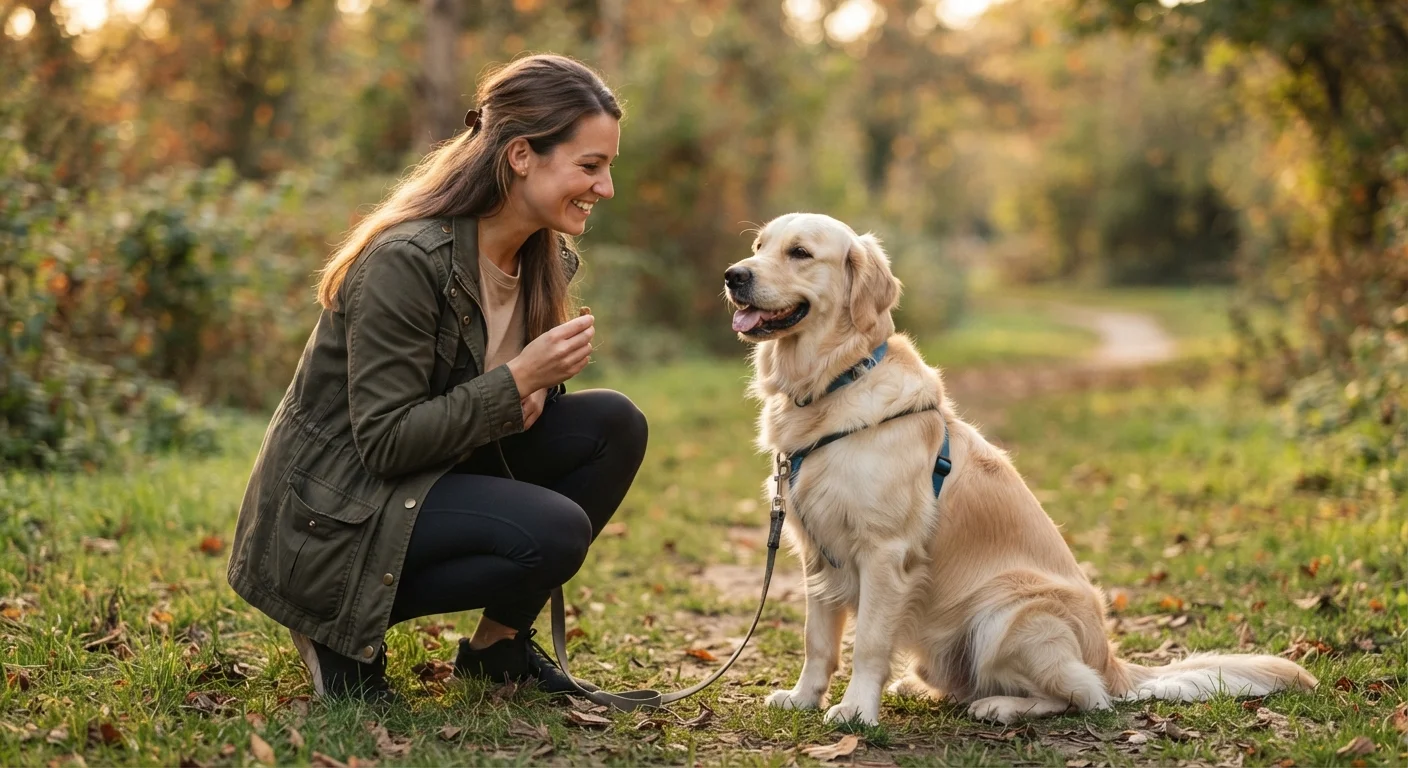
Why Body Language Fluency Matters in Training
Dogs cannot tell you when a training session has become overwhelming, when they're confused by a cue, or when they're simply too anxious to learn. Instead, they communicate constantly through posture, facial expression, tail movement, and subtle displacement behaviors. Recognizing these signals isn't just a nice skill — it's the foundation of effective, humane training.
When trainers miss stress signals, they often push dogs past their learning threshold. A dog that is over-threshold — too aroused, fearful, or frustrated — cannot consolidate new information. Understanding this connects directly to how animals actually learn; for background on those mechanisms, see our guide to operant and classical conditioning.
Reading body language accurately also helps you distinguish a dog that's ignoring a command because of distraction from one that's shutting down due to stress — two very different problems requiring very different responses. Our article on why dogs ignore commands explores those distinctions further.
| Primary communication channel | Body posture and movement |
| Ideal session length for most dogs | 3–5 minutes per session (General veterinary behaviorist guidance) |
| Key stress cluster signals | Yawning, lip licking, whale eye, tucked tail |
| Play bow indicates | Dog is relaxed and socially engaged |
| Hackles raised means | Heightened arousal (not always aggression) |
| Best response to red-light signals | End exercise calmly; give space; reset environment |
A Field Guide to Key Signals
Body language signals rarely appear in isolation. Look for clusters — multiple signals occurring together give a clearer picture of your dog's emotional state than any single gesture.
Green-Light Signals: Engaged and Ready to Learn
- Soft, relaxed eyes with no visible whites (sclera)
- Slightly open mouth, relaxed jaw, no tension in the lips
- Loose, wiggly body posture — weight balanced, not shifted forward or back
- Play bow: front elbows dropped to the ground, hindquarters raised — an invitation and a sign the dog feels safe
- Tail wagging in a wide, fluid arc at a mid-height position
Yellow-Light Signals: Approaching the Stress Threshold
- Yawning outside of tiredness — a classic calming signal used to self-soothe and communicate discomfort
- Lip licking when no food is present
- Turning the head or body away from the handler
- Sniffing the ground suddenly during an exercise — often displacement, not distraction
- Paw raise — a moment of hesitation or mild anxiety
- Blinking or squinting excessively
Red-Light Signals: Over-Threshold — Stop and Reset
- Whale eye: whites of the eyes visible, head turned but eyes fixed
- Tail tucked beneath the body or rigid and stiff at a high position
- Ears pinned flat against the skull
- Low, crouched body posture or freezing in place
- Panting heavily when not hot or recently exercised
- Piloerection (hackles raised) along the spine
Calming signal
A behavior — such as yawning, lip licking, or turning away — that dogs use to communicate discomfort or to de-escalate tension. Coined by Norwegian trainer Turid Rugaas, these signals are now widely recognized in behavioral science.
Over-threshold
A state in which a dog's arousal or stress level is so high that it cannot respond to cues or learn effectively. A dog over-threshold needs distance from the stressor and time to calm before training can resume.
Displacement behavior
An out-of-context behavior — like sniffing the ground mid-exercise — that signals internal conflict or stress. It is not the same as simple distraction.
Piloerection
The involuntary raising of hair along a dog's spine (hackles), triggered by the autonomic nervous system in response to arousal, fear, or excitement. It is a physiological response, not a deliberate threat signal.
Play bow
A posture in which the dog drops its front elbows to the ground while keeping its hindquarters raised. It functions as an invitation to play and signals that subsequent behaviors are friendly, not aggressive.
Whale eye
A stress signal in which the whites of the eyes (sclera) become visible, often when the dog turns its head but keeps its gaze fixed. It frequently indicates discomfort, conflict, or fear.
If you observe red-light signals, the appropriate response is to end the exercise calmly, give the dog space, and return to training in a lower-stress environment. Continuing to push through these signals is counterproductive and can erode trust. Dogs experiencing persistent anxiety — especially around departure cues — may be showing early signs of separation anxiety; our separation anxiety training guide covers evidence-based approaches.
Applying What You See: Practical Training Adjustments
Recognizing signals is only useful when paired with action. Here's how to translate what you're seeing into real-time training decisions:
- Shorten sessions when you spot yellow-light signals. Most dogs learn best in 3–5 minute bursts. Fatigue and frustration accumulate quickly, especially in puppies and senior dogs — whose learning capacity differs across life stages, as described in our article on training across different life stages.
- Lower criteria when stress appears. If you were working on a 30-second stay and the dog starts yawning and looking away, drop back to a 5-second stay and end on success. For a structured approach to building that skill, see teaching a reliable stay.
- Create predictability. Consistent routines reduce ambient anxiety, making dogs more receptive. A dog that knows what to expect from a session arrives calmer and more engaged.
- Monitor for pain. A dog that suddenly becomes reluctant, snappy, or avoidant during previously enjoyed exercises may be hurting — not defiant. Our resource on signs your pet is in pain can help you distinguish behavioral from physical causes.
Body language reading is a skill that sharpens with practice. Keep a short log of which signals appear at what point in sessions — patterns often reveal consistent stressors that are easy to adjust once identified.
This article provides general educational information about canine behavior and is not a substitute for guidance from a certified veterinary behaviorist or professional dog trainer. If your dog displays persistent fear, aggression, or anxiety, consult a qualified professional.
The content on this site is for informational purposes only and is not a substitute for professional advice. Always consult a qualified professional for guidance specific to your situation.