

The Real Reason Your Dog Isn't Listening
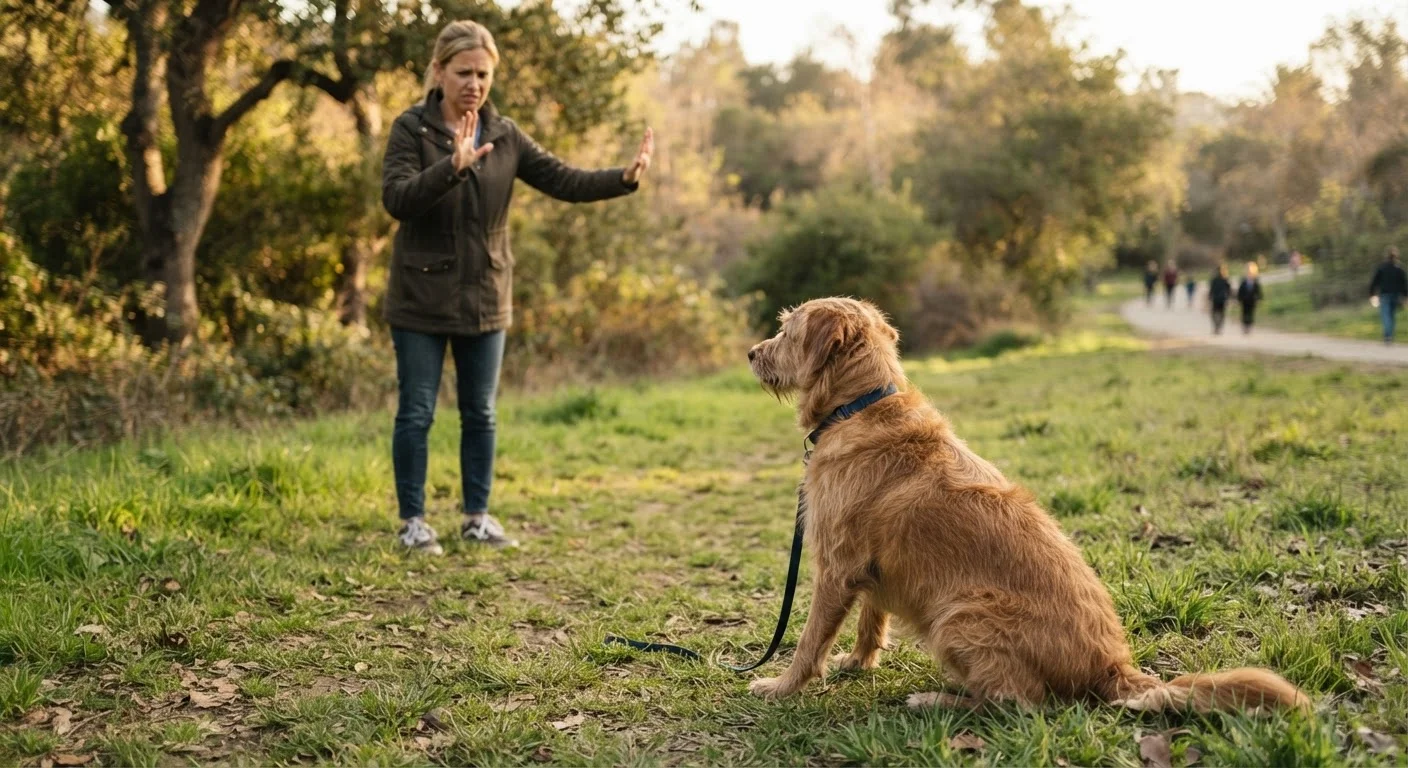
When a dog stops responding to commands, most owners jump to the same conclusion: the dog is stubborn, dominant, or just not smart enough. In reality, non-compliance is almost always a training communication problem — and the solution starts with understanding what went wrong in the learning process.
Dogs don't come pre-loaded with the meaning of words like "sit" or "come." Those associations are built through repetition, timing, and consistent consequences. When that foundation has gaps, the behavior looks like disobedience but is actually confusion or a lack of reinforcement history. Everyday habits owners overlook — including inconsistent training — can quietly undermine a dog's confidence and responsiveness over time.
Repeated Non-Response Can Become Learned
Every time you give a command your dog doesn't follow — and nothing changes — you're reinforcing that ignoring you is a viable option. This pattern can become deeply ingrained over time. Addressing it early, by resetting the reinforcement history, is far easier than correcting a long-established habit.
Mistakes That Break Down Your Dog's Responsiveness
Most dogs that "won't listen" have been inadvertently taught that ignoring commands is a reasonable option. The mistakes below are the most common culprits — and each one is fixable once you recognize it.
Repeating commands multiple times before the dog complies.
Why it happens: Owners assume the dog didn't hear or understand, so they say "sit, sit, sit" until the dog finally responds — accidentally teaching that the third or fourth repetition is when the command "counts."
Training in one environment and expecting reliability everywhere.
Why it happens: A dog that sits perfectly in the kitchen may appear to "forget" everything at the park. This happens because dogs learn commands in context — a behavior practiced only at home hasn't been generalized to other settings.
Inconsistent reinforcement — sometimes rewarding compliance, sometimes not.
Why it happens: Life gets busy. Owners reinforce a command enthusiastically during formal sessions but ignore it during everyday moments, signaling to the dog that compliance is situational.
Using a command the dog has never fully learned as if it's already mastered.
Why it happens: Owners often move too quickly through training stages, assuming a few successful repetitions means a behavior is solid. In reality, the dog may only respond under ideal conditions.
Ignoring what the dog's body language is communicating during training.
Why it happens: Owners focus on whether the dog complies, missing stress signals like lip licking, yawning, or averted gaze that indicate the dog is overwhelmed or disengaged.
Frustration-Based Corrections Backfire
Responding to non-compliance with physical corrections, harsh tones, or repeated shouting can create anxiety around training rather than improving responsiveness. Dogs that associate commands with stress are more likely to shut down or avoid engagement altogether. Keep sessions calm and end on a success whenever possible.
If your dog shuts down or becomes anxious during training rather than simply distracted, it's worth considering whether something deeper is going on. Repetitive or avoidance behaviors sometimes signal that a dog's emotional needs aren't being met, which no amount of command practice will fix on its own.
Building Back Reliable Responses
Recovering a dog's responsiveness isn't about starting over from scratch — it's about closing the gaps. Begin by identifying which specific commands have broken down and in what contexts. Then return to a controlled environment, reward the very first correct response every time, and resist the urge to rush back to difficult situations.
Short sessions — typically three to five minutes for dogs new to a behavior — outperform long ones. End each session with a behavior your dog does confidently so the experience finishes on a positive note. As reliability builds in low-distraction settings, gradually introduce complexity. Dogs with a history of reactivity in high-stimulus environments may need additional patience when working toward outdoor reliability.
80%
Of training issues linked to handler behavior
Veterinary behaviorists commonly estimate that the majority of dog training failures trace back to human inconsistency rather than the dog's capacity to learn.
3–5 min
Ideal session length for young or new learners
Animal learning research supports keeping training sessions short for dogs new to a behavior, as cognitive fatigue reduces responsiveness quickly in early learning stages.
The goal isn't a dog that obeys under perfect conditions — it's a dog that trusts the training process enough to engage even when the world is interesting. That kind of reliability is built slowly, but it's built to last.
The content on this site is for informational purposes only and is not a substitute for professional advice. Always consult a qualified professional for guidance specific to your situation.