

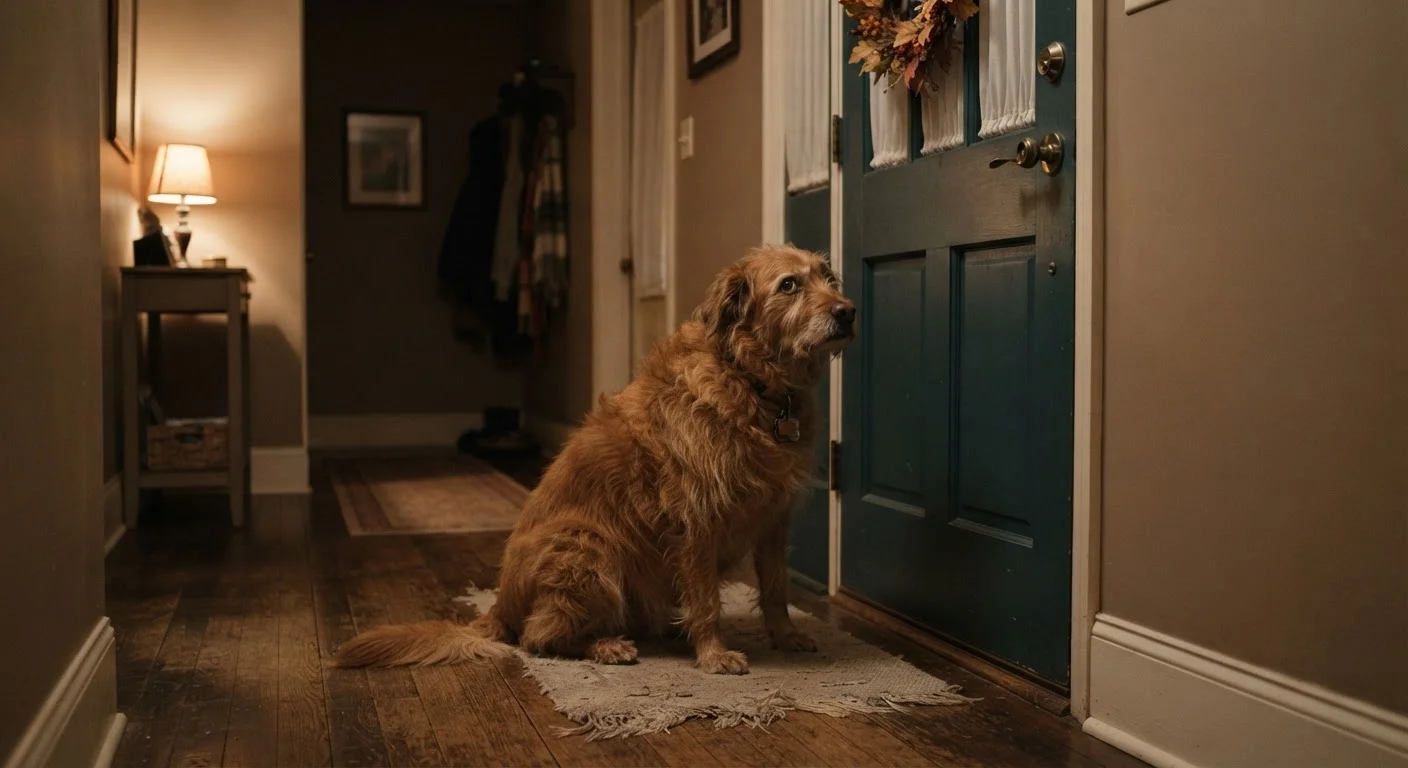
Understanding What Separation Anxiety Actually Is
Separation anxiety is a stress response triggered when a dog is left alone or separated from an attachment figure. It is not stubbornness, spite, or the result of lax discipline. Dogs experiencing it are in genuine emotional distress — a distinction that matters enormously for how owners approach training.
Common signs include destructive behavior concentrated near exits, excessive vocalization, house-soiling despite being house-trained, and self-injurious behaviors like paw-licking or attempts to escape. Many owners only discover the extent of the problem through a neighbor's complaint or a camera recording.
Understanding the underlying emotional state is the necessary starting point. As our editorial team details in Stress and Anxiety in Cats and Dogs, chronic anxiety has real physiological consequences — it is not simply a behavioral inconvenience.
Simulated vs. True Separation Anxiety
Not all alone-time problem behavior is true separation anxiety. Some dogs are under-exercised, bored, or poorly habituated to confinement — conditions that respond to different interventions than anxiety-based distress. Video recording your dog during absences is the most reliable way to distinguish between panic-driven behavior and frustration or boredom. A veterinarian or certified applied animal behaviorist can help clarify the diagnosis.
The Core Strategy: Systematic Desensitization
The most rigorously supported approach to separation anxiety is systematic desensitization — a gradual process of exposing the dog to progressively longer absences while keeping the dog below its anxiety threshold. The goal is to teach the dog that departures are predictable, temporary, and non-threatening.
Begin desensitization below the dog's visible anxiety threshold
If a dog begins showing stress the moment you pick up your keys, starting with full departures will only reinforce the panic response. Training must begin at whatever tiny duration the dog can tolerate without distress — sometimes just seconds.
Decouple departure cues from actual departures
Dogs quickly learn to associate pre-departure rituals — putting on shoes, grabbing a bag, picking up keys — with the anxiety of being left. Practicing these cues without actually leaving can defuse their predictive power over time.
Avoid dramatic greetings and departures
Highly emotional hellos and goodbyes signal to the dog that alone time is an emotionally significant event, which amplifies anxiety. Calm, matter-of-fact transitions help normalize the experience.
Use food-stuffed enrichment toys strategically
A high-value food puzzle given exclusively during absences can shift the dog's emotional association from dread to mild anticipation — provided the anxiety level is low enough for the dog to actually eat.
Keep a training log to track genuine progress
Because progress is slow and setbacks are common, owners without a record often misjudge where the dog actually stands. Documented baselines allow for realistic assessment and prevent rushing.
Reading your dog's body language during practice sessions is essential. Our guide on canine body language during training can help you recognize early stress signals before they escalate.
Quick Wins to Start Building Confidence
While a full desensitization program unfolds over weeks or months, several immediately actionable steps can begin shifting the emotional experience of alone time for your dog.
Dogs that struggle with basic independence exercises — like holding a stay while you step briefly out of sight — may benefit from structured skill-building. See our breakdown of building duration, distance, and distraction in a stay as a companion exercise.
When Training Alone Isn't Enough
Separation anxiety exists on a spectrum. Mild cases often respond well to owner-led behavior modification. Moderate to severe cases — where the dog enters full panic within seconds of departure — typically require professional support and may benefit from medication prescribed by a veterinarian to reduce baseline anxiety enough for training to take hold.
“Separation anxiety is one of the most common and most serious behavioral problems in dogs, and it is widely undertreated. It responds best to a combination of behavior modification and, when appropriate, medication — neither alone is as effective as both together.”
— Karen Overall, Veterinary behaviorist and author of clinical behavior guidelines
If your dog's anxiety is also surfacing in other contexts, such as reactivity toward strangers or other dogs during walks, these challenges can sometimes share an underlying anxiety profile. Our article on leash reactivity in dogs covers how that specific pattern develops and what helps.
It's also worth remembering that the pace of learning shifts with age. Training ability changes across a dog's lifespan, and senior dogs with late-onset anxiety may need a modified approach compared to younger animals.
This article is for general informational and educational purposes only. It is not a substitute for personalized advice from a licensed veterinarian or certified veterinary behaviorist. If your dog is showing signs of significant distress, please consult a qualified professional.
The content on this site is for informational purposes only and is not a substitute for professional advice. Always consult a qualified professional for guidance specific to your situation.