

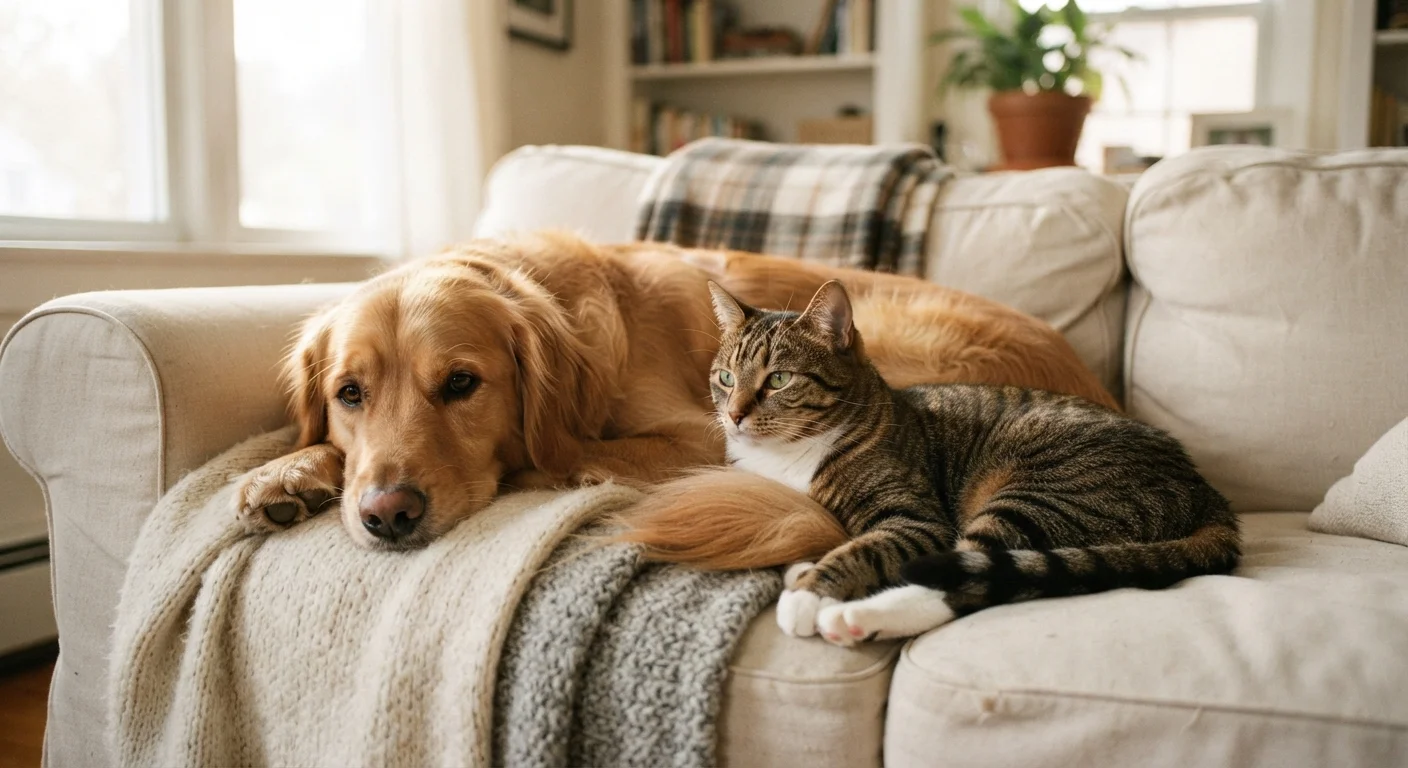
Why Anxiety Is a Health Issue, Not Just a Behavior Problem
When a pet shreds furniture while alone or hides under the bed during thunderstorms, it's easy to frame the problem as a behavioral one. But veterinary science tells a different story. Anxiety activates the hypothalamic-pituitary-adrenal (HPA) axis — the same stress-response system found in humans — flooding the body with cortisol and adrenaline. In short bursts, this is adaptive. Sustained over weeks or months, it becomes destructive.
Chronic stress is linked to weakened immune responses, gastrointestinal problems, increased heart rate, and inflammatory skin conditions in companion animals. It can also accelerate cognitive decline in older pets. For a deeper look at how stress hormones affect bodies at a biological level, see the science behind the stress response.
Understanding anxiety as a medical state — not a discipline failure — is the first step toward helping an affected animal. It also means that punishment-based responses are not only ineffective, they're likely to make things worse.
Anxiety vs. Situational Fear: Know the Difference
Not every fearful response is an anxiety disorder. A dog startled by a sudden loud noise is experiencing a normal acute stress reaction. Anxiety disorder refers to a persistent, disproportionate, or generalized state of fear that impairs daily functioning and wellbeing. If you're unsure which applies to your pet, a veterinarian is the right first stop.
Common Triggers in Cats and Dogs
Triggers vary by species, individual history, and environment, but several patterns appear consistently in clinical and behavioral research:
- Separation: Separation anxiety is among the most common anxiety disorders in dogs. Affected animals may vocalize, eliminate indoors, or destroy objects within minutes of being left alone.
- Loud or unpredictable noises: Fireworks, thunderstorms, and construction sounds are frequent triggers, particularly in noise-sensitive dogs.
- New people, animals, or environments: Cats are especially sensitive to territorial disruption — a new pet or even rearranged furniture can destabilize a cat's sense of safety.
- Insufficient enrichment or stimulation: Boredom and unmet behavioral needs can produce chronic low-grade stress that escalates over time. This often underlies repetitive behaviors like pacing or over-grooming.
- Changes in routine: A shift in feeding schedules, work hours, or household membership can unsettle animals whose sense of safety depends on predictability.
- Pain or illness: Physical discomfort is a frequently overlooked source of anxiety. An animal in pain may appear irritable, withdrawn, or reactive — behaviors that mirror anxiety disorders. See signs your pet may be in pain to tell the difference.
~17%
Dogs affected by separation anxiety
Research published in veterinary behavior journals estimates separation anxiety affects roughly 17% of the general dog population, making it one of the most prevalent behavioral disorders in companion animals.
~40%
Cats showing stress in multi-cat homes
Studies in feline behavior research suggest a significant proportion of cats in multi-cat households show behavioral indicators of chronic stress, particularly when resources like food stations and litter boxes are insufficient.
Up to 49%
Dogs with noise phobia in some studies
A study published in Applied Animal Behaviour Science found that nearly half of a large dog population sample showed signs of noise sensitivity, with thunderstorms and fireworks most commonly implicated.
Recognizing Stress Signals by Species
Cats and dogs communicate distress through body language and behavior — but they use different dialects. Misreading signals can delay intervention significantly.
Dogs
- Excessive panting or yawning outside of heat or tiredness
- Pacing, whining, or inability to settle
- Destructive behavior when alone
- Tail tucked, ears pinned, body low to the ground
- Aggression or reactivity that seems out of proportion
- Loss of appetite or digestive upset
Cats
- Hiding persistently, especially from familiar people
- Over-grooming leading to bald patches or skin sores
- House soiling outside the litter box
- Reduced appetite or sudden changes in food intake
- Increased vocalization or uncharacteristic aggression
- Freezing or hypervigilance in situations that were previously normal
Some of these signals also appear in older animals whose cognitive or sensory function is changing. Aging pets may develop anxiety as a secondary effect of declining health, which requires careful veterinary assessment to distinguish from primary anxiety disorders.
How Anxiety Is Typically Addressed
There is no single solution for pet anxiety — effective management usually involves layering several approaches, guided by a veterinarian or veterinary behaviorist.
Start With a Veterinary Exam
Before beginning any anxiety management program, schedule a full veterinary checkup. Pain, thyroid disorders, neurological changes, and other medical conditions can all produce anxiety-like symptoms. Treating anxiety without ruling out a physical cause can delay necessary care and leave the animal suffering unnecessarily.
Environmental and Behavioral Strategies
Enrichment — puzzle feeders, safe hiding spaces, regular structured play — reduces baseline stress by giving animals appropriate outlets for their instincts. For dogs, consistent training using reward-based methods builds confidence and teaches coping skills. The Pet Care Basics hub and Pet Training hub offer practical guidance on creating a stable, supportive home environment.
Desensitization and Counterconditioning
These evidence-based techniques gradually expose the animal to a stress trigger at low intensity while pairing it with something positive, reshaping the animal's emotional response over time. This requires patience and consistency but is one of the most effective tools available for noise phobias, separation anxiety, and social fears.
Veterinary Support
When anxiety is severe or unresponsive to behavioral strategies alone, a veterinarian may discuss additional options. These can include referral to a board-certified veterinary behaviorist, pheromone products with some supporting evidence, or — in certain cases — prescription medications. Medication decisions should always be made in partnership with a licensed vet who knows the individual animal's health history. Anxiety can also overlap with or worsen chronic health conditions, so a full medical workup is often a valuable first step.
This article is for general informational purposes only and is not a substitute for professional veterinary advice. Always consult a licensed veterinarian or veterinary behaviorist for guidance specific to your pet's health and behavior.
Frequently Asked Questions
Stress signals tend to be context-specific and repetitive — appearing around certain triggers like strangers or loud sounds. A tired pet relaxes and sleeps soundly; a stressed pet may pace, yawn excessively, pant without heat, or stay vigilant even while resting. If the behavior recurs in predictable situations, stress is more likely.
Yes. Chronic stress suppresses immune function, increases inflammation, and can contribute to digestive upsets, skin conditions, and heart-rate irregularities. Research in veterinary medicine consistently links chronic anxiety to tangible health problems beyond behavioral changes.
In most cases, anxiety can be significantly reduced with the right combination of environmental enrichment, behavior modification, and — when appropriate — veterinary-prescribed support. The earlier intervention begins, the better the outcome tends to be.
No. Punishment increases fear and typically worsens anxiety disorders. Anxiety-driven behaviors like destructive chewing or inappropriate elimination are symptoms, not defiance, and they respond poorly to corrections. Positive, reward-based approaches are far more effective and humane.
Consult a vet any time anxiety is severe, persistent, or causing physical symptoms, or if behavior poses a safety risk. A veterinarian can rule out underlying medical causes and may refer you to a veterinary behaviorist for complex cases.
Both species experience anxiety but express it differently. Dogs often show outward distress — barking, panting, destructive behavior. Cats tend to hide, over-groom, stop using the litter box, or become withdrawn. Recognizing species-specific signals is key to early intervention.
The content on this site is for informational purposes only and is not a substitute for professional advice. Always consult a qualified professional for guidance specific to your situation.