

The Alarm System: How Stress Starts
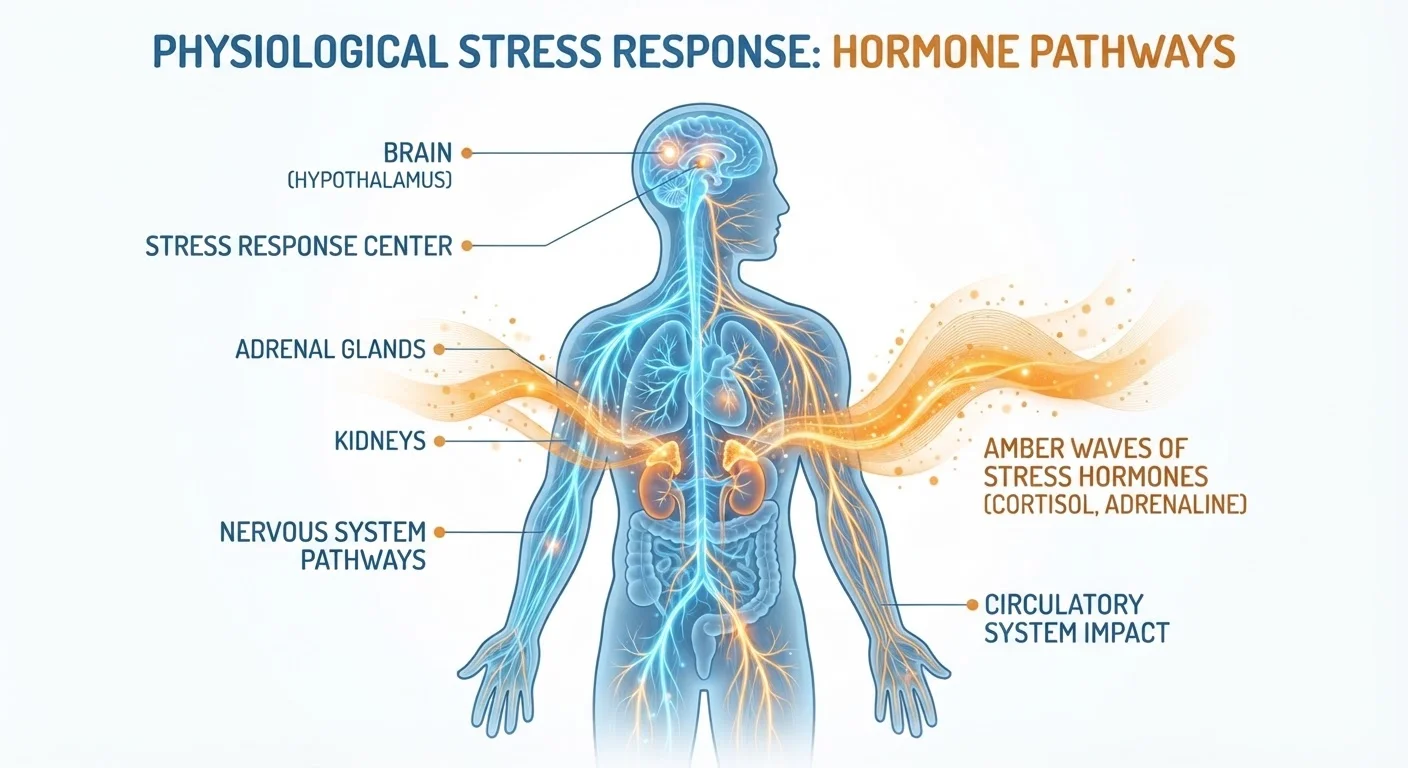
When your brain detects a threat - whether a near-miss on the highway or a difficult conversation at work - a region called the amygdala fires an alert. It signals the hypothalamus, which acts as a command center, activating the sympathetic nervous system within milliseconds.
Almost instantly, your adrenal glands release adrenaline (epinephrine). Heart rate climbs. Breathing quickens. Blood is redirected from digestion toward the large muscles in your arms and legs. Pupils dilate to sharpen vision. This is the classic fight-or-flight response - an evolutionary mechanism designed to help your ancestors survive immediate physical danger.
What makes this remarkable is that the brain does not require a real physical threat to trigger it. Anticipating a difficult meeting or replaying a tense memory can activate the same cascade. The body responds to perceived danger much as it does to actual danger.
Psychological vs. Physical Threats
The stress response evolved primarily to handle physical danger. Modern stressors - financial pressure, social conflict, work demands - are largely psychological, yet they activate the same biological machinery. This mismatch is one reason chronic stress is so prevalent in contemporary life. The body prepares for a physical confrontation that never arrives, leaving stress hormones circulating with no clear outlet.
Cortisol: The Slow-Burn Hormone
While adrenaline delivers the initial jolt, cortisol - often called the primary stress hormone - sustains the response. Released by the adrenal cortex through the HPA axis, cortisol keeps blood sugar elevated, suppresses non-essential functions like digestion and reproduction, and maintains heightened alertness.
In the short term, this is useful. Cortisol can enhance memory formation, focus, and physical endurance. Research suggests that moderate, time-limited stress can even sharpen cognitive performance - a pattern sometimes called the Yerkes-Dodson effect.
However, when stress is chronic and cortisol remains elevated for days or weeks, the picture changes. Sustained high cortisol is associated with disrupted sleep, weight gain around the abdomen, impaired immune function, and increased cardiovascular risk. This is why understanding the difference between acute and chronic stress matters.
77%
Adults reporting physical stress symptoms
According to the American Psychological Association's Stress in America survey, a large majority of U.S. adults report experiencing physical symptoms they attribute to stress.
2-3×
Elevated heart disease risk with chronic stress
Multiple large-scale studies have found that individuals with high chronic psychosocial stress face roughly two to three times the risk of cardiovascular events compared to low-stress counterparts.
30 min
Time for cortisol to peak after a stressor
Research on the HPA axis shows cortisol typically reaches peak blood concentration approximately 20-30 minutes after onset of an acute stressor, then gradually declines.
What Chronic Stress Does to the Body Over Time
The body is built for brief, intense stress - not prolonged exposure. When the stress response stays switched on, systems that were temporarily deprioritized begin to suffer. Digestion slows and becomes dysregulated. The immune system, initially boosted, may become suppressed with chronic cortisol exposure. Inflammatory markers can rise.
The cardiovascular system bears a particular burden. Persistently elevated heart rate and blood pressure contribute to arterial wear over time. Research published in health literature consistently links chronic psychosocial stress to increased risk of hypertension and heart disease, though causality is complex and multifactorial.
Sleep is another casualty. Stress disrupts the normal drop in cortisol that should occur at night, interfering with the ability to fall and stay asleep. In turn, poor sleep raises stress reactivity the following day - a cycle explored in depth in our article on sleep and mental health.
For a broader look at how these systems interact with overall well-being, see our complete overview of physical health.
“Stress is not what happens to us. It is our response to what happens, and response is something we can choose.”
— Maureen Killoran, Wellness educator and published author on stress and resilience
Supporting Your Body's Stress Recovery
The stress response has an off-switch: the parasympathetic nervous system, sometimes called the rest-and-digest system. Activating it is the goal of many evidence-informed stress management approaches.
Slow, diaphragmatic breathing is one of the fastest known ways to stimulate the vagus nerve and downshift the stress response. Physical movement helps metabolize the stress hormones circulating in the bloodstream. Social connection also plays a meaningful role - research suggests that supportive relationships buffer the physiological impact of stress, a topic covered thoroughly in our article on social connection and mental health.
When stress spikes acutely, grounding techniques - practices that anchor attention to the present moment - can interrupt the alarm cycle. Our guide to grounding techniques for moments of overwhelm walks through several practical approaches.
Try a Simple Breathing Reset
When you notice stress symptoms rising, a slow exhale longer than your inhale - such as four counts in and six counts out - can help activate the parasympathetic nervous system relatively quickly. This is not a treatment for any condition, but it is a well-studied technique for reducing physiological arousal in the moment. Practicing it regularly may make it easier to access under pressure.
This article is for informational purposes only and does not constitute medical advice. If you are experiencing persistent or severe stress symptoms, please speak with a qualified healthcare professional.
Frequently Asked Questions
The two primary hormones are adrenaline (epinephrine) and cortisol. Adrenaline is released almost immediately, raising heart rate and blood pressure. Cortisol follows shortly after and helps sustain the body's elevated alert state.
Not necessarily. Short-term, acute stress can sharpen alertness and motivation - a phenomenon researchers sometimes call 'eustress.' It's prolonged, unrelenting stress that is associated with harmful health outcomes, including cardiovascular strain and immune suppression.
Yes. Common physical symptoms include headaches, muscle tension, digestive upset, fatigue, and disrupted sleep. These are direct results of the hormonal and nervous system changes triggered by stress.
Sustained high cortisol levels can suppress immune function over time, potentially making the body more susceptible to illness. Research also links chronic stress to low-grade systemic inflammation.
If stress symptoms are persistent, interfering with daily life, or accompanied by chest pain, difficulty breathing, or mood changes that don't resolve, consult a qualified healthcare professional. This article is for general information only and is not a substitute for medical advice.
The content on this site is for informational purposes only and is not a substitute for professional advice. Always consult a qualified professional for guidance specific to your situation.