

Why Pets Don't Tell You When They Hurt
Domestic animals evolved from prey and predator species alike — and both groups share a powerful survival instinct: conceal weakness. A visibly suffering animal in the wild is an easy target or a liability to the group. This biological programming doesn't switch off in the living room. Your dog or cat is wired to push through discomfort without making it obvious, which means waiting for a yelp or a limp before acting often means waiting too long.
Understanding pain in pets is fundamentally about learning a different language — one made up of posture, appetite shifts, and subtle behavioral changes rather than words. This is especially important for older animals, whose chronic pain can be mistakenly written off as routine aging.
Vocalizing Is Not Always the First Sign
Many pet owners assume they'll hear their animal cry or whimper if something is seriously wrong. In reality, vocalizing is often a late-stage or high-intensity pain response. Most mild-to-moderate pain in dogs and cats is communicated through the behavioral and physical changes described in this article, not through sound. Relying on vocalization as the primary pain indicator can lead to delayed care.
Behavioral Signs of Pain to Watch For
Behavioral changes are typically the first and most reliable indicators that a pet is hurting. Key signs include:
- Withdrawal and hiding: A normally social cat retreating under the bed, or a friendly dog staying away from family activity, often signals distress.
- Reduced activity or reluctance to move: Hesitation to jump, climb stairs, or go for walks they once enjoyed can indicate musculoskeletal pain.
- Changes in appetite or water intake: Pain — especially dental or abdominal — frequently causes decreased eating. Unusual changes in drinking are also worth tracking; see our guide on when water intake changes warrant concern.
- Aggression or irritability: A pet that snaps, growls, or hisses when approached — particularly in a specific body area — is often communicating pain, not defiance.
- Excessive licking, biting, or scratching one area: Focused self-grooming on a joint, paw, or body region often indicates localized pain or inflammation.
- Sleep and posture changes: Sleeping more than usual, choosing unusual resting spots, or adopting a hunched or guarded posture are all meaningful signals.
It's worth noting that anxiety and pain can overlap in presentation. Our article on stress and anxiety in cats and dogs explores how to distinguish the two.
~80%
Dogs over 8 with detectable arthritis pain
Veterinary research suggests the majority of dogs over age 8 show some degree of osteoarthritis, yet many cases go undiagnosed because signs are subtle and gradual.
28%
Pet owners who recognize feline pain signs
Studies have found that a significant proportion of cat owners struggle to identify pain indicators in their cats, partly because cats mask discomfort more effectively than dogs.
Physical Signs You Can See and Feel
Beyond behavior, some pain signals show up in how a pet looks or moves:
- Facial tension: Squinting, flattened ears, whiskers pulled back, and a tight muzzle are all components of the Feline Grimace Scale — and similar cues apply to dogs.
- Altered gait: Limping, favoring one limb, or an uneven stride almost always points to pain in the affected limb or joint.
- Coat and grooming changes: A cat that stops grooming may hurt too much to reach certain areas; a dog whose coat suddenly looks unkempt may be redirecting energy away from self-care.
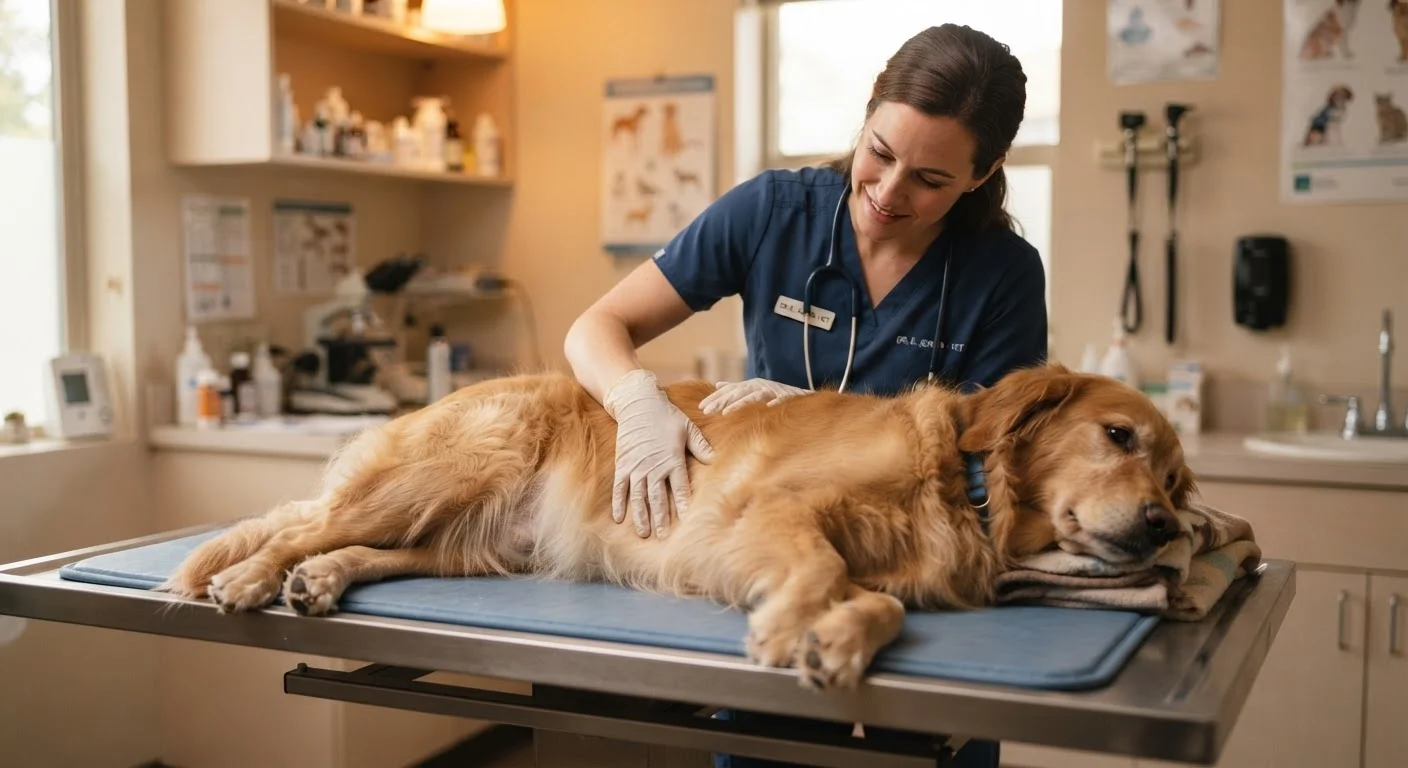
- Swelling, heat, or sensitivity: Gently running your hands along your pet's body — something veterinarians call a physical exam — can reveal localized swelling or areas that cause the animal to flinch when touched.
Learning to read your pet's body language fluently takes practice. Our overview of canine body language provides additional context for interpreting what your dog is communicating through posture and movement.
Keep a Simple Pain Journal
If you suspect your pet is uncomfortable, note the date, what you observed, and how long it lasted. Track appetite, activity level, and any specific areas your pet protects or avoids. Even three to four days of notes gives your veterinarian a much clearer picture than a verbal summary alone — and can speed up diagnosis.
What to Do When You Suspect Your Pet Is in Pain
If you notice any combination of the signs above, the right first step is straightforward: contact your veterinarian. Don't wait to see if it resolves on its own if the signs are persistent, worsening, or accompanied by loss of appetite, lethargy, or obvious distress.
Before your appointment, keep a brief written log of what you've observed — when it started, what changed, and whether anything makes it better or worse. This history is genuinely useful diagnostic information. You can also check your pet's basic vital signs at home to give your vet an initial picture.
A critical safety note: Never administer human pain medications — including ibuprofen, aspirin, or acetaminophen — to a dog or cat. These are toxic to companion animals and can cause kidney failure, gastrointestinal bleeding, or death. Only use medications your veterinarian has specifically prescribed for your pet.
For non-emergency situations, your vet will perform a physical examination, may recommend imaging or bloodwork, and will discuss appropriate pain management tailored to your animal's specific condition and history. Pain management in veterinary medicine has advanced considerably, and effective, safe options exist for most species and situations.
This article provides general educational information about animal health and is not a substitute for professional veterinary advice. If you are concerned about your pet's health, always consult a licensed veterinarian.
Frequently Asked Questions
Look for changes in normal behavior: reduced activity, reluctance to climb stairs, changes in appetite, or unusual posturing. Dogs may also lick or bite at a painful area repeatedly. If any change is sudden or persists for more than a day or two, contact your veterinarian.
Yes. Cats tend to withdraw and hide when they hurt, rather than seeking comfort. Flattened ears, a hunched posture, a tense facial expression, and reduced grooming are key feline pain signals. Because cats are especially stoic, even subtle changes should be taken seriously.
No — never give human pain relievers to pets without explicit veterinary instruction. Ibuprofen and acetaminophen are toxic to both dogs and cats and can cause organ failure. Only use medications prescribed or approved by your veterinarian for your specific animal.
Seek emergency veterinary care immediately if your pet is crying out continuously, cannot stand or walk, has labored breathing, shows sudden paralysis, or has a distended abdomen. These can signal life-threatening conditions requiring urgent treatment.
Touch avoidance is a classic pain signal. An animal that was previously affectionate but now flinches, growls, or moves away when handled in a specific area is likely experiencing localized discomfort. Document where the sensitivity occurs and report it to your vet.
Older pets are more susceptible to chronic pain conditions like arthritis, dental disease, and cancer. Because age-related pain often develops gradually, owners may mistake it for normal slowing down. Regular senior wellness exams help catch and manage pain early.
The content on this site is for informational purposes only and is not a substitute for professional advice. Always consult a qualified professional for guidance specific to your situation.