

Start here
Why Your Home Setup Matters Before Day One
Next
Choosing and Preparing Your Pet's Space
Then
Identifying and Removing Common Hazards
Gear up
Essential Supplies to Have Ready
Fine-tune
Temperature, Noise, and Environmental Comfort
Keep going
Building Routines from the First Day
Why Your Home Setup Matters Before Day One
Bringing a new animal home is an exciting milestone — and a significant responsibility. The decisions you make in the days before your pet arrives have a direct impact on how smoothly the transition unfolds. Animals entering a new environment experience real stress: unfamiliar smells, sounds, and spatial layouts can trigger anxiety behaviors ranging from hiding and loss of appetite to destructive activity.
A thoughtfully prepared home shortens the adjustment period, reduces behavioral problems in the early weeks, and helps you establish authority and routines from a place of calm rather than crisis. Think of pre-arrival preparation as the foundation on which everything else — training, bonding, health — is built.
This guide walks you through the core elements of that foundation: space selection, hazard removal, supply procurement, environmental calibration, and routine-setting. For a deeper look at ongoing care responsibilities once your pet is settled, see our comprehensive daily care guide.
Choosing and Preparing Your Pet's Space
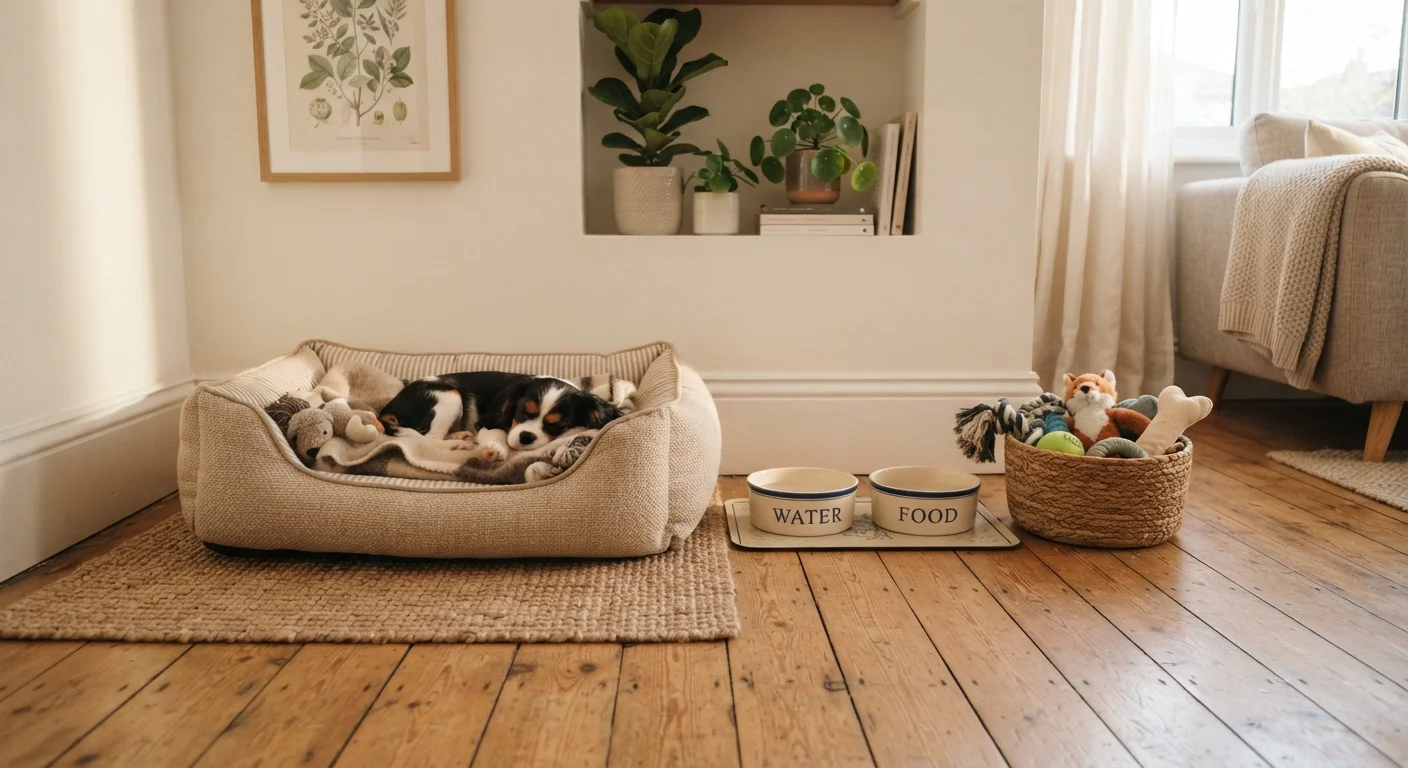
Resist the urge to give a new pet immediate access to your entire home. Start with a single, manageable room — a spare bedroom, a quiet corner of the living room, or a sectioned-off area — and expand access gradually as your animal settles in and demonstrates comfort.
This "base space" should include everything your pet needs: food and water stations, a resting area, a litter box (for cats), and a few enrichment items. Key features to consider:
- Flooring: Non-slip surfaces matter for puppies and senior animals. Place rugs or mats on smooth floors.
- Escape routes: Check for gaps under doors, behind appliances, or in fencing before a small animal or cat explores.
- Separation from high-traffic zones: Initially, a quiet zone away from front doors and busy hallways reduces overstimulation.
Base space
A single, limited area of your home designated as your new pet's starting zone, used to ease the transition before gradually expanding access to the rest of the house.
Crate training
A method of using a properly sized enclosure to give a dog a secure, den-like space that supports both emotional comfort and house training progress.
Environmental enrichment
Activities, objects, and conditions that stimulate a pet's natural behaviors and keep them mentally engaged — critical for preventing boredom-related behavioral problems.
Microchipping
A small, permanent electronic chip implanted under a pet's skin that carries a unique ID number, used to reunite lost animals with their owners through a scanner and registry.
Thermal regulation
The process of maintaining an appropriate temperature in a pet's environment — especially important for reptiles and birds that cannot internally regulate their own body temperature the way mammals do.
For dogs, a crate set up in the base space gives them a den-like retreat that supports both security and house training. For cats, vertical space — a cat tree or sturdy shelving — is as important as floor area. Birds and small mammals have species-specific enclosure requirements; research those carefully with a veterinary or species-specialist source before purchase.
Identifying and Removing Common Hazards
Your home, seen through a pet's perspective, contains numerous hidden risks. A systematic walk-through before arrival is essential. Key hazard categories to address:
- Toxic plants: Many common houseplants are poisonous to pets. Remove or relocate any plant you cannot positively identify as safe. The ASPCA's Animal Poison Control database is a reliable reference.
- Loose cords and cables: Puppies and rabbits especially will chew electrical cords. Use cable management sleeves or route cords out of reach entirely.
- Cleaning products and medications: Store all chemicals, medications (human and pet), and cleaning supplies in latched cabinets. A determined dog can open an unlocked cupboard.
- Small objects and choking hazards: Coins, rubber bands, hair ties, and small children's toys are common swallowing risks for dogs and cats.
- Open water sources: Toilets, buckets, and decorative ponds can be drowning risks for small animals and puppies.
For a room-by-room walkthrough of specific hazards, consult our detailed pet-safe home checklist. Being proactive about hazards also pays off when you're ready to explore emergency preparedness planning for your household.
Never Assume a Plant or Food Is Safe
Many foods safe for humans are toxic to pets — including grapes, onions, xylitol (an artificial sweetener), and chocolate. Before your pet arrives, audit both your houseplants and your pantry for known hazards. When in doubt, keep items secured or out of reach entirely, and contact your vet or animal poison control if accidental ingestion occurs.
Essential Supplies to Have Ready
Having the right supplies in place before your pet arrives means your first hours together focus on bonding, not errands. While exact needs vary by species, the following represent a sound baseline for common companion animals:
- Food and water dishes: Choose appropriately sized, easy-to-clean options — stainless steel or ceramic are generally preferred over plastic, which can harbor bacteria.
- Species-appropriate food: Confirm the diet your pet has been eating and transition to any new food gradually to avoid digestive upset.
- Collar, ID tag, and microchip: For dogs and cats, visible ID combined with microchipping is the most reliable lost-pet protection. Have the tag engraved before arrival.
- Crate or enclosure: A correctly sized crate for dogs, a secure cage for birds or small mammals, or a cat carrier for initial transport and vet visits.
- Litter box and litter (cats): Place it in a quiet, low-traffic area. Provide one box per cat, plus one extra, as a general guideline.
- Basic grooming tools: A brush appropriate for your pet's coat type, nail clippers, and ear cleaning supplies.
- Enrichment items: Toys suited to your pet's species and age — they're not optional extras, but essential for mental health.
Buy Supplies Before You Bring Your Pet Home
Assembling supplies the day before arrival — rather than after — means your first moments together are calm and focused on your new animal. Walk through each supply category against your pet's specific needs, and double-check food type and portion guidance with your vet or breeder in advance.
Keep a list of your veterinarian's contact information and the nearest 24-hour emergency animal hospital saved in your phone before your pet arrives home. For guidance on what to expect in your pet's first year of health care, see our first-year health timeline.
Temperature, Noise, and Environmental Comfort
Environmental conditions that feel routine to you may be stressful or even dangerous for a new animal. Review these factors before and after arrival:
- Temperature
- Most household pets tolerate the 65–75°F (18–24°C) range that comfortable homes maintain. Reptiles, birds, and some small mammals have tighter thermal needs — research your species and use a reliable room thermometer to verify conditions, especially in garages, basements, or rooms with drafts.
- Humidity
- Reptiles, amphibians, and tropical birds often require specific humidity levels. A basic hygrometer (humidity gauge) is inexpensive and useful for monitoring enclosure environments.
- Noise levels
- Loud televisions, music, or frequent visitors during the first week can overwhelm a new pet. Keep the introduction period quieter than usual. Gradual exposure to normal household sounds — appliances, doorbells, outdoor traffic — helps build resilience over time.
- Lighting cycles
- Birds and reptiles are particularly sensitive to light cycles. Ensure enclosures are not placed in direct sunlight where temperatures can spike, and maintain consistent light/dark patterns.
If you're considering adding smart thermostats or monitoring devices to help manage your pet's environment, our overview of smart home devices for first-timers explains how these tools work in plain terms.
Environmental Needs Vary by Species
The guidance in this section covers general companion animals, but species variation is significant. A bearded dragon requires a basking zone above 100°F, while a rabbit is sensitive to temperatures above 80°F. Always source environmental specifications from veterinary or species-specialist references specific to your animal, not generalized pet care advice.
Building Routines from the First Day
Animals thrive on predictability. A consistent daily schedule — set feeding times, exercise windows, and sleep cues — communicates safety to a new pet and lays the groundwork for everything from house training to long-term health. Start as you intend to go: the routines you establish in week one are much easier to maintain than habits corrected later.
Key routine elements to establish early:
- Feeding schedule: Feed at the same times each day rather than free-feeding, which makes monitoring intake (a key health indicator) much easier.
- Potty or litter training: For dogs, consistent outdoor trips on a predictable schedule dramatically accelerate house training. For cats, clean the litter box daily.
- Exercise and play: Build species-appropriate activity into every day from the start — both physical and mental stimulation matter for behavioral health.
- Quiet time and rest: Ensure your pet has undisturbed rest periods. Overtired animals are stressed animals.
If you've brought home a puppy, our complete puppy training foundation guide walks through socialization, commands, and house training in detail. For small pets like rabbits or guinea pigs, small pet training basics may also be a useful next step. Once your environment is set and routines are in place, review what to have ready before training begins to ensure you're fully prepared.
This article provides general educational information for new pet owners and is not a substitute for personalized guidance from a licensed veterinarian. Always consult a qualified veterinary professional regarding the specific health, behavioral, and environmental needs of your individual animal.
Frequently Asked Questions
Space requirements vary significantly by species and breed. A small cat needs at minimum one room with vertical climbing options, while a large dog breed needs regular outdoor exercise and indoor room to move. Research your specific animal's needs using veterinary guidelines before deciding on housing arrangements.
Common toxic plants include lilies (especially dangerous for cats), sago palm, pothos, and philodendron. The ASPCA maintains a comprehensive, searchable database of toxic and non-toxic plants for dogs, cats, and horses. Remove or relocate any uncertain plants before your pet arrives.
Most companion animals — dogs, cats, small mammals — are comfortable in the same temperature range humans keep their homes, roughly 65–75°F (18–24°C). Reptiles and birds often require more specific thermal regulation. Always research your species' requirements and use a reliable thermometer to verify.
Scheduling a veterinary appointment within the first week of bringing a pet home is strongly recommended. A vet can establish a health baseline, confirm vaccination records, discuss preventive care, and address any early concerns — especially important for puppies, kittens, and rescued animals.
Start with a single, quiet room rather than giving free run of the whole home immediately. Use familiar scents, consistent feeding times, and calm interaction. Avoid loud gatherings or abrupt changes during the first week. Gradual exposure to new spaces and people eases the transition.
At minimum: species-appropriate food, fresh water supply, a resting area (crate, bed, or enclosure), collar and ID tag for dogs and cats, litter box for cats, and waste bags for dogs. Have your vet's contact information and a nearby emergency animal hospital's number saved before day one.
The content on this site is for informational purposes only and is not a substitute for professional advice. Always consult a qualified professional for guidance specific to your situation.