

Summary
18 items · 30–60 minutes to set up
Why Preparation Matters Before a Single Command Is Given
Most training struggles don't start with the animal — they start with a setup that sets everyone up to fail. Before you teach your dog to sit, stay, or come when called, the conditions around the training session determine how much of that work actually sticks. Distracted pets, inconsistent rules, and mismatched expectations between family members can unravel weeks of effort.
Whether you're starting fresh with a new puppy or reestablishing habits with an older dog, the checklist below helps you build the foundation that makes every technique more effective. For new puppies specifically, this groundwork dovetails closely with early socialization and habit-building covered in the complete puppy training foundation guide.
Think of this checklist as an audit — work through it once before your first session, then revisit it any time training feels stuck.
Environment Setup
Timing and Session Structure
Rewards and Motivation
Household Alignment and Trainer Mindset
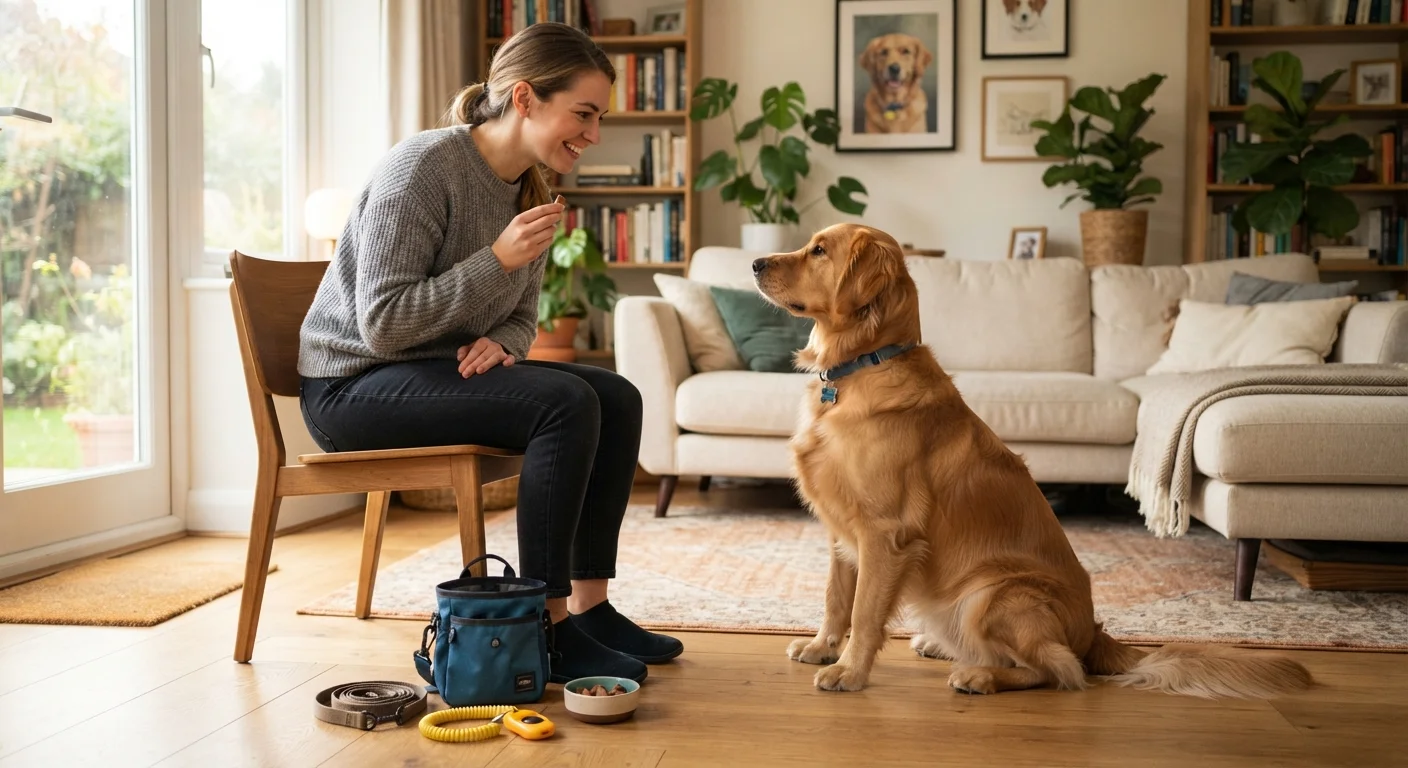
Tools and Resources to Have on Hand
You don't need an expensive kit to train effectively, but having the right items ready before you start prevents mid-session interruptions that break your pet's focus — and yours.
Treat Pouch or Bait Bag
Keeps high-value treats accessible at your hip so reward delivery is fast and doesn't break the training flow.
Clicker or Marker Word
Marks the exact moment your pet performs the correct behavior, creating a precise communication bridge between action and reward.
Standard 4–6 Foot Leash
Provides safe management during early training sessions, especially for recall and leash manners work.
Mat or Designated Spot
Gives your pet a clearly defined place to perform stationary behaviors like 'stay' or 'go to your place.'
Training Log or Notebook
Tracks which behaviors were practiced, what reward value was used, and where your pet excelled or struggled each session.
Avoid Aversive Tools Without Professional Guidance
Choke chains, prong collars, and shock devices are not recommended as starting tools and can cause fear, pain, and lasting behavioral damage when misused. Current guidance from veterinary behavior organizations supports reward-based methods as the safest and most effective foundation. If you're working through a difficult behavioral issue, consult a certified professional trainer before introducing any tool that applies physical pressure or discomfort.
If you're weighing whether to train at home alone or with professional guidance, the group classes vs. private instruction comparison can help you decide which format fits your dog's needs and your schedule.
Setting Household Rules Everyone Will Follow
Inconsistency is one of the most common reasons training plateaus. If one family member allows the dog on the couch and another enforces an off-limits rule, the animal learns that rules are negotiable — and that understanding spreads to everything else you're trying to teach.
Before training begins, gather every person who regularly interacts with your pet and align on a short list of non-negotiable household rules: which furniture is allowed, how greetings happen, what behaviors get rewarded, and what gets redirected. Write it down and post it somewhere visible.
This kind of structured consistency at home also supports your pet's overall wellbeing. The common ways owners accidentally undermine their pet's health piece highlights how seemingly small inconsistencies — including mixed signals during training — can compound over time.
Mixed Signals Undo Training Progress
When household members use different cues for the same behavior — or reward and correct the same action inconsistently — your pet learns that rules are context-dependent. This makes every skill harder to solidify and can cause frustration in both the animal and the trainer. Consistency isn't just helpful; it's the single biggest driver of how quickly a dog learns and retains new behavior.
This article provides general training preparation guidance for informational purposes. For behavioral concerns, anxiety, or aggression, consult a certified professional trainer or veterinary behaviorist.
The content on this site is for informational purposes only and is not a substitute for professional advice. Always consult a qualified professional for guidance specific to your situation.