

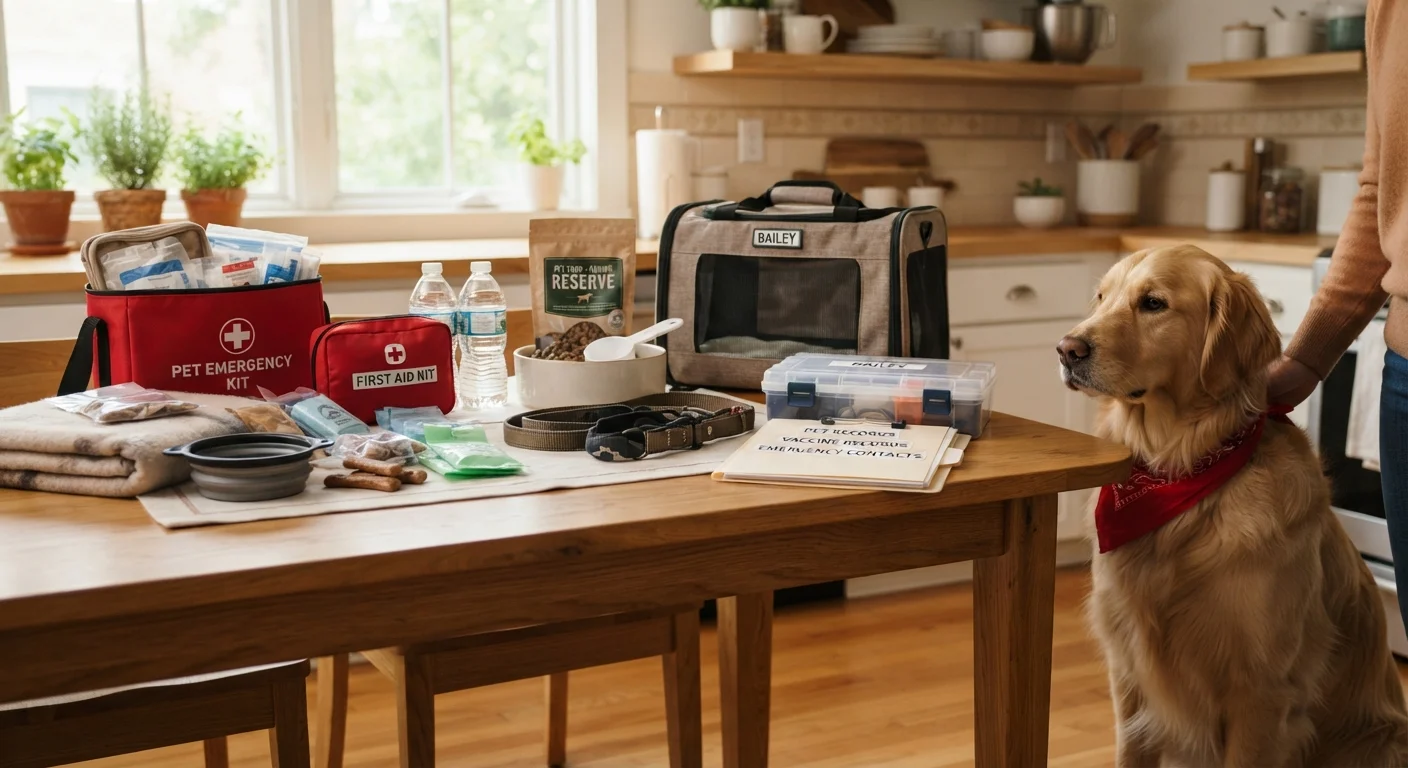
Summary
24 items · 45–90 minutes to fully assemble and verify
Why Pet Emergency Preparedness Can't Wait
Most pet owners think about emergencies in the abstract — something that happens to others. But natural disasters, house fires, sudden illness, and accidents don't announce themselves. When a crisis hits, the decisions you make in the first few minutes matter enormously for your animal's survival and well-being.
Preparedness isn't about catastrophizing. It's about making calm, rational decisions now so you don't have to improvise under stress later. This checklist is designed to help you audit what you have, identify what's missing, and build a plan that actually works for your household and your specific pet.
If you're newer to pet ownership, it's worth reviewing our foundational guide for first-time pet owners alongside this checklist. And since emergencies at home can involve household hazards too, the room-by-room pet hazard checklist is a smart companion resource.
When to Call a Veterinarian Immediately
Some emergencies cannot wait for a scheduled appointment. Seek emergency veterinary care right away if your pet is having difficulty breathing, has uncontrolled bleeding, is unconscious or unresponsive, is having a seizure, may have ingested a toxin, or is unable to stand. Keep an emergency vet's number saved in your phone at all times — not just in a document at home.
What You'll Need Before You Start
Before working through the checklist, gather the tools and supplies listed below. Having everything on hand means you can build your emergency kit in a single session rather than piecing it together over days.
Hard-sided or soft-sided pet carrier
Provides safe, secure transport for your pet during evacuation or emergency vet visits.
Waterproof document folder or resealable bag
Keeps veterinary records, vaccination history, and ID documents dry and organized.
Pet first-aid kit
Supplies basic wound care, temperature measurement, and stabilization materials for pet health emergencies.
Airtight food storage container
Preserves an emergency food supply and protects it from moisture and pests.
Portable water containers
Store clean drinking water for your pet during periods when tap water may be unavailable.
Microchip scanner app or registry account
Allows you to quickly verify your pet's microchip registration and update contact details online.
If you travel with your pet regularly, preparing your vehicle for long trips is another layer of readiness worth building into your routine.
The Full Emergency Preparedness Checklist
Work through each group below and check off items as you confirm them. Items marked must are non-negotiable. Should items are strongly recommended for most households. Nice-to-have items add meaningful protection and are worth adding when you can.
Identification & Documentation
Emergency Supply Kit
Evacuation Readiness
Veterinary & Health Planning
Household Communication Plan
Never Leave Pets Behind During Evacuation Orders
Leaving a pet behind during a mandatory evacuation puts both the animal and potential rescuers at serious risk. Many animals who survive initial disasters are lost, injured, or unable to find food and water afterward. Plan ahead so you have a carrier, supplies, and a destination that accepts pets — never assume you will be able to return quickly.
Keeping Your Preparedness Plan Current
Building the kit is only step one. Emergency supplies expire, medications run out, and your pet's needs change with age. Set a calendar reminder every six months to rotate food and water supplies, check medication expiration dates, and update veterinary records.
Share the plan with everyone in your household. If an emergency happens while you're not home, another adult — or even an older child — should know where the kit is stored, which vet to call, and how to safely transport your pet.
Consistent daily routines also build the foundation for crisis resilience. Our guide on pet care routines that hold up under a busy schedule can help you integrate preparedness checks into an already-busy life. For a broader view of what responsible ownership involves day to day, see everything that goes into responsible daily pet ownership.
This article provides general preparedness information for educational purposes only. For guidance specific to your pet's health, medications, or medical conditions, consult a licensed veterinarian.
The content on this site is for informational purposes only and is not a substitute for professional advice. Always consult a qualified professional for guidance specific to your situation.