

Our Verdict
A minimalist skincare routine is a genuinely smart choice for many people — especially those prone to irritation, overwhelmed by shelves of products, or working with a tight budget. It strips away the noise and makes consistency easy. That said, if you have specific skin concerns that require targeted active ingredients, a three-step routine may not get you all the way there, and that's worth knowing upfront.
Best for people who want a sustainable, low-maintenance daily habit and whose primary skin goals are cleanliness, hydration, and sun protection.
What 'Minimalist Skincare' Actually Means
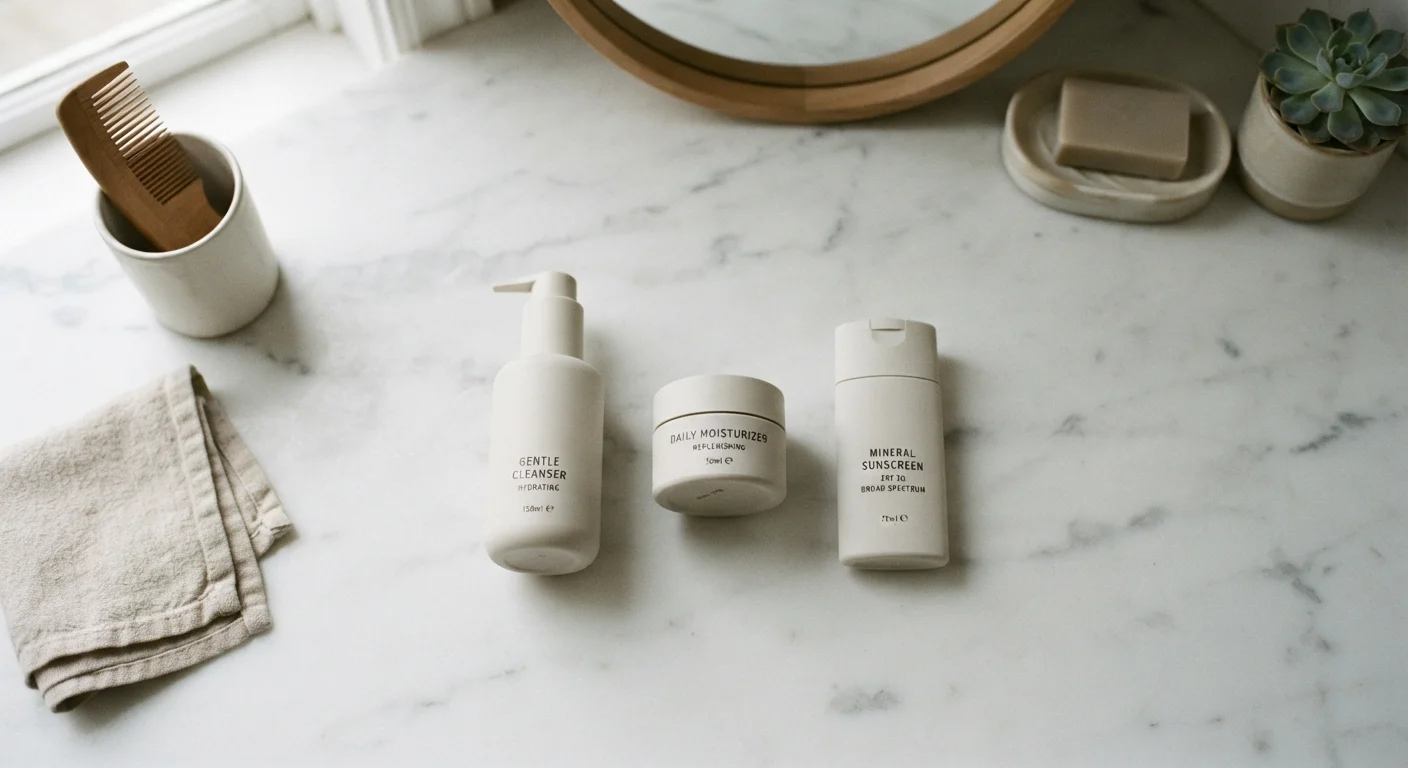
A minimalist skincare routine usually comes down to three steps: a gentle cleanser, a moisturizer suited to your skin type, and a broad-spectrum SPF during the day. That's it. No serums, no toners, no essences, no weekly acid peels — just the core trio that dermatologists widely agree forms the foundation of healthy skin.
The appeal is obvious. Three products take roughly two minutes to apply, cost far less than a ten-step regimen, and leave almost no room for ingredient conflicts. For a fuller look at what those foundational products are and why they matter, our step-by-step everyday routine guide walks through each layer in plain terms.
Before weighing the tradeoffs, it helps to be honest about what you're actually comparing: a curated three-step habit versus a multi-product routine built around targeted actives like retinoids, vitamin C, or niacinamide. Both can work — they just serve different goals.
The Real Advantages of Going Minimal
The benefits of a pared-down routine go well beyond saving counter space.
Lower cost with fewer products to purchase
Three well-chosen products cost a fraction of a multi-step regimen. Over a year, that difference in spending can be significant, especially when products are replenished regularly.
Dramatically reduces decision fatigue each day
A short routine requires almost no mental energy to execute, making it easier to stay consistent — and consistency is what actually produces results over time.
Lowers the risk of ingredient overload and irritation
Using fewer products means fewer active ingredients interacting on your skin, which reduces the likelihood of sensitivity reactions, especially for those with reactive or barrier-compromised skin.
Easy to troubleshoot when your skin reacts
With only three variables, identifying the source of a breakout or flare-up is straightforward. Narrow ingredient lists are especially helpful when introducing skincare to a new routine.
Sustainable for busy or routine-averse people
A two-minute routine is one almost anyone can maintain regardless of schedule, energy level, or lifestyle — which matters more than any individual product's efficacy.
3–5 min
Average time for a three-step routine
Skincare educators commonly estimate that a cleanser-moisturizer-SPF routine takes under five minutes, making morning consistency far more achievable.
60%+
Of product reactions linked to multiple-product use
Dermatology practitioners frequently note that ingredient interactions across multiple products are among the most common causes of unexpected skin sensitivity.
One underappreciated upside: when something goes wrong — a breakout, sudden dryness, redness — it's far easier to identify the culprit when you only have three products in play. With a ten-step routine, isolating a reaction can take weeks of elimination testing.
Minimalism also pairs naturally with the kind of financial mindfulness covered in our saving and debt hub. Skincare spending adds up quickly, and choosing fewer, well-chosen products is one practical way to keep those costs in check without sacrificing skin health.
Where a Minimalist Routine Falls Short
A three-step routine handles the basics beautifully, but it has real gaps — and being honest about them is more useful than pretending they don't exist.
Limited ability to target specific skin concerns
Concerns like hyperpigmentation, persistent acne, or fine lines often require targeted actives — retinoids, vitamin C, or salicylic acid — that a basic three-step routine simply doesn't include.
May be insufficient for dry or aging skin types
People with significant dryness or mature skin often benefit from additional layers like a hydrating serum or facial oil that a minimalist routine typically omits.
Slower visible results for people with complex concerns
If your goals go beyond basic skin health — evening tone, reducing texture, managing sebum — a more targeted routine will generally deliver more noticeable changes over time.
Requires careful product selection to work well
When you're relying on only three products, the quality and suitability of each one matters more. A poorly matched cleanser or moisturizer has nowhere to hide in a minimal lineup.
Minimal Doesn't Mean One-Size-Fits-All
A minimalist routine still needs to be tailored to your skin type. Someone with oily, acne-prone skin needs a very different cleanser and moisturizer than someone with dry or sensitive skin. 'Minimal' refers to the number of steps, not the thought behind them. If you're unsure where to start, a consultation with a dermatologist can help you identify which three products are actually right for your skin.
If targeted treatment is a priority for you, our guide to what to stock and what to skip can help you add one or two actives strategically without spiraling into a ten-product overhaul. The goal isn't minimalism for its own sake — it's efficiency.
How to Decide What's Right for Your Skin
The honest answer is that your skin's needs — not a philosophy — should drive your routine length. A minimalist approach is a strong starting point for nearly everyone, including those building a consistent morning personal care routine from scratch. Consistency with a simple plan beats sporadic commitment to a complex one, every time.
If you're managing a specific concern — persistent acne, post-inflammatory marks, or visible signs of aging — consider adding a single targeted product rather than overhauling your entire routine. And if you're curious about adding exfoliation, our comparison of chemical exfoliants and physical scrubs explains the differences in practical terms before you commit to anything.
Start with the three essentials, give them four to six weeks, and let your skin tell you what it needs next.
This article is for general informational and educational purposes only. It is not a substitute for personalized advice from a licensed dermatologist or healthcare professional. If you have a skin condition or concern, please consult a qualified provider.
The content on this site is for informational purposes only and is not a substitute for professional advice. Always consult a qualified professional for guidance specific to your situation.