

Why Routines Fail — and How to Build One That Won't
Most morning routines collapse not because people lack motivation, but because the routine was too ambitious from day one. A 12-step regimen launched on a Monday tends to be a distant memory by Friday. The fix isn't discipline — it's design.
A sustainable routine has three qualities: it's short enough to complete on bad mornings, sequenced so each step flows naturally into the next, and anchored to existing habits rather than bolted on as a separate project. Think of it as building infrastructure, not performing a ritual.
The steps below cover the core personal care categories — skin, oral care, body, and hair — in a sequence that minimizes backtracking and wasted time. You won't need a packed shelf or an hour of free time. Most people can complete this routine in 10 to 20 minutes.
What you will need
Habit Stacking Makes It Stick
Attach new routine steps to things you already do automatically — brushing teeth after making coffee, applying SPF right after moisturizing. Behavior researchers sometimes call this 'habit stacking,' and it's one of the most reliable ways to build consistency without willpower. Start with just two or three steps if the full routine feels overwhelming; you can layer in the rest over a few weeks.
Your Morning Routine, Step by Step
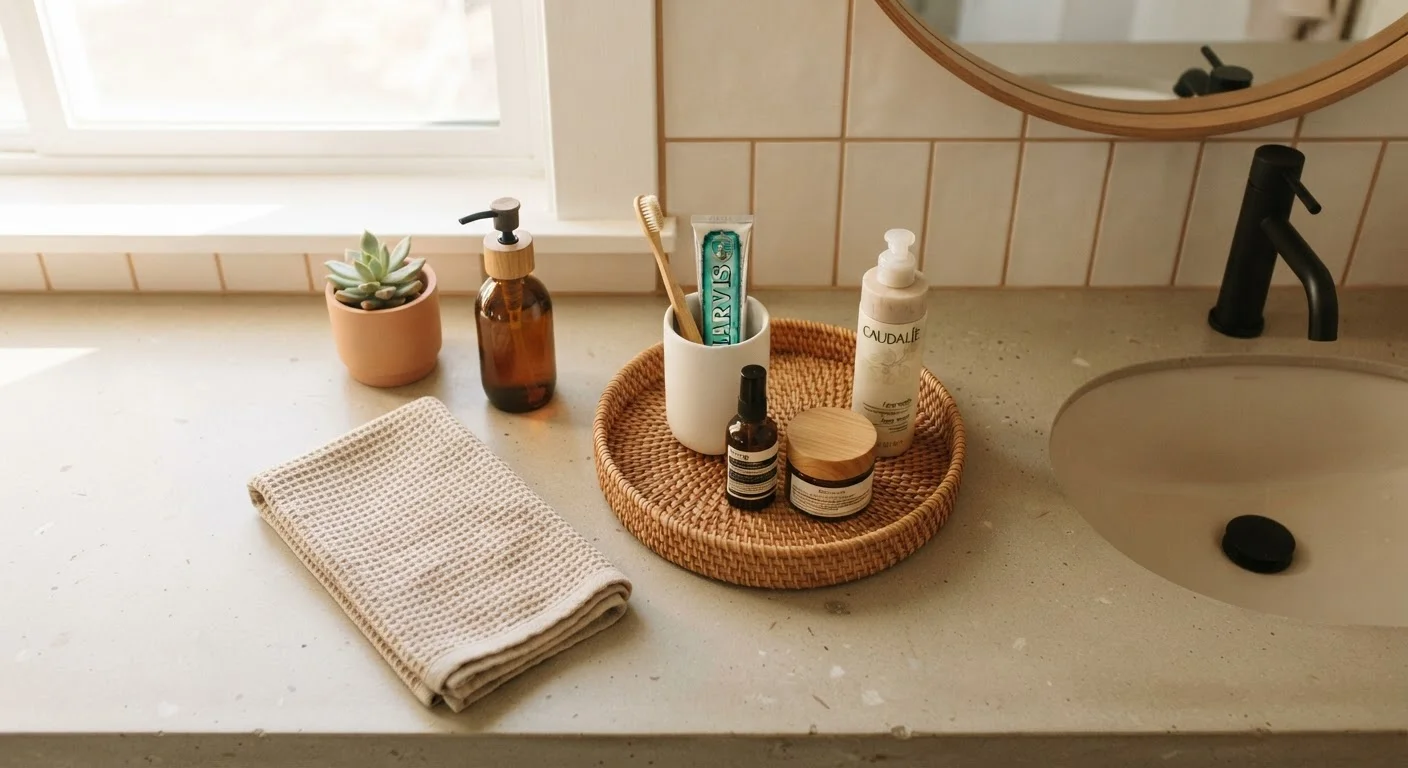
Gather what you need the night before if possible — having your products within easy reach removes small friction points that can derail a new habit. Here's what you'll need:
Gentle face cleanser
Removes overnight oil buildup and prepares skin for subsequent products.
Moisturizer with broad-spectrum SPF
Hydrates skin and provides daily UV protection in a single step.
Fluoride toothpaste
Helps prevent cavities and supports overall oral health when used twice daily.
Dental floss or interdental picks
Removes plaque and food debris from between teeth that brushing misses.
Deodorant or antiperspirant
Controls body odor and, in the case of antiperspirant, reduces perspiration.
Lip balm with SPF
Protects lips from UV exposure and prevents dryness throughout the day.
Rinse or wash your face
Splash your face with lukewarm water, then apply a small amount of gentle cleanser using your fingertips. Work it in for about 30 seconds, then rinse thoroughly. Pat — don't rub — dry with a clean towel.
If your skin tends to feel tight after washing, consider a cream or milk cleanser. If it leans oily, a gel formula often works well. For a deeper look at building out your skincare sequence, see our everyday skincare routine guide.
Apply moisturizer and sun protection
While your face is still slightly damp, apply a moisturizer. If yours doesn't include SPF, follow with a broad-spectrum sunscreen of at least SPF 30. Allow it to absorb for a minute before applying any makeup or heading outside.
Daily sun protection is one of the most evidence-supported habits for long-term skin health. It applies year-round, not just on sunny days.
Brush and floss your teeth
Brush for a full two minutes using a soft-bristled toothbrush and fluoride toothpaste. Use gentle, circular motions rather than aggressive back-and-forth scrubbing. Then floss between every tooth — this step removes plaque that brushing simply can't reach.
If you want to understand common mistakes that undermine even a regular brushing habit, oral hygiene habits most adults get wrong is worth a read.
Apply deodorant or antiperspirant
Apply your deodorant or antiperspirant after dressing. If you use an antiperspirant, applying it to completely dry underarms improves absorption. Give it a moment to dry before putting on your top layer.
Attend to hair basics
Whether you wash your hair every morning or every few days depends on your hair type and preference. At minimum, take a moment to style or tidy your hair so it's intentional rather than an afterthought. Even a quick comb-through or application of a styling product takes under two minutes.
Not sure how often to wash or what your hair actually needs? Our first-timer's haircare guide breaks it down by hair type.
Do a quick head-to-toe check
Before you head out, take 60 seconds to verify the basics: nails are clean, any visible skin concerns are addressed, and you feel put-together. This is a habit audit in micro-form — and it catches the things that slip through on busy mornings.
For a more thorough version of this self-check, the daily personal care audit checklist gives you a quick, comprehensive reference.
Don't Skip SPF on Overcast Days
UV rays penetrate cloud cover and can affect skin even when it doesn't feel sunny. Skipping sunscreen on cloudy or cold days is one of the most common personal care missteps. Make SPF a daily non-negotiable rather than a seasonal habit — your future self will thank you.
Skin or Oral Concerns Deserve Professional Input
This article covers general personal care habits for healthy adults. If you're experiencing persistent skin issues, dental pain, or any symptoms that concern you, please consult a qualified dermatologist or dentist. General guidance is not a substitute for professional evaluation tailored to your individual situation.
Once these steps feel automatic — usually after two to four weeks of consistency — you can consider adding anything more specialized, like a targeted serum or a tongue scraper for oral care. For guidance on expanding your skincare shelf without overdoing it, starting a skincare routine: what to stock and what to skip is a helpful next read. And if you're building other positive daily habits alongside your personal care routine, the daily mental wellness routine guide offers practical, evidence-informed strategies that pair well.
This article is for general informational purposes only and does not constitute medical or professional healthcare advice. Consult a qualified healthcare provider for personal health concerns.
The content on this site is for informational purposes only and is not a substitute for professional advice. Always consult a qualified professional for guidance specific to your situation.