

Summary
18 items · 20–35 minutes
Why Most Beginners Overbuy
Walk into any beauty aisle and you'll face dozens of serums, toners, essences, exfoliants, and masks — each promising transformation. It's genuinely overwhelming, and that overwhelm leads most beginners to either buy everything at once or give up entirely. Neither outcome serves your skin.
The good news: dermatologists and estheticians consistently agree that a short, consistent routine beats an elaborate one you'll abandon by week two. This checklist is designed to help you identify exactly what belongs on your shelf — and what you can confidently leave behind, at least for now.
Before you start shopping, it helps to know your basic skin type: oily, dry, combination, or sensitive. You don't need a clinical diagnosis — a quick observation after washing your face (no products applied) will reveal a lot. If you're curious about which ingredients to look for once you have the basics down, our ingredients reference guide breaks down the most common label terms in plain English.
Must Stock — The Core Four
Should Consider — Useful Add-Ons
Skip for Now — Premature Purchases
Application & Habit Checks
How to Use This Checklist
Work through the groups in order. The Must Stock items form your non-negotiable foundation — get these right before adding anything else. Should Consider items are genuinely useful additions once your skin has adjusted. Skip for Now items aren't bad products; they're simply unnecessary until you have a baseline routine running smoothly.
Don't Stack Actives Right Away
It's tempting to layer a vitamin C serum, a retinol, and an exfoliating acid all in week one — but combining multiple active ingredients before your skin has adjusted is a reliable path to irritation, redness, and a damaged barrier. Start with just your core four products for the first month. Add one new item at a time, spaced at least two weeks apart, so you can clearly attribute any changes to a specific product.
If you're building a morning routine around these steps, our guide on establishing a morning personal care routine offers a practical framework for making new habits stick. And if you're debating whether to keep things extremely minimal, it's worth reading the honest tradeoffs of a minimalist approach before you decide.
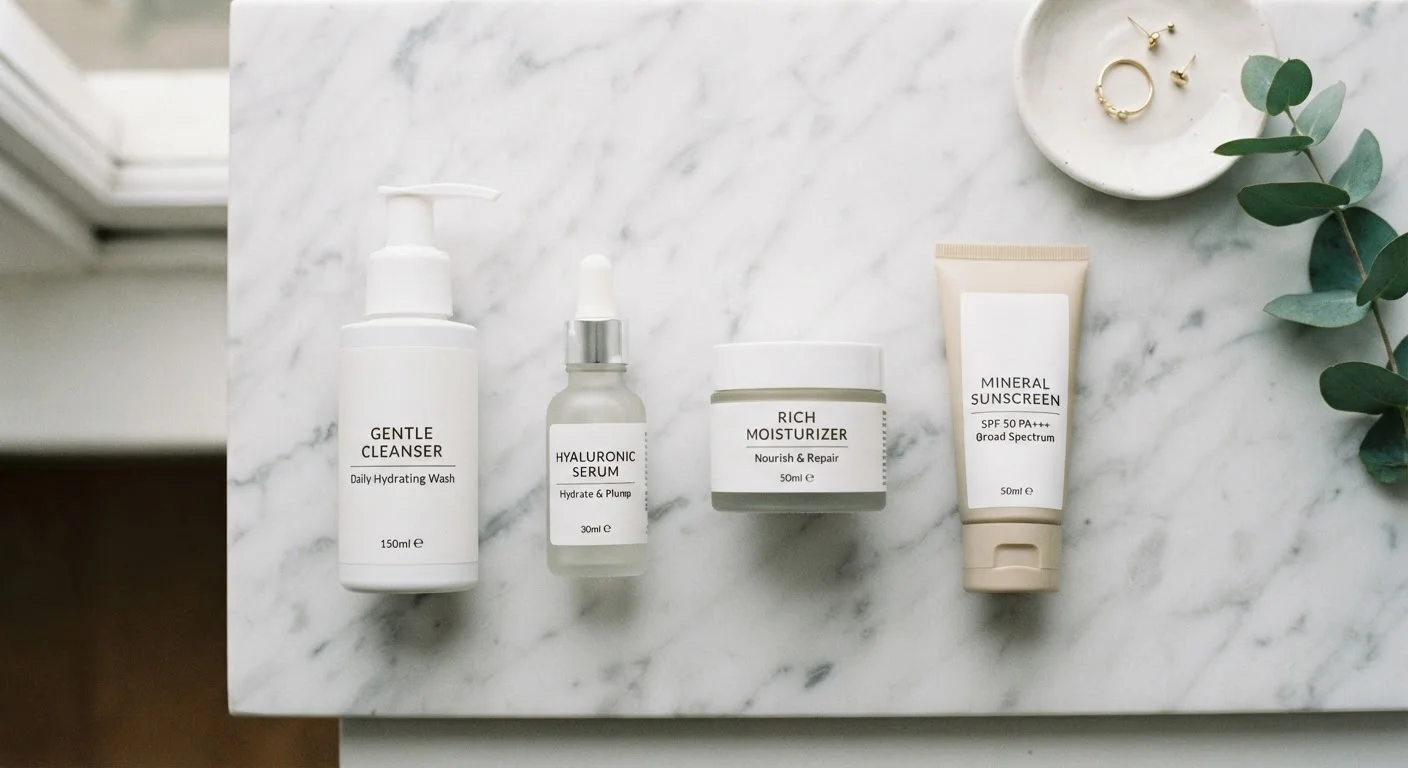
Gentle Facial Cleanser
Removes dirt, oil, and impurities without disrupting the skin's natural moisture barrier.
Daily Moisturizer
Replenishes hydration and supports the skin barrier after cleansing.
Broad-Spectrum Sunscreen (SPF 30+)
Protects skin from UVA and UVB damage during daytime hours.
Hydrating Serum (single active)
Delivers concentrated hydration or a targeted benefit once the core routine is established.
Gentle Chemical Exfoliant
Removes dead skin cell buildup to improve texture and product absorption, used one to two times per week.
This article is for general informational and educational purposes only. It is not a substitute for personalized advice from a licensed dermatologist or skincare professional. If you have a diagnosed skin condition, allergies, or concerns about a specific product, consult a qualified healthcare provider before changing your routine.
The content on this site is for informational purposes only and is not a substitute for professional advice. Always consult a qualified professional for guidance specific to your situation.