

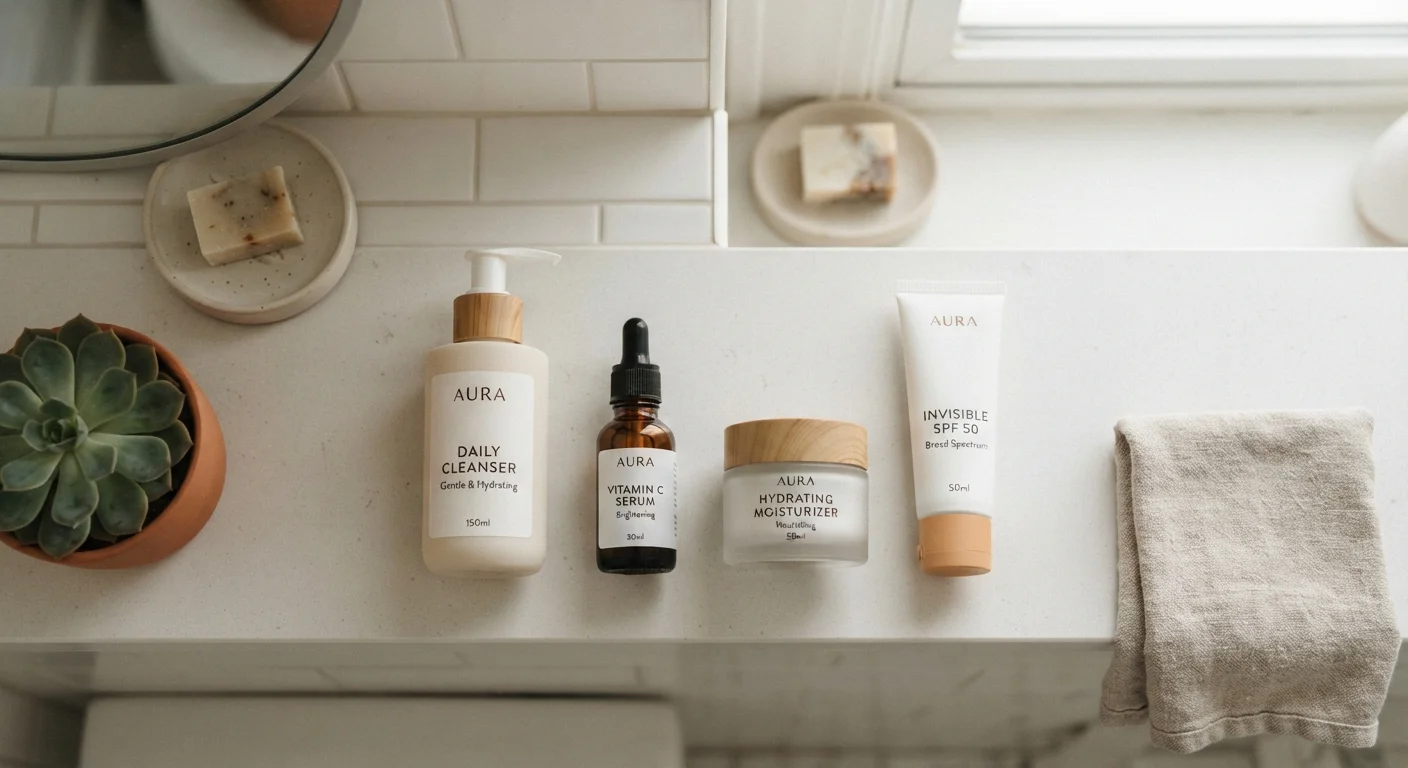
Why a Simple Routine Outperforms a Complicated One
A shelf lined with ten products might look impressive, but research and dermatological guidance consistently point to the same conclusion: a handful of well-chosen steps, applied consistently, delivers better results than an elaborate lineup used sporadically. Skin needs time to adapt to products, and adding too much at once makes it nearly impossible to understand what's actually helping.
The framework here — cleanse, treat, moisturize, protect — covers every essential function your skin needs day to day. It's flexible enough to accommodate different skin types and concerns, and scalable if you ever want to expand it. Think of it as a foundation, not a ceiling.
For a broader look at working skincare into your morning from start to finish, the guide to building a morning personal care routine that actually sticks walks through how face care fits alongside other daily habits.
What you will need
Gentle facial cleanser
Removes dirt, oil, and surface buildup without disrupting the skin barrier.
Toner (optional)
Helps rebalance skin's pH after cleansing and preps it to absorb subsequent products.
Serum or treatment product
Delivers concentrated active ingredients (such as vitamin C or niacinamide) to address specific skin concerns.
Moisturizer
Locks in hydration and reinforces the skin barrier for both morning and evening use.
Broad-spectrum SPF 30+ sunscreen
Protects skin from UV damage every morning; the single most impactful anti-aging and skin-health step.
Eye cream
Provides targeted hydration to the delicate under-eye area, where regular moisturizer can sometimes feel too heavy.
Your Step-by-Step Routine
The steps below apply to both morning and evening with a few key differences called out along the way. Morning routines end with SPF; evening routines can go heavier on moisturizer and, when you're ready, introduce targeted treatments. Follow the thinnest-to-thickest layering rule throughout — it helps each product absorb properly rather than sitting on top of the previous one.
Cleanse your face
Use a gentle, pH-balanced cleanser suited to your skin type. Apply with damp hands using light circular motions for about 30–60 seconds, then rinse thoroughly with lukewarm water. Pat (don't rub) dry with a clean towel.
In the morning, a single gentle cleanse is usually sufficient. In the evening, if you wear makeup or SPF, consider a two-step cleanse: an oil-based cleanser first to dissolve product, followed by your regular water-based cleanser.
Apply toner (optional)
If you use a toner, apply it while your skin is still slightly damp. Dispense a small amount onto a cotton pad or into your palms and press gently across your face and neck. Skip anything with high concentrations of alcohol, which can over-dry most skin types.
Toner is genuinely optional. If your routine is already working without it, there's no need to add one. Curious whether a shorter routine might suit you better? Check out the honest breakdown of what a minimalist approach gains and gives up.
Apply any serums or treatment products
Serums are lightweight, concentrated formulas designed to address specific concerns — uneven tone, dehydration, texture, or early signs of aging. Apply a few drops and press gently into the skin; don't drag or rub.
Use the thinnest-consistency products before heavier ones. A vitamin C serum in the morning offers antioxidant protection; a niacinamide serum can help manage oil and pores any time of day.
Moisturize
Moisturizer seals in everything you've applied and keeps the skin barrier functioning well. Use a lighter, water-based formula in the morning and a slightly richer one at night if your skin tends toward dryness.
Apply while skin is still a little damp from the previous steps — this helps lock in hydration more effectively. Gently press the product in with your fingertips rather than pulling or tugging.
Apply SPF (morning only)
Sunscreen is the final morning step and arguably the most important one in your entire routine. Apply a broad-spectrum SPF 30 or higher to your face and any exposed neck skin. Use enough — about a nickel-sized amount for the face — and let it sit for a minute before applying makeup.
SPF is not just for sunny days or outdoor activities. UV rays penetrate clouds and windows, so daily use is recommended year-round by dermatologists.
Add a targeted evening treatment (optional)
Your nighttime routine is a good place for products that work best without sun exposure — such as retinoids or exfoliating acids. These are not required for a basic routine, but when you're ready to expand, the evening is the right time for them.
If you're new to these ingredients, start with the lowest available concentration and use just two or three times per week before building up frequency. Always follow with moisturizer.
Patch Test Every New Product First
Before applying anything new all over your face, dab a small amount on the inside of your wrist or behind your ear for 24–48 hours. This simple step can save you from a full-face reaction and helps you identify sensitivities early.
Don't Layer Incompatible Active Ingredients
Certain actives — such as retinoids and exfoliating acids — can cause irritation when used together in the same routine. When adding any treatment product, introduce it slowly and give your skin time to adjust before combining it with other actives.
Common Beginner Mistakes to Avoid
The most frequent stumbling block for beginners isn't choosing the wrong products — it's overcleansing. Washing your face more than twice a day can strip the skin's natural oils, weaken its protective barrier, and paradoxically trigger more breakouts or irritation. Learn more about why overcleaning backfires and what to do instead.
Another common misstep: switching products before giving them enough time to work. Most skincare products need four to six weeks of consistent use before you can fairly evaluate results. Patience and consistency are the underrated heroes of any routine.
When you feel ready to go deeper on what to stock and what to leave on the shelf, this checklist for assembling your foundational skincare setup is a practical next step.
Skincare Is Not Medical Advice
The guidance here is general educational information, not a substitute for professional dermatological care. If you're dealing with persistent acne, eczema, rosacea, or other skin conditions, please consult a licensed dermatologist for personalized recommendations.
This article is for general informational purposes only and does not constitute medical or dermatological advice. Please consult a qualified skincare professional or dermatologist for guidance specific to your skin's needs.
The content on this site is for informational purposes only and is not a substitute for professional advice. Always consult a qualified professional for guidance specific to your situation.