

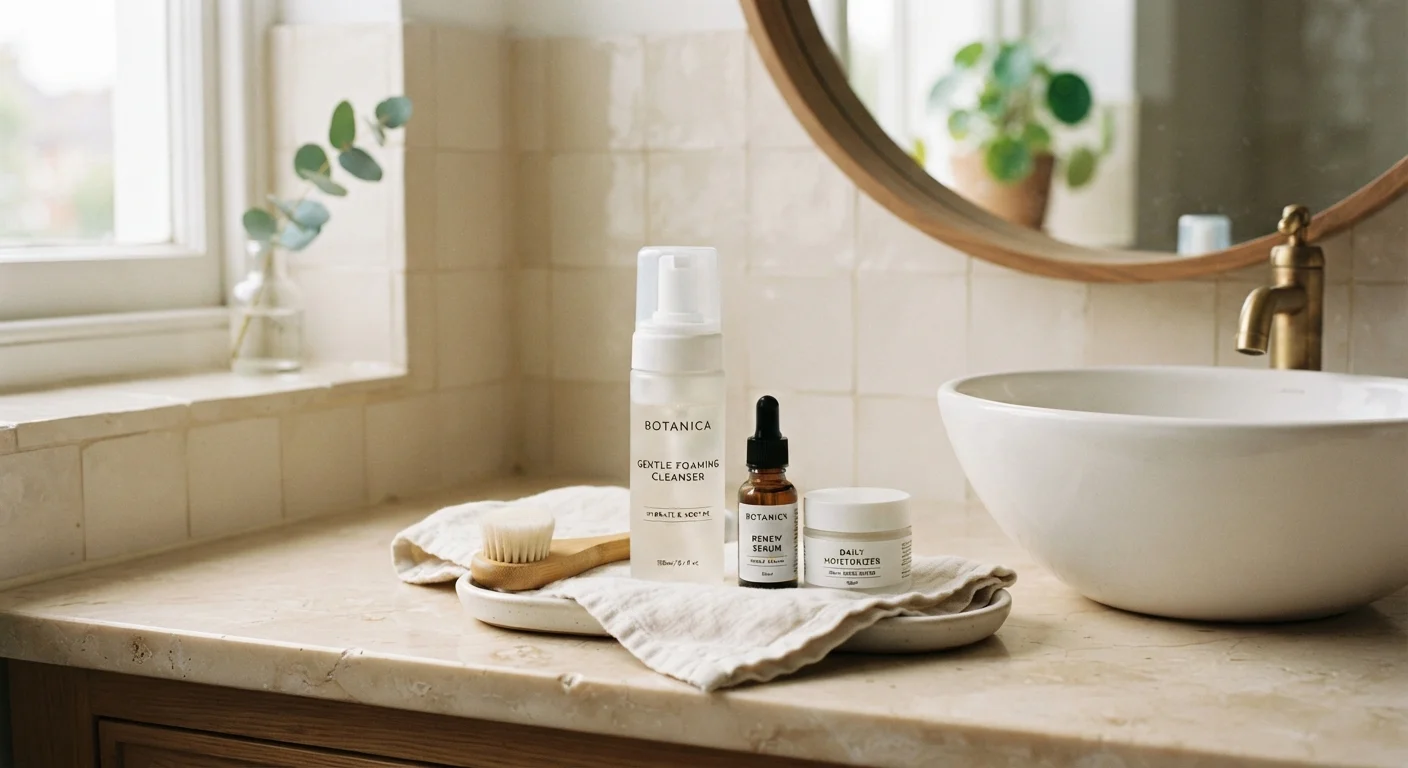
The Skin Barrier: What It Does and Why It Matters
Your skin has a built-in defense system called the skin barrier — the outermost layer of cells and lipids (natural fats) that keeps moisture in and irritants out. Think of it as a brick-and-mortar wall: the skin cells are the bricks, and the lipids are the mortar holding everything together. When that mortar gets worn away, the wall starts to crumble.
Over-cleansing is one of the most common ways that barrier gets compromised. Cleansers — especially foaming or strongly alkaline ones — are designed to remove oil, dirt, and makeup. Used once or twice a day with the right formula, they do exactly that. Used too often or too aggressively, they start removing the lipids your skin actually needs to stay healthy.
The result? Skin that feels tight, looks flaky, produces excess oil (your body's compensatory response), and is far more reactive to everything else you put on it. If you want to understand your skin type more deeply before adjusting your routine, our guide to skin types can help you identify what you're actually working with.
Common Over-Cleansing Mistakes — and How to Fix Them
The good news is that most over-cleansing mistakes are easy to correct once you spot them. Here are the patterns we see most often:
Washing your face more than twice a day to control oiliness or prevent breakouts.
Why it happens: Shiny skin feels unclean, so the instinct is to wash more. Many people assume excess oil means excess dirt.
Using very hot water to wash your face, believing it 'opens pores' for a deeper clean.
Why it happens: The idea that steam or hot water opens pores is a persistent myth. It feels thorough, so it must be doing more — right?
Choosing a cleanser based on how 'squeaky clean' the skin feels afterward.
Why it happens: That tight, squeaky feeling has been marketed as freshness and cleanliness for decades. It genuinely feels like something worked.
Scrubbing the face vigorously with a washcloth, brush, or exfoliating cleanser every day.
Why it happens: Physical exfoliation feels satisfying and immediately smoothing, which reads as effective. Daily exfoliation sounds like due diligence.
Using an alcohol-heavy toner immediately after cleansing to 'finish' the clean.
Why it happens: Toners with high alcohol content give a cooling, tight sensation that feels like a final sweep of cleanliness.
If you've been unknowingly repeating some of these patterns, you're far from alone. Many of these habits are actually reinforced by well-meaning but outdated advice — and our roundup of skincare myths dermatologists keep correcting addresses several of them directly.
What Recovery Actually Looks Like
Scaling back your cleansing routine can feel counterintuitive — especially if your skin has been oily or breaking out. But that excess oil and those breakouts are often symptoms of a disrupted barrier, not proof that you need to clean more.
~15
Days for skin barrier to begin recovery
Dermatological research generally suggests that a compromised skin barrier can begin showing signs of recovery within roughly two weeks of a gentler regimen.
2x
Daily cleansing is typically sufficient
Most dermatologists recommend cleansing no more than twice daily — once in the morning and once at night — for the majority of skin types.
When you simplify your routine, expect a brief adjustment period of one to two weeks where skin may continue to feel off-balance. That's normal. During this window, a fragrance-free, gentle cleanser used morning and evening (or even just at night if your mornings are low-activity) is usually enough. Pair it with a simple moisturizer to help restore lipids — you don't need a ten-step lineup.
For a clear framework on building a routine from scratch, see The Everyday Skincare Routine, Step by Step. And if you're curious how the same over-washing logic applies to your body, the science behind daily showering is a worthwhile read.
Persistent Skin Issues Deserve Professional Attention
If your skin remains inflamed, excessively flaky, or breaking out despite simplifying your routine, those symptoms may have an underlying cause — like eczema, rosacea, or hormonal factors — that goes beyond cleansing habits. A board-certified dermatologist can assess what's actually going on and recommend appropriate care. Don't self-diagnose or self-treat persistent skin conditions.
This article is for general informational purposes only and is not a substitute for personalized advice from a licensed dermatologist or healthcare provider. If you are experiencing persistent or severe skin concerns, please consult a qualified professional.
The content on this site is for informational purposes only and is not a substitute for professional advice. Always consult a qualified professional for guidance specific to your situation.