

Why Skincare Myths Are So Hard to Shake
Skincare advice travels fast — through social media feeds, family wisdom, and beauty marketing that blurs the line between science and sales pitch. The result is a landscape full of well-meaning but inaccurate beliefs that can actually slow down your skin's progress. Understanding what's true (and what isn't) is the single most practical thing you can do for your routine.
The good news? Most solid skincare science is straightforward once you strip away the noise. The myth-busting below draws on what dermatologists consistently communicate to patients. For a broader look at how stubborn misinformation works across wellness topics, see our piece on fitness myths that refuse to die.
Myth
Drinking more water will clear up dry skin.
Fact
Hydration from within supports general health, but dry skin is primarily a barrier function issue — not a hydration deficit you can drink away.
Dry skin happens when the outer layer of skin (the stratum corneum) loses moisture faster than it retains it, often due to environmental factors, genetics, or a compromised skin barrier. While staying adequately hydrated is important for overall health, studies have not established a direct link between increased water intake and improved skin hydration in people who are not clinically dehydrated. What does work: applying a moisturizer to damp skin to lock in moisture, and choosing formulas that contain barrier-supporting ingredients like ceramides, glycerin, or hyaluronic acid.
Myth
You can shrink your pores with the right product or steam treatment.
Fact
Pore size is largely determined by genetics and skin elasticity — no topical product physically shrinks them.
Pores are not muscles; they cannot open or close in response to temperature. Steam, cold water, and pore-minimizing toners do not alter pore size. What they can do is temporarily affect how pores look. Keeping pores clear of excess oil and debris — through consistent, gentle cleansing and occasional exfoliation — makes them appear less prominent. Retinoids, used consistently over time, may improve skin texture and elasticity in ways that reduce the appearance of larger pores, but even these do not change underlying pore anatomy. You can read more about common related misconceptions in our roundup of personal care myths dermatologists keep debunking.
Myth
Sunscreen is only necessary on sunny days or during summer.
Fact
UV radiation reaches your skin year-round, including on overcast days and through car windows.
UVA rays — the type most associated with premature aging and deeper skin damage — penetrate clouds and glass and are present at relatively consistent levels throughout the year, regardless of season or perceived brightness. UVB rays, which cause sunburn, are stronger in summer but are present year-round at varying intensities. Dermatologists widely recommend a broad-spectrum SPF 30 or higher as a daily step regardless of the season or whether you plan to spend time outdoors. This single habit is consistently cited as the most evidence-supported anti-aging measure available.
Myth
Natural or "clean" ingredients are always gentler and safer than synthetic ones.
Fact
Whether an ingredient is naturally derived has no bearing on how well it performs or how irritating it might be.
Poison ivy is natural. So is arsenic. The idea that "natural" equals safe is a marketing concept, not a scientific one. Many well-researched synthetic ingredients — like niacinamide, peptides, or certain sunscreen filters — have strong safety and efficacy profiles. Conversely, some plant-derived ingredients (citrus oils, certain essential oils, fragrant botanicals) are among the most common causes of contact dermatitis and skin sensitization. What matters is how an ingredient behaves on skin, at what concentration, and in what formulation — not its origin.
Myth
Exfoliating more often will give you clearer, smoother skin faster.
Fact
Over-exfoliating disrupts the skin's protective barrier and can cause redness, breakouts, and increased sensitivity.
Exfoliation — whether physical (scrubs) or chemical (acids like AHAs and BHAs) — removes dead skin cells and can improve texture and tone when used appropriately. But skin needs time to complete its natural cell-turnover cycle. Exfoliating too frequently strips away cells that haven't finished their job, weakening the skin barrier. Signs of over-exfoliation include persistent redness, tightness, flakiness, or a sudden increase in breakouts. For most skin types, one to three times per week is a general guideline — but the right frequency varies considerably based on your skin type and the specific product concentration.
Building a Routine on What Actually Works
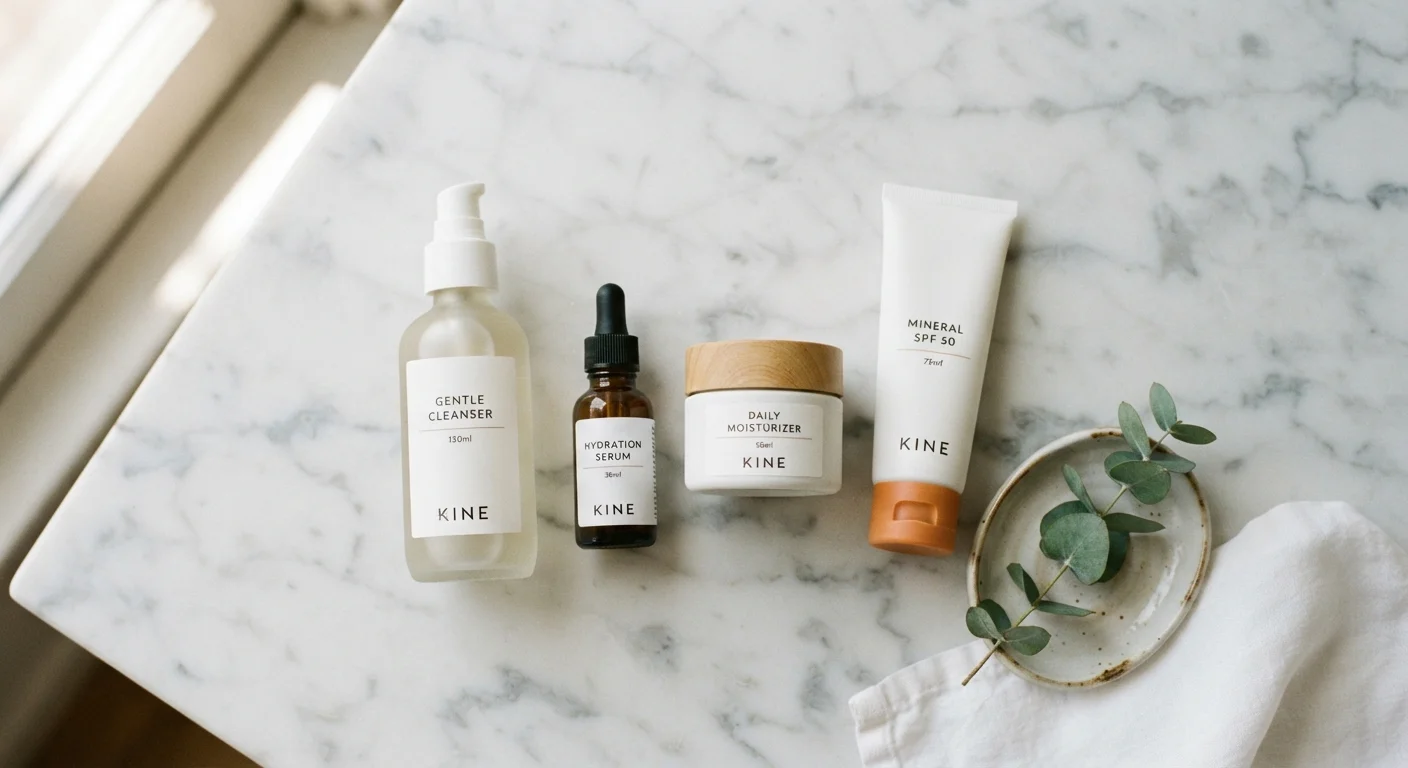
Once you clear out the myths, a reliable routine gets a lot simpler. Most dermatologists land on the same short list of cornerstones: a gentle cleanser, a moisturizer suited to your skin type, and a broad-spectrum SPF applied daily. From there, targeted ingredients — like retinoids, niacinamide, or vitamin C — can be added based on specific concerns rather than trend cycles.
More Products Don't Mean Better Results
A 10-step routine is not inherently more effective than a three-step one. Layering too many active ingredients — especially acids, retinoids, and vitamin C together — can cause irritation, barrier damage, and make it nearly impossible to identify what is or isn't working. When starting something new, introduce one product at a time and give it at least four to six weeks before evaluating results.
If layering products feels confusing, it usually comes down to understanding what each product is designed to do. Our guide to moisturizer vs. serum breaks down the role of each step clearly. And because skin needs genuinely shift with the weather, adapting your routine each season can prevent a lot of unnecessary dryness or breakouts. You might also be surprised how much your cleansing habits matter — our article on daily showering and skin health covers what over-washing can do to your skin barrier.
90%
Of visible skin aging attributed to UV exposure
According to research widely cited by dermatological associations, the majority of premature skin aging — wrinkles, dark spots, loss of elasticity — is linked to cumulative sun exposure rather than chronological age.
~28 days
Average skin cell turnover cycle in adults
Skin cells typically take around 28 days to move from the lower layers to the surface, which is why consistent routines — not rapid results — are the standard expectation with most topical skincare ingredients.
This article is for general informational purposes only and is not a substitute for professional medical or dermatological advice. If you have persistent skin concerns, consult a qualified healthcare provider or board-certified dermatologist.
The content on this site is for informational purposes only and is not a substitute for professional advice. Always consult a qualified professional for guidance specific to your situation.