

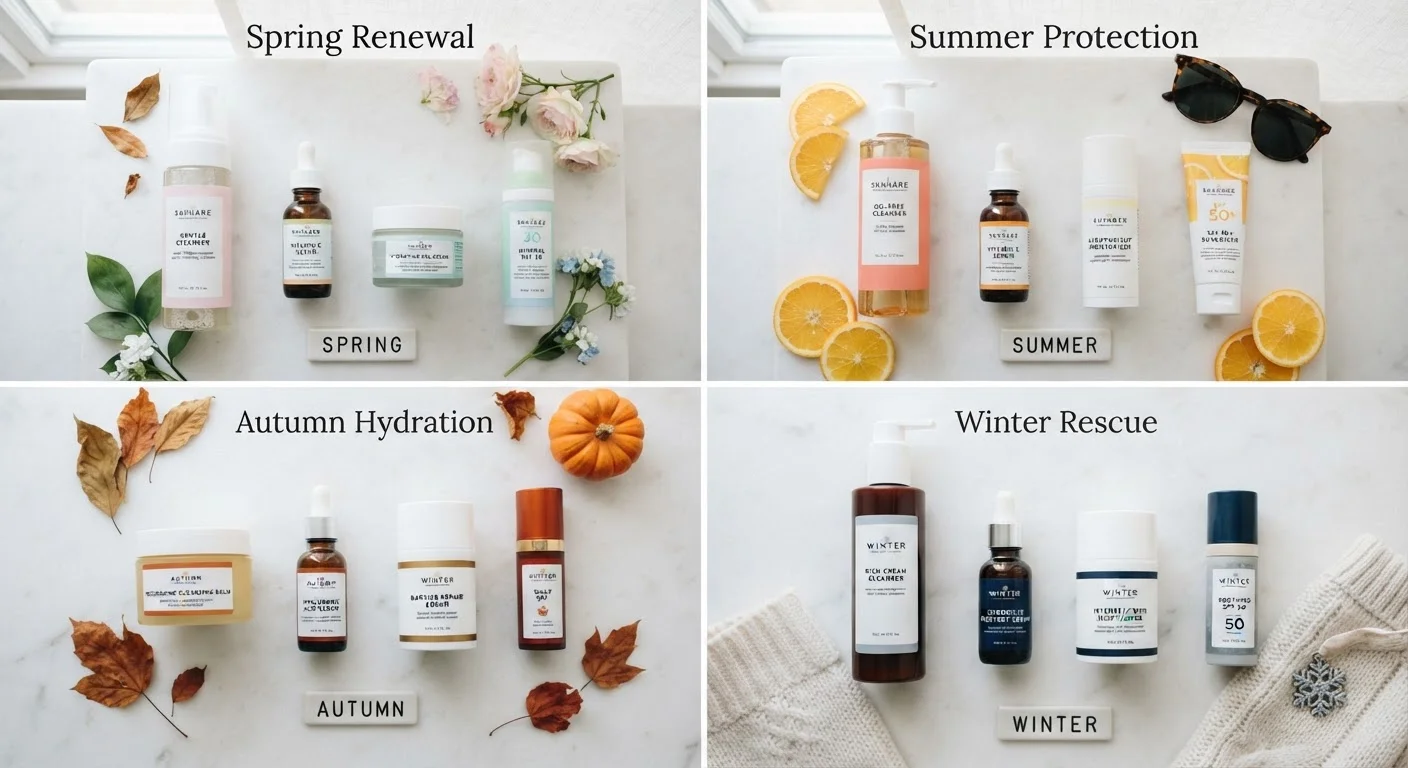
Why Your Skin Behaves Differently in Each Season
Your skin is your body's largest organ, and it responds directly to its environment. Temperature, humidity, wind, UV intensity, and even indoor heating all influence how much oil your skin produces, how quickly moisture evaporates from its surface, and how sensitive it can become. Understanding these shifts is the first step toward a routine that actually works year-round.
Think of seasonal skincare not as overhauling your entire routine four times a year, but as making thoughtful, targeted adjustments to what you already do. The fundamentals — gentle cleansing, moisturizing, and sun protection — stay constant. What changes is the weight of your products and how you layer them. This is much like how seasonal wardrobe transitions work: you adapt what you have rather than starting from scratch.
80%
UV rays reflected by fresh snow
According to the World Health Organization, snow can reflect up to 80% of UV radiation, significantly increasing exposure in winter months.
~30–40%
Drop in skin hydration in low humidity
Research published in dermatology literature notes that skin hydration levels can decrease substantially when relative humidity falls below 30–40%, a common indoor condition in winter.
Best Practices for Seasonal Skin Adaptation
These core practices will help you keep your skin balanced and comfortable no matter what the calendar says. Adjust gradually — rapid product swaps can cause unnecessary irritation.
Switch moisturizer weight with the seasons, not your entire routine.
Cold air holds less moisture, and indoor heating pulls water from the skin's surface — a process called transepidermal water loss. A richer, occlusive moisturizer in winter creates a protective barrier that a lightweight summer lotion simply can't match.
Wear broad-spectrum SPF 30 or higher every single day, including winter.
UV radiation reaches your skin even on overcast days and through car windows. Snow reflects up to 80% of UV rays, making winter sun exposure surprisingly significant. Consistent daily SPF use is one of the most well-supported practices in dermatology for maintaining long-term skin health.
Use a gentler, cream-based cleanser in colder months.
Foaming or gel cleansers that work well in summer can strip the skin's natural oils in winter, triggering dryness and irritation. Choosing a gentler formula preserves the skin barrier when it's already under environmental stress.
Introduce exfoliation gradually and scale back when skin is stressed.
Exfoliation removes dead cells and supports cell turnover, but overdoing it — especially in dry or windy weather — disrupts the skin barrier and invites sensitivity. Less is almost always more when conditions are harsh.
Adjust your lip and eye care when temperatures drop.
The skin around the eyes and on the lips is significantly thinner than the rest of the face, making it quicker to dry, crack, and show irritation. These areas need dedicated attention during transitions.
Quick Wins You Can Start Today
You don't need to wait for a seasonal change to improve your routine. These small, immediate moves make a meaningful difference in how your skin looks and feels.
If you've noticed recurring irritation regardless of season, it's worth exploring whether fragrance in your products could be a factor. Our guide on fragrance sensitivity and personal care products walks through what to look for and how to adapt.
This article is for general informational and educational purposes only and is not medical or dermatological advice. If you have a skin condition, persistent irritation, or concerns about your skin health, consult a qualified healthcare or dermatology professional.
The content on this site is for informational purposes only and is not a substitute for professional advice. Always consult a qualified professional for guidance specific to your situation.