

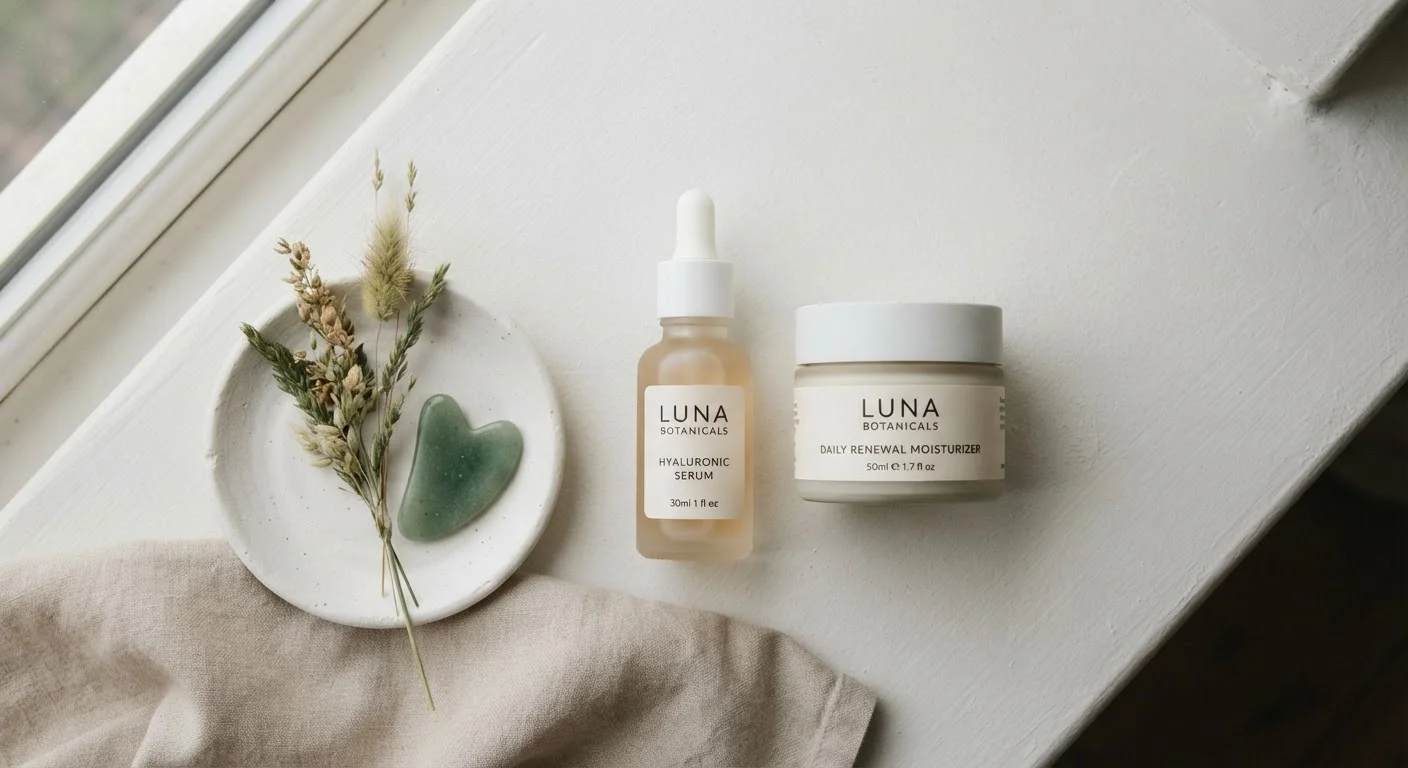
Option A
Moisturizer
The protective, hydration-locking layer your skin counts on daily.
Best for: Anyone who wants to maintain a healthy skin barrier, prevent water loss, and keep skin feeling comfortable throughout the day.
Option B
Serum
The concentrated, targeted treatment that gets down to business.
Best for: Anyone addressing a specific skin concern — such as dullness, uneven tone, fine lines, or dehydration — with potent active ingredients.
What Each Product Is Actually Designed to Do
Walk through any skincare aisle and you'll find serums and moisturizers shelved side by side — but they're built for entirely different jobs. Understanding that distinction is the clearest shortcut to building a routine that actually works for your skin.
A moisturizer is primarily a barrier product. Its job is to prevent transepidermal water loss (TEWL) — the process by which water evaporates from your skin into the air. Most moisturizers use a combination of three ingredient types to do this: humectants (which attract water), emollients (which soften and smooth), and occlusives (which physically seal the surface). The result is skin that stays comfortable, plump-feeling, and protected. For a deeper look at these ingredient categories, see our plain-language ingredient glossary.
A serum, by contrast, is a treatment product. Serums are formulated with smaller molecules and higher concentrations of active ingredients, allowing them to penetrate more deeply than a standard moisturizer. They're designed to target something specific — brightening, smoothing texture, evening skin tone, or boosting hydration at a cellular level. Serums typically have a thinner, more fluid consistency, and they don't form a significant protective barrier on their own.
| Criterion | Moisturizer | Serum |
|---|---|---|
| Primary purpose | Seal in hydration, protect barrier | Deliver concentrated active ingredients |
| Consistency | Cream, lotion, or gel | Thin fluid, oil, or lightweight gel |
| Penetration depth | Works on surface layers | Formulated to reach deeper layers |
| Application order | Second (after serum) | First (on clean skin) |
| Who needs it | Nearly everyone | Anyone with specific skin concerns |
| Common ingredients | Glycerin, ceramides, shea butter | Vitamin C, niacinamide, hyaluronic acid |
| Barrier protection | Yes — core function | Minimal to none |
How to Use Both in One Routine
The good news: you don't have to pick one. Serums and moisturizers are genuinely complementary — and for most people, using both makes more sense than using either alone.
The golden rule is thinnest to thickest. Apply your serum to clean skin first, give it a moment to absorb, then follow with moisturizer. This order matters because a heavier moisturizer applied first can create a physical barrier that prevents the serum's actives from reaching where they need to go.
SPF and the Morning Routine
If you use a moisturizer with SPF in the morning, apply your serum before it — just as you would with a non-SPF moisturizer. Layering products over sunscreen can dilute or disrupt its coverage, so SPF always goes last in your daytime routine (or as a dedicated final step). At night, SPF isn't needed, making your PM routine a great time to introduce treatment serums.
If you're new to serums, starting with a single, well-tolerated active is a smart approach. Ingredients like hyaluronic acid (for hydration) and niacinamide (for tone and texture) are generally well-suited to most skin types. To understand which ingredients are commonly found in each product type, our guide to skincare ingredients worth knowing is a useful starting point.
It's also worth noting that not every serum plays well with every other active. Some combinations — like retinol and certain acids — can cause irritation when layered. If you're mixing actives, keep it simple at first and pay attention to how your skin responds.
Matching Products to Your Skin Type and Concerns
Your skin type should shape both what you use and how you use it. Someone with oily skin may find a gel-format moisturizer and a niacinamide serum the right pairing, while someone with dry skin might lean toward a richer cream moisturizer and a hyaluronic acid serum for extra hydration support. Not sure which category you fall into? Our skin types guide can help you identify yours accurately.
For sensitive skin, the approach is the same but the stakes for ingredient selection are higher. Patch-testing new serums before applying them to your full face is a practical step worth building into any new product introduction.
64%
Adults who use a daily facial moisturizer
According to survey data from Statista, moisturizer is one of the most widely used skincare products among U.S. adults.
3–10x
Higher active concentration in serums vs. moisturizers
Dermatology references commonly note that serums can carry several times the concentration of actives found in standard moisturizing formulas.
As your skin's needs shift through the year — winter dryness, summer humidity — both your serum and moisturizer choices may need to shift too. Our article on caring for your skin through every season covers how to adapt without overhauling your entire routine.
The content on this site is for informational purposes only and is not a substitute for professional advice. Always consult a qualified professional for guidance specific to your situation.