

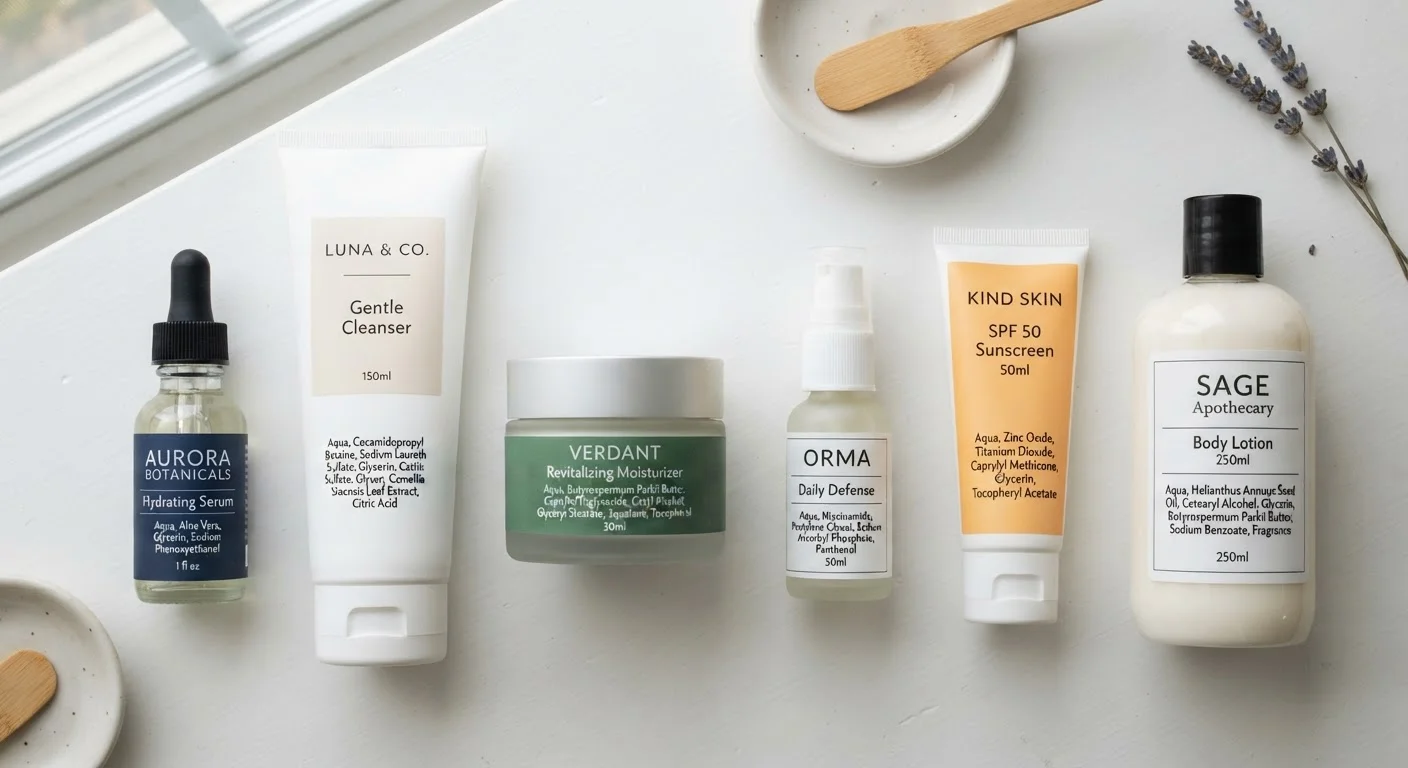
Why Ingredient Labels Feel So Confusing
Pick up almost any cleanser or lotion and the back panel reads like a chemistry exam. Long Latin-sounding names, multiple words for what seems like the same thing, and an order that does not obviously match how the product is marketed — it can be genuinely hard to know what you're actually applying to your skin each day.
The good news: ingredient labels follow consistent rules, and once you understand the logic, they become much easier to read. This reference covers the core vocabulary you will encounter across cleansers, moisturizers, deodorants, shampoos, and other everyday hygiene products. For a deeper look at specific skincare actives like retinol and niacinamide, see ingredients worth knowing before buying any skincare product.
The Core Ingredient Categories Explained
Most personal care formulas are built from a handful of functional ingredient categories. Knowing what role each plays helps you understand why it's there — and what happens if your skin reacts to it.
If you want to understand how pH fits into your daily routine specifically, the guide on what 'pH-balanced' on a skincare label really means goes deeper into that single concept. For a broader comparison of how natural and synthetic versions of these ingredient categories compare in real-world use, see natural vs. synthetic ingredients in personal care products.
Reading Labels With More Confidence
Armed with the glossary above and the note about how lists are ordered, you can start making faster sense of any product panel.
Ingredient Lists Are Ordered by Concentration
In the United States, the FDA requires that cosmetic ingredients be listed in descending order of concentration — meaning the first ingredient makes up the largest proportion of the formula. Ingredients present at 1% or less may be listed in any order after that threshold. This means a moisturizing ingredient listed near the bottom is present in a very small amount, even if it features prominently in the product's marketing.
OTC Drug Products Follow Different Rules
Products like sunscreens, acne treatments, and dandruff shampoos are classified as over-the-counter (OTC) drugs by the FDA, not cosmetics. Their active ingredients are listed separately at the top of the label under 'Active Ingredients,' and the rest follow under 'Inactive Ingredients.' This distinction matters when comparing products or checking for specific actives.
A few practical habits make label-reading easier over time. First, check the first five ingredients — they typically make up the bulk of a formula and tell you the most about what a product will actually do. Second, look for the distinction between active and inactive ingredients, which signals whether something is regulated as a drug. Third, if a particular ingredient concerns you — fragrance, for example — scan for it across your whole routine, not just one product, since cumulative exposure matters.
For a structured way to audit every product category in your daily routine, the daily personal care audit checklist is a useful companion to this reference. And if you are curious how sunscreen labels specifically work, the explainer on SPF numbers, PA ratings, and what sunscreen labels really mean walks through that in plain language.
This article is for general informational purposes only and does not constitute medical or dermatological advice. If you have a skin condition, allergy, or sensitivity, consult a qualified healthcare professional before making changes to your personal care routine.
The content on this site is for informational purposes only and is not a substitute for professional advice. Always consult a qualified professional for guidance specific to your situation.