

Why a Core Wardrobe Matters
A wardrobe built on reliable, versatile pieces makes everyday dressing faster, less stressful, and more satisfying. Rather than owning dozens of items you rarely reach for, a focused collection of essentials lets you get dressed confidently for almost any occasion—work, a casual weekend, a last-minute dinner, or a job interview.
This reference covers the foundational clothing items that hold up across contexts, body types, and budgets. Think of it as a checklist, not a prescription. Every person's lifestyle is different, so treat these categories as a starting framework, then adjust based on what you actually do and wear. If you're interested in taking this further, learn how the capsule wardrobe concept works as a philosophy for intentional dressing.
| Minimum functional wardrobe size | Approximately 30–40 versatile pieces (General styling industry guidance) |
| Most used wardrobe category | Tops (shirts, tees, sweaters) (Widely cited across wardrobe planning resources) |
| Most versatile color group | Neutrals: navy, white, gray, black, camel |
| Outerwear essentials needed | 1–2 coats cover most climates year-round |
| Footwear minimum | 3 pairs (casual, dressy, weather-appropriate) (Common capsule wardrobe guidance) |
The Essential Pieces by Category
Below are the core categories every adult wardrobe benefits from. Within each category, aim for neutral or understated colors where possible—they mix and match more easily and resist going out of style. For guidance on pairing these pieces, foundational color coordination principles can help you build outfits with confidence.
Tops
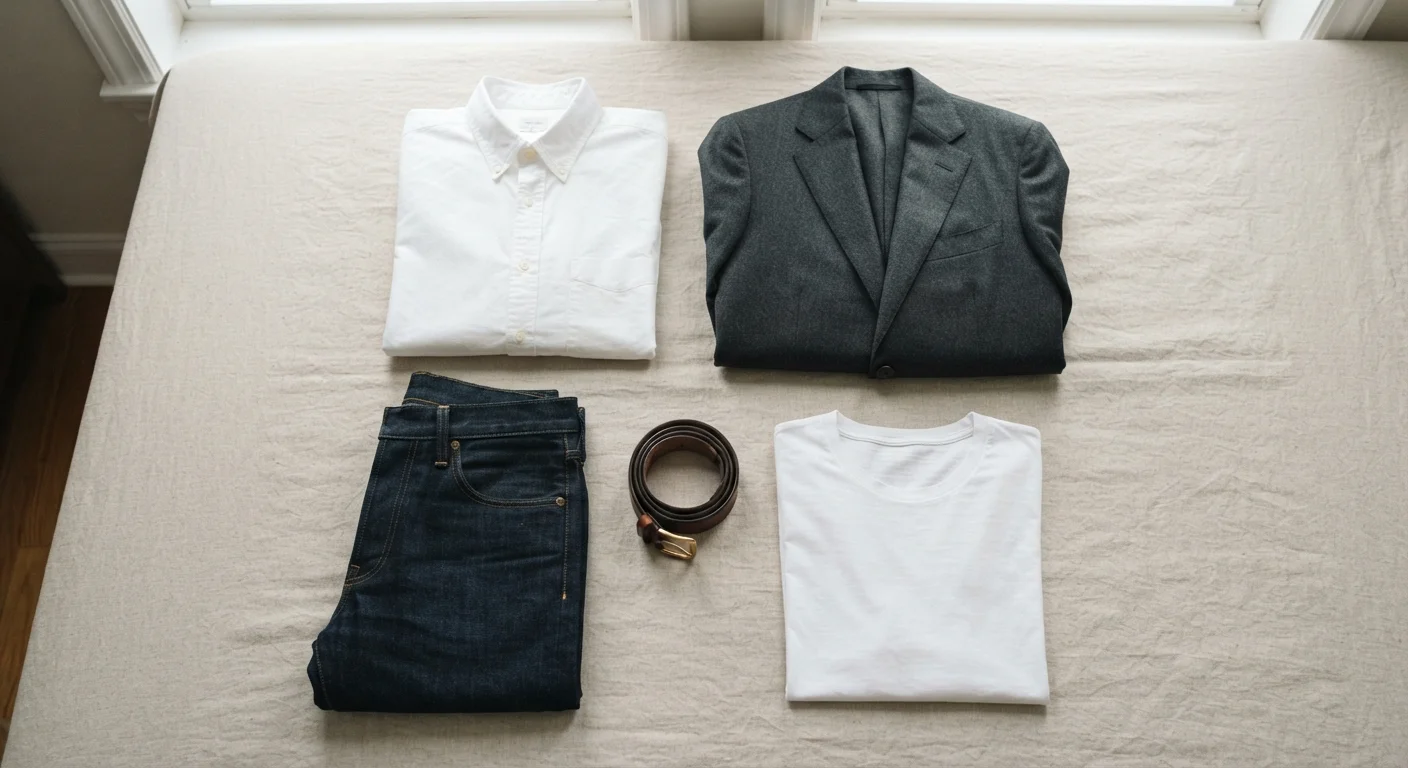
- White or light-colored crew-neck tee — the most versatile layering and standalone piece in any closet.
- Neutral button-down shirt — works tucked or untucked, dressed up or down. White, light blue, or chambray are reliable first choices.
- Simple crewneck or v-neck sweater — a mid-layer that bridges casual and smart-casual contexts.
Bottoms
- Dark-wash straight or slim jeans — pairs with nearly everything and reads as polished enough for many dress codes.
- Tailored trousers or chinos — essential for workplaces and formal occasions; navy, gray, or khaki are the most adaptable shades.
Outerwear & Layering
- Tailored blazer or structured jacket — instantly elevates any outfit. A neutral tone (navy, charcoal, camel) earns the most wear.
- Versatile coat — a single quality coat in a classic silhouette handles the majority of cold-weather needs.
Footwear
- Clean white or neutral sneakers — comfortable, casual, and surprisingly adaptable.
- Simple leather or leather-look shoes or loafers — the go-to for professional or semi-formal settings.
Accessories
- Plain leather or fabric belt — a finishing detail that also holds things together practically.
- Versatile bag or tote — functional for daily commutes, errands, and travel.
Capsule wardrobe
A curated set of interchangeable clothing items—typically 30 to 50 pieces—chosen to cover a wide range of occasions with minimal redundancy. The goal is intentional simplicity rather than quantity.
Smart casual
A dress code that sits between business casual and fully informal. It typically involves neat, coordinated pieces like chinos, a button-down, and clean shoes—no tie or suit required, but no athletic wear either.
Neutral color palette
A range of understated, low-saturation colors—such as white, black, navy, gray, beige, and camel—that pair easily with each other and with bolder accent colors.
Wardrobe essential
A clothing item versatile and durable enough to serve multiple functions across different occasions. Essentials are context-flexible, meaning they aren't locked into a single outfit or setting.
Layering piece
A garment intended to be worn over or under another, adding warmth, visual interest, or formality. Cardigans, blazers, and lightweight tees are common examples.
Making These Pieces Work Together
Owning the right items is only half the equation—knowing how to combine them is what makes a wardrobe truly functional. A few guiding principles help stretch a modest collection further:
- Stick to a consistent color palette. When most of your pieces share compatible undertones, outfits come together almost automatically.
- Dress codes shape context. The same dark jeans and button-down can read as smart-casual or business casual depending on your shoes and jacket. Understanding dress code labels removes guesswork.
- Seasonal overlap is real. Many essentials—a blazer, a white tee, chinos—work year-round when layered thoughtfully. Transitioning your wardrobe between seasons without buying everything new is a practical skill worth developing.
Once you have these foundations in place, a wardrobe audit can help you evaluate what you already own before adding anything new. And if you're starting entirely from scratch, building a functional wardrobe from the ground up walks through the priorities step by step.
Budget and Access Look Different for Everyone
Building a complete wardrobe at once isn't realistic for most people—and it doesn't need to be. Prioritize the pieces you'll actually use most based on your own lifestyle, then add over time. Thrift stores, clothing swaps, and altering items you already own are all legitimate ways to fill gaps without significant expense.
The content on this site is for informational purposes only and is not a substitute for professional advice. Always consult a qualified professional for guidance specific to your situation.