

Why Dress Codes Still Matter
Dress codes can feel like a puzzle written in a language nobody officially teaches. Yet they signal something genuinely useful: the level of formality a host or workplace is aiming for, and the respect they hope guests will extend in return. Reading them correctly isn't about following arbitrary rules — it's about feeling at ease and showing up prepared.
The good news is that most occasions fall into one of five or six well-defined zones. Once you understand what each one actually means, you'll spend far less time staring at your closet in a panic. Building a wardrobe that spans these zones doesn't require an enormous budget either — it's mostly about having the right foundational pieces. See our wardrobe essentials guide for the core items that cover most situations.
47%
Workers unsure what 'business casual' means
A survey by the Society for Human Resource Management found that nearly half of employees feel uncertain about their workplace's dress code expectations.
5–6
Distinct dress code tiers most people encounter
Most social and professional situations fall within a spectrum of roughly five to six recognized dress codes, from casual to white tie.
The Dress Code Spectrum, Explained
Casual
Casual means comfortable, everyday clothing — jeans, t-shirts, sneakers, and relaxed-fit pieces are all fair game. But casual doesn't mean sloppy. Clean, well-fitting clothes in good condition still matter. Think: Saturday errands, a low-key lunch with friends, or a laid-back family gathering.
Smart Casual
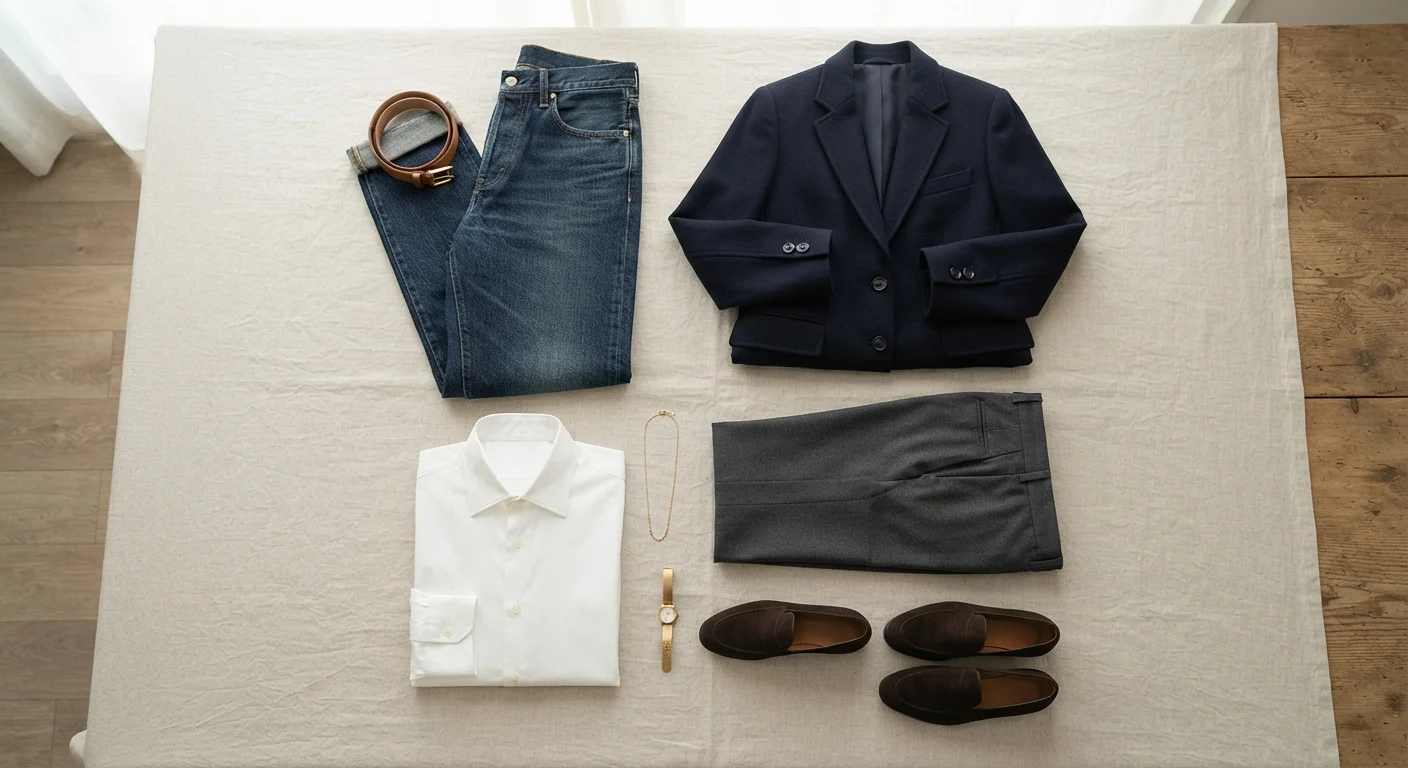
Smart casual is where most people get tripped up. It sits above everyday casual but below business wear — polished enough to look intentional, relaxed enough to feel approachable. Examples include dark jeans or chinos, a neat blouse or button-down, loafers or clean ankle boots, and a blazer if you want to elevate further. Common settings: dinner at a nice restaurant, a daytime wedding brunch, or a creative-industry social event.
Business Casual
Business casual is the workplace standard at many modern offices. It typically means tailored trousers or a midi skirt, a structured blouse or collared shirt, and closed-toe shoes with a moderate heel or clean leather sole. Blazers are common but not always required. Athletic wear, flip-flops, and graphic tees generally fall outside this code.
Business Formal / Professional
This is a traditional office environment's more elevated register: suits, tailored dresses, blazers over button-downs, and polished dress shoes. Colors tend toward neutrals. It's the standard for courtrooms, senior-level interviews, and formal corporate settings.
Cocktail and Semi-Formal
Cocktail attire covers evening social events — think fundraisers, weddings with a dressy reception, or milestone birthday parties. Knee-to-midi dresses, dressy jumpsuits, and suits with smart shirts all land well here. Semi-formal is nearly synonymous but sometimes leans slightly more conservative depending on the host's culture.
Black Tie and White Tie
Black tie is the most commonly encountered formal dress code: floor-length gowns or elegant midi dresses for women; tuxedos or formal dark suits for men. White tie is the most elevated of all, reserved for state dinners or extremely formal galas — full-length ball gowns and tailcoats. Most people encounter white tie rarely, if ever.
Fit and Fabric: The Real Dress Code Secrets
Regardless of which zone you're dressing for, two factors matter more than any specific item: fit and fabric. A well-fitting pair of affordable trousers reads more polished than an expensive pair that pulls at the hips or bunches at the ankles. For practical guidance on understanding how clothes interact with your proportions, getting dressed for your body is a helpful companion read.
Fabric also signals formality. Natural fibers like cotton, wool, silk, and linen (when pressed) tend to read as more elevated than heavily synthetic blends. The condition of your clothes matters too — follow care labels carefully to keep garments looking their best. Our clothing care label guide decodes those small symbols so you're not guessing at the laundry machine.
When in Doubt, Dress One Level Up
If you're genuinely unsure about a dress code, err on the side of slightly more formal rather than less. It's far easier to remove a blazer or swap out formal shoes if you arrive and realize the event is more relaxed — but you can't quickly fix being underdressed. A small mental adjustment before you leave the house saves a lot of awkwardness.
Finally, remember that dress codes intersect with personal style — there's usually room to express yourself within any given framework. Some style rules genuinely hold up; others don't — understanding which is which gives you real confidence to dress on your own terms.
Frequently Asked Questions
Smart casual is social — think polished yet relaxed, like neat chinos and a button-down at a dinner party. Business casual is workplace-oriented and typically requires slightly more structure, such as slacks, a blazer, or a blouse without necessarily requiring a full suit or tie.
Yes, in many contexts. A well-fitting, dark-wash pair of jeans with no distressing, paired with polished shoes and a neat top, can absolutely read as smart casual. Avoid overly casual finishes like fraying or bleaching.
Formal usually means cocktail to black-tie range. A knee-length or midi dress, a tailored suit, or an elegant evening top with tailored trousers all work well. If the event is very elevated, lean toward black tie — a floor-length dress or tuxedo.
Cocktail attire calls for polished, dressy clothes suitable for an evening event — typically a knee-to-midi length dress, a dressy jumpsuit, or a suit with a smart shirt. It falls between business formal and black tie on the dress-code spectrum.
Generally, yes — but context matters. For a casual backyard barbecue, showing up in a blazer can feel as awkward as underdressing for a gala. When unsure, aim for one level above what you think the baseline is.
Focus on a core set of versatile, well-fitting pieces that can be layered and styled up or down — think neutral trousers, a blazer, quality basics, and a couple of elevated shoes. Our <a href="/style-beauty/everyday-fashion/wardrobe-essentials-every-adult-should-own">wardrobe essentials guide</a> is a great starting point.
The content on this site is for informational purposes only and is not a substitute for professional advice. Always consult a qualified professional for guidance specific to your situation.