

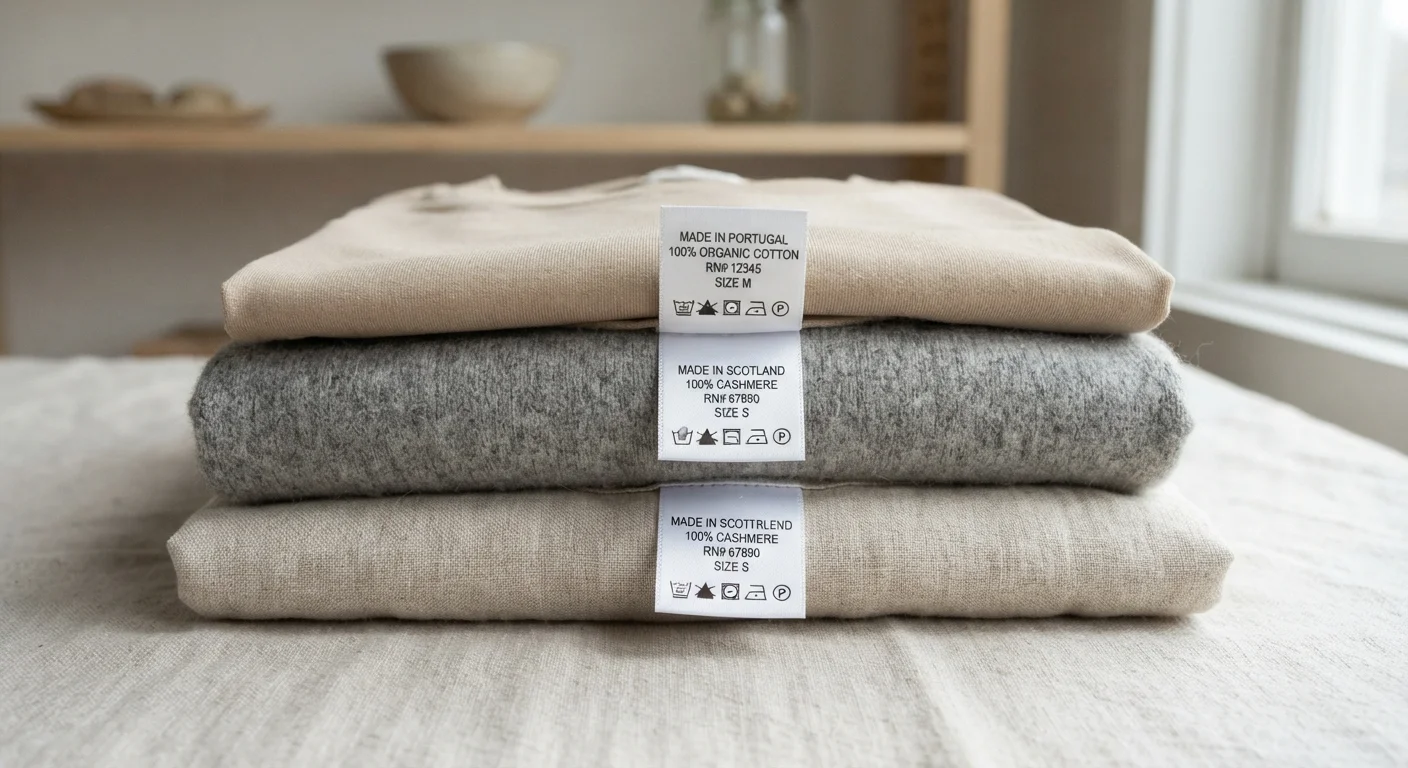
Why Care Labels Matter
That small, sometimes scratchy tag sewn into your garment isn't just filler — it's a legally required set of instructions designed to protect your clothes from damage. In the U.S., the Federal Trade Commission (FTC) mandates that most clothing sold domestically carry a permanent care label with at least one safe cleaning method. Understanding those instructions can mean the difference between a sweater that lasts five years and one that shrinks after its first wash.
Care labels communicate in two ways: written instructions ("Dry clean only," "Hand wash") and standardized symbols adopted from the international ASTM system. Many labels use both. Once you learn the symbol logic, you can decode virtually any garment at a glance — no guesswork required.
| U.S. regulatory body | Federal Trade Commission (FTC) (FTC Care Labeling Rule, 16 CFR Part 423) |
| Care label requirement | At least one safe cleaning method must be listed (FTC Care Labeling Rule) |
| Symbol standard used in U.S. | ASTM D5489 international care symbols (ASTM International) |
| Number of symbol categories | 5 (wash, bleach, dry, iron, dry clean) |
| Label permanence requirement | Must remain legible for the life of the garment (FTC Care Labeling Rule) |
| Exemptions | Footwear, hats, and some household textiles are exempt (FTC Care Labeling Rule) |
If you enjoy building a wardrobe that works hard and lasts long, pairing care knowledge with the right fit is equally important. See our guide to dressing for your body for practical fit and proportion advice.
Decoding the Five Symbol Categories
Care symbols fall into five categories, each with its own base icon. Learning the icons once gives you a permanent reference frame.
Washing tub symbol
The base icon for laundering instructions. It looks like a small bucket or tub with water. Modifications — dots, lines, or an X — indicate temperature and cycle type.
Triangle symbol
Represents bleaching instructions. An empty triangle means any bleach is safe; a triangle with diagonal lines means non-chlorine bleach only; an X through the triangle means do not bleach.
Square symbol
Indicates drying method. A circle inside the square means tumble dry; a horizontal line inside means lay flat to dry; a curved line at the top means line dry.
Iron symbol
Shaped like a clothes iron, this symbol specifies ironing temperature via dots (one = low, two = medium, three = high). An X means do not iron.
Circle symbol
Signals professional dry cleaning. A plain circle means dry clean; a letter inside (such as P or F) tells the cleaner which solvents are safe to use. An X means do not dry clean.
Felting
An irreversible process in which wool or other protein fibers mat together when exposed to heat, agitation, and moisture simultaneously, causing the garment to shrink and harden.
Permanent press cycle
A washing machine setting that uses warm water and a slow spin to reduce wrinkles in synthetic and blended fabrics. Indicated on care labels by one line under the washing tub symbol.
Delicate cycle
A gentle machine wash setting with slow agitation and low spin speed, designed for fragile fabrics. Shown by two lines under the washing tub symbol.
Reading Dots and Lines
Within each symbol category, dots and lines modify the base meaning. For temperature-sensitive instructions — washing and drying — one dot means low heat, two dots mean medium, and three dots mean high. A line under a washing tub or iron means gentle or permanent-press cycle. Two lines mean extra-gentle. A hand inside the tub? Hand wash only. An X over any symbol means "do not" perform that action.
Written Instructions to Know
- Machine wash cold/warm/hot — temperature matters; hot water can shrink natural fibers and fade dyes.
- Tumble dry low/medium/high — excessive heat degrades elastic and can felt wool.
- Lay flat to dry — prevents stretching in knits; skip the hanger for these.
- Do not wring — wringing stresses fabric weave and seams.
- Dry clean only — water-based washing can permanently alter the fabric's structure or finish.
Reading ingredient lists on personal care products follows a similar logic to decoding garment labels. Our personal care ingredients reference applies the same plain-language approach to cleansers and moisturizers.
Common Fabric-Specific Guidelines
The care method a label specifies is largely driven by fiber content. Here's a quick-reference overview of how major fabric types typically respond to cleaning:
5 categories
Core care symbol groups on every label
The ASTM D5489 standard organizes all care instructions into washing, bleaching, drying, ironing, and dry cleaning symbols.
3 dots
Maximum heat setting indicated by dots
Within temperature-sensitive symbols, one dot signals low heat, two medium, and three high — a consistent logic across washing and drying icons.
16 CFR 423
FTC regulation governing U.S. care labels
The FTC's Care Labeling Rule has required permanent, legible garment care instructions on most clothing sold in the United States since 1971.
- Cotton — Generally machine washable; tolerates warm or hot water but may shrink on first wash. Line or tumble dry on medium.
- Wool and cashmere — Prone to felting and shrinking in agitated or hot water. Hand wash in cool water or use a delicate machine cycle with a wool-safe detergent. Always lay flat to dry.
- Silk — Delicate protein fiber. Hand wash in cool water with a gentle detergent, or dry clean. Heat and prolonged soaking cause irreversible damage.
- Linen — Durable but wrinkle-prone. Machine washable in cool or warm water; low-heat tumble dry or line dry. Iron while slightly damp for best results.
- Synthetic blends (polyester, nylon, spandex) — Usually machine washable in cold or warm water on a gentle cycle. Avoid high heat, which can melt fibers or permanently set wrinkles.
Once you know how to care for your clothes, it's worth revisiting how they work for your lifestyle. Our dress codes decoded guide helps you dress appropriately for any occasion without second-guessing yourself.
Storage and Long-Term Garment Care
Washing correctly is only half the equation — how you store garments matters just as much. A few consistent habits extend the life of nearly every item in your wardrobe:
- Fold, don't hang, knits. Hanging sweaters and jersey items stretches them at the shoulders over time. Fold them on a shelf instead.
- Use breathable garment bags for delicates. Plastic dry-cleaning bags trap moisture; swap them for fabric or cotton covers for long-term storage.
- Cedar blocks over mothballs. Cedar naturally repels moths without the harsh chemical odor. Replace or sand blocks annually to refresh their effectiveness.
- Avoid direct sunlight in storage areas. UV exposure fades dyes and weakens fibers even when clothes are not being worn.
- Air garments before storing. Body oils and residue that aren't fully washed out can attract insects and cause yellowing over time.
This article is for general informational purposes only. Always follow the specific care instructions on your individual garments, as fabric compositions and finishes vary by manufacturer.
The content on this site is for informational purposes only and is not a substitute for professional advice. Always consult a qualified professional for guidance specific to your situation.