

Where the Idea Came From
The capsule wardrobe concept has roots in 1970s London, where boutique owner Susie Faux used the term to describe a core set of timeless, high-quality garments that could be supplemented with seasonal pieces. The idea gained broader recognition in the mid-1980s when designer Donna Karan introduced her widely discussed "7 Easy Pieces" concept — a working wardrobe built around a few hardworking, interchangeable items.
What made the idea resonate then still holds true today: most people wear a fraction of what they own. The capsule wardrobe offered a practical counterpoint — a reason to shop more deliberately and dress more confidently.
“A capsule wardrobe is not about deprivation. It's about editing your life so that what remains is exactly what you need.”
— Susie Faux, London boutique owner credited with popularizing the capsule wardrobe concept
What Makes a Wardrobe a 'Capsule'
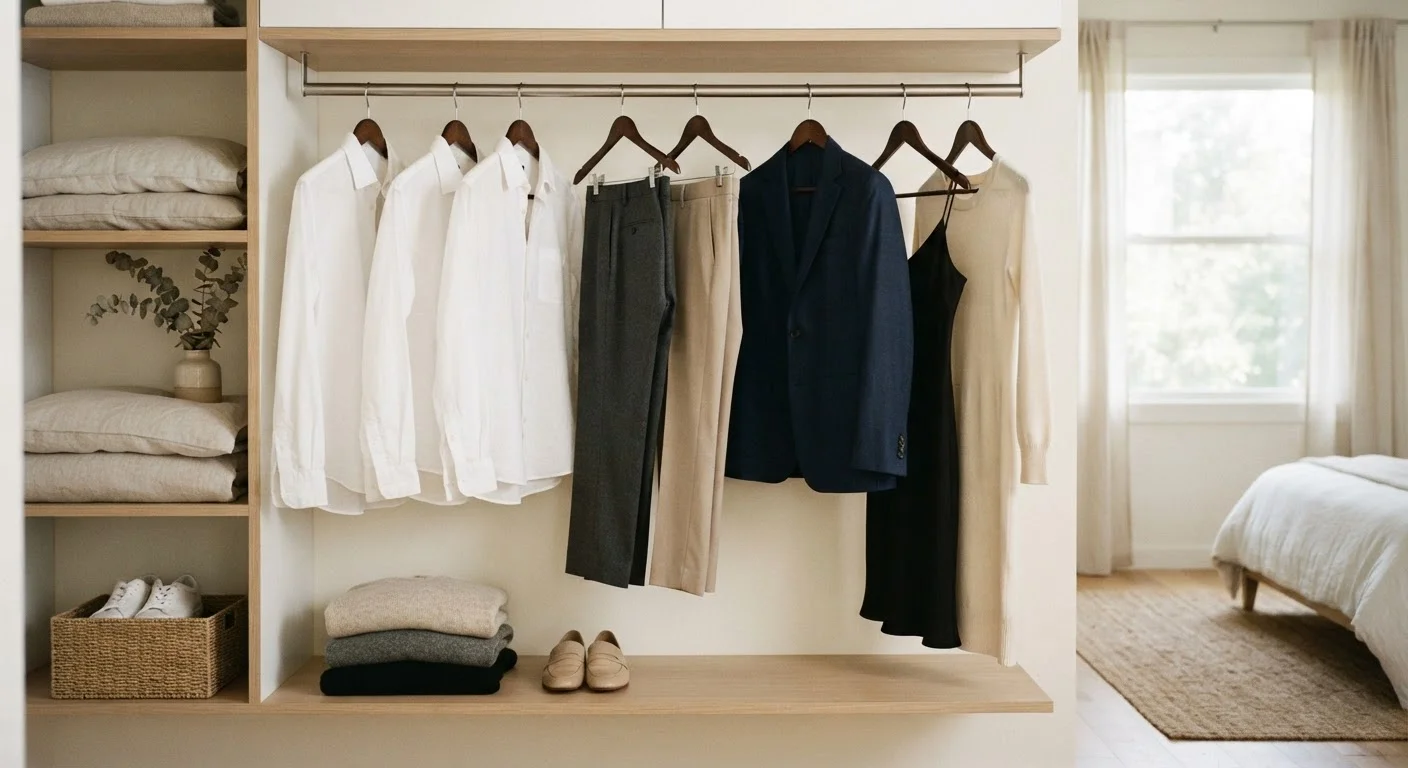
The defining quality of a capsule wardrobe isn't a number — it's intentionality. Every piece earns its place by doing multiple jobs. A well-cut blazer that works over a dress, with trousers, or layered on weekends is a capsule piece. A novelty top that only matches one specific outfit is not.
Three principles tend to hold across every capsule wardrobe approach:
- Cohesion: Colors, tones, and silhouettes complement each other so outfits combine naturally.
- Versatility: Each item works across at least two or three contexts — work, casual, errands, social occasions.
- Longevity: Pieces are chosen for durability and lasting style rather than what's trending right now.
If you've ever felt like your closet is full but you still have nothing to wear, that frustration is usually a sign that your wardrobe lacks cohesion — something our article Why Your Closet Feels Full but You Have Nothing to Wear explores in depth.
~20%
Clothes worn regularly by average person
Research and wardrobe studies consistently suggest most people wear only about 20% of their clothing on a regular basis, leaving the majority largely unused.
30–50
Typical capsule wardrobe piece count
Many style educators and wardrobe coaches suggest a range of 30–50 total items — including shoes, outerwear, and accessories — as a workable capsule size for most lifestyles.
Why It Actually Works
A well-built capsule wardrobe reduces what psychologists sometimes call decision fatigue — the mental drain of making too many choices. When every item in your closet pairs easily with several others, getting dressed stops being a puzzle and starts being automatic. You spend less mental energy in the morning and more confidence walking out the door.
There are practical benefits too. Owning fewer, better-fitting pieces means less clutter, easier care routines, and a clearer sense of what you actually need when shopping. It also makes gaps in your wardrobe obvious — which is the first step to filling them strategically. For a structured way to evaluate what you currently own, a wardrobe audit checklist can make the process straightforward.
Start With What You Already Love
Before buying anything new, spend time identifying the pieces in your current wardrobe that you genuinely enjoy wearing. These become the anchor items around which everything else is built. Shopping to fill gaps around beloved pieces you already own is far more effective than starting from a list.
How to Start Building One
You don't need to clear out your entire closet overnight. The most sustainable approach is gradual and rooted in what you already have.
- Audit first. Go through what you own and identify the pieces you reach for repeatedly. Those are your anchors.
- Note the gaps. What do you keep wishing you had? What categories feel thin or mismatched?
- Add with intention. When filling gaps, look for items that work with at least three things already in your wardrobe before you commit.
For a practical list of the core items most wardrobes benefit from, see our guide to wardrobe essentials every adult should own. And if you're building from scratch, Building Your First Functional Wardrobe From the Ground Up covers the foundational decisions worth making early.
Once you've settled on the capsule approach, it's worth exploring how it compares to other organizational systems. Our overview of wardrobe organization approaches lays out the options side by side.
Frequently Asked Questions
There is no single magic number. Common frameworks suggest anywhere from 30 to 50 pieces including shoes and outerwear, but the right size depends entirely on your lifestyle, climate, and how often you do laundry. Focus on how well pieces work together, not hitting a specific count.
Not at all. A capsule wardrobe can absolutely reflect your personal style and include color, pattern, or statement pieces — as long as those items genuinely integrate with the rest of your collection. The goal is cohesion, not uniformity.
Yes. A capsule wardrobe is about choosing thoughtfully, not spending more. Starting with what you already own, filling gaps gradually, and prioritizing fit and durability over price tags are all valid approaches regardless of budget.
A minimalist wardrobe is primarily about owning as little as possible. A capsule wardrobe is about owning the right things — pieces that work together and serve your actual life. You can build a capsule wardrobe without being a minimalist.
No — and it's actually better if you don't. A wardrobe audit that identifies what you already love and wear regularly is the ideal starting point. From there, you fill gaps rather than starting from zero.
The content on this site is for informational purposes only and is not a substitute for professional advice. Always consult a qualified professional for guidance specific to your situation.