

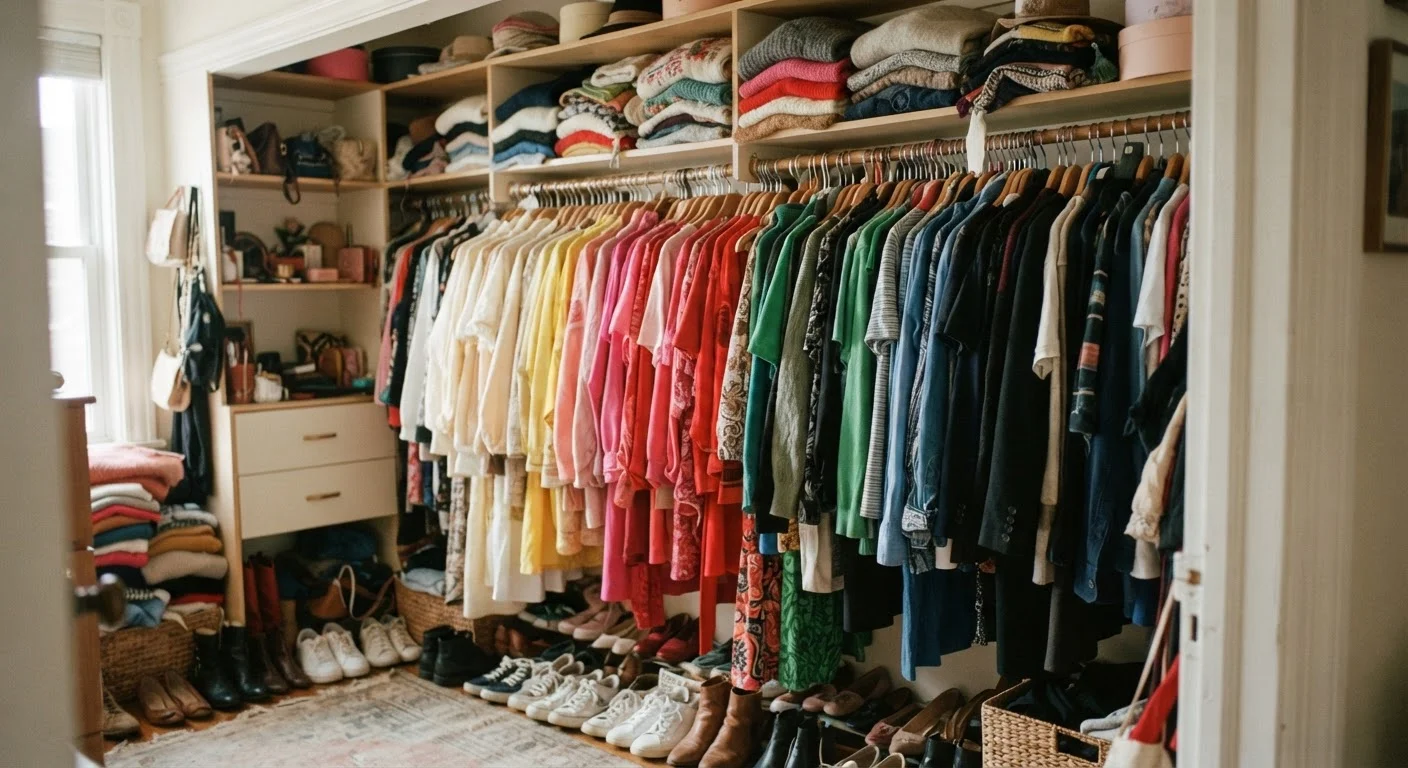
The Real Reason Getting Dressed Feels Impossible
You're standing in front of a closet packed rail to rail, and somehow nothing looks right. Sound familiar? This frustration is extremely common — and almost always misdiagnosed. Most people assume the solution is more clothes. In reality, the problem is almost always the wrong clothes.
A wardrobe that doesn't function isn't a quantity problem. It's a strategy problem. The pieces you own don't communicate with each other, they don't reflect how you actually live, or they fit badly enough that you skip them every single morning. Understanding why this happens is the first step to fixing it — without buying a single thing.
If you've ever felt the itch to overhaul everything from scratch, our capsule wardrobe guide explains exactly how a smaller, intentional collection can actually give you more to wear.
Buying clothes for a life you don't actually live.
Why it happens: It's easy to shop for an idealized version of your schedule — imagining fancy dinners, weekend hikes, or office presentations — rather than your real, day-to-day routine.
Owning too many statement pieces and too few versatile basics.
Why it happens: Statement pieces are exciting to buy; basics feel boring. So carts fill up with bold prints and novelty items that are hard to pair with anything already in the closet.
Keeping clothes that don't fit your current body.
Why it happens: Sentimental attachment, guilt about money spent, or hope that a piece will fit again someday leads people to hold on to items they never actually wear.
Shopping by trend rather than by personal style.
Why it happens: Trend-driven marketing is designed to make seasonal items feel urgent and necessary. Without a clear sense of personal style, it's easy to fill a closet with micro-trend purchases that feel dated within months.
Ignoring fit issues and hoping to "wear them in."
Why it happens: People often convince themselves that slight discomfort or poor fit will improve over time, especially if they love the item or it was a good deal.
How to Start Building a Wardrobe That Actually Works
Avoiding these mistakes doesn't require a complete overhaul or a big budget. It starts with honest self-assessment. Before buying anything new, try doing a quick inventory of what you already own: pull everything out, try it on, and ask whether each piece fits your current life and current body — not the life you had three years ago or the body you hope to have someday.
Don't Shop Your Way Out of This Problem
It's tempting to treat a dysfunctional wardrobe as a shopping problem — as if adding more pieces will eventually tip the balance. In most cases, it only adds more clutter and more decisions. Step back and assess what you have before spending anything new. Clarity about what's missing is far more valuable than another impulse purchase.
Pay special attention to the gaps. If you have twelve casual tops but nothing appropriate for a work meeting or a dinner out, that imbalance is costing you outfit options every week. A single well-fitting blazer or versatile trousers could unlock combinations across dozens of pieces you already own. Our wardrobe audit checklist walks you through exactly how to evaluate each item systematically.
Fit is non-negotiable. Clothes that don't fit properly won't get worn, no matter how appealing they seemed at purchase. A tailor can transform a near-perfect piece into one you reach for constantly — often for less than the cost of replacing it. For deeper guidance on dressing in a way that genuinely suits your shape and proportions, see our article on dressing for your body.
Finally, think seasonally. Rotating clothes in and out of active storage keeps your visible options relevant and manageable year-round. Transitioning your wardrobe between seasons doesn't have to mean buying new things — it means working smarter with what you already have.
~80%
Clothes worn regularly vs. owned
Research into consumer wardrobe behavior consistently suggests most people regularly wear only around 20% of their clothing, leaving the majority unused.
1 in 3
Clothing items never worn after purchase
Studies on retail consumer habits have found that a significant proportion of clothing items are worn fewer than three times or never at all after being bought.
The content on this site is for informational purposes only and is not a substitute for professional advice. Always consult a qualified professional for guidance specific to your situation.