

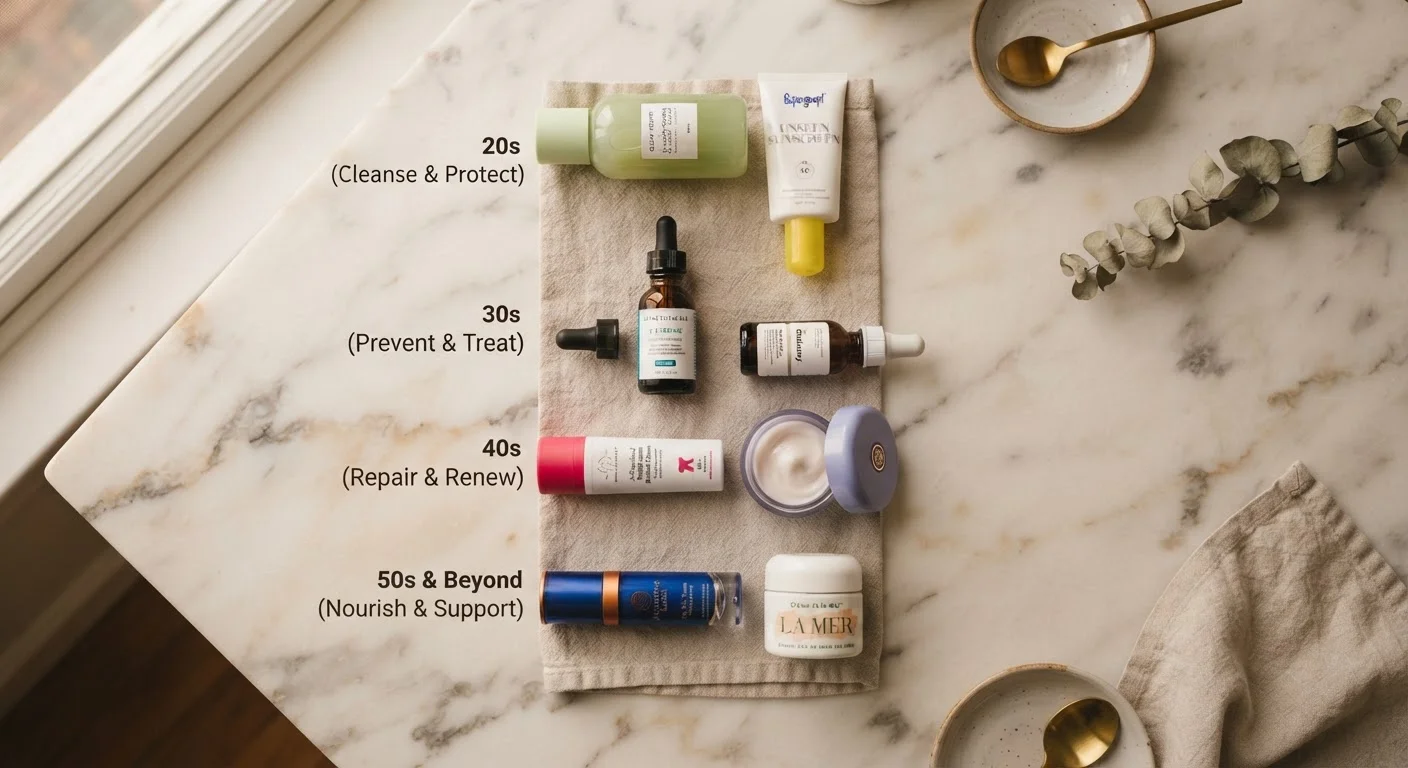
Why Skin Changes Are Worth Understanding
Skin isn't static. It's living tissue that responds to hormones, environment, lifestyle habits, and the simple passage of time. Understanding how it shifts — and why — lets you make smarter choices rather than chasing products based on marketing claims.
The key biological drivers of age-related skin change include slowing cell turnover (how quickly new skin cells rise to the surface), declining sebum (natural oil) production, reduced collagen and elastin synthesis, and gradual thinning of the dermis, the skin's structural middle layer. These processes don't happen overnight; they unfold across decades, which means your routine can evolve gradually too.
Before diving into decade-by-decade specifics, it helps to know your baseline. Identifying your skin type shapes how every ingredient and product category performs for you — the same active can be a game-changer for one person and a irritant for another.
SPF Is a Health Decision, Not Just a Beauty One
UV radiation is a leading environmental contributor to both skin cancer and premature skin aging. The American Academy of Dermatology recommends broad-spectrum SPF 30 or higher daily — even on cloudy days or when spending most of the day indoors near windows. Establishing this habit early and maintaining it consistently across every decade is the single most impactful thing you can do for long-term skin health.
Your 20s: Building the Foundation
Skin in your 20s is generally at peak cellular efficiency — collagen production is robust, cell turnover is relatively rapid, and elasticity is high. That said, this decade isn't without its challenges: hormonal fluctuations often mean persistent breakouts well into your mid-20s, and cumulative sun exposure starts silently accumulating.
The most valuable habits to establish now are also the simplest: a gentle cleanser, a lightweight moisturizer suited to your skin type, and — critically — a broad-spectrum SPF 30 or higher applied every morning. Research consistently shows that UV exposure is responsible for a significant portion of visible skin aging, and protection started early pays compounding dividends.
Start Simple, Stay Consistent
A three-step routine — cleanser, moisturizer, SPF — done every day outperforms a ten-step routine done sporadically. Before adding serums or actives, make sure your foundational habits are locked in. New additions are easier to evaluate when you're starting from a stable baseline.
This is also the right decade to build an everyday routine you'll actually follow. Consistency with simple steps matters far more than an elaborate shelf of products. If acne is a concern, an over-the-counter ingredient like salicylic acid or benzoyl peroxide can be appropriate — but a dermatologist can offer guidance tailored to your situation.
Apply your SPF as the final step of your morning routine, after moisturizer, and give it two to three minutes to settle before applying makeup. Many people under-apply — a nickel-sized amount for the face alone is a reasonable general guideline.
SPF efficacy depends heavily on application amount and consistency. Dermatologists frequently note that most people apply far less than the amount used in clinical testing, which reduces real-world protection.
When introducing a retinoid for the first time, try the 'buffer method': apply your moisturizer first, then the retinoid on top. This slows absorption slightly and significantly reduces the dryness and peeling many first-time users experience.
Retinoid-associated irritation is one of the most common reasons people abandon an otherwise effective ingredient. Buffering is a well-recognized strategy for managing initial sensitivity without abandoning the product entirely.
Your 30s: When Prevention Becomes Priority
In your 30s, the first subtle shifts become visible. Cell turnover slows slightly, meaning skin can look a touch duller and fine lines — especially around the eyes and forehead — may begin to appear. Collagen synthesis starts its gradual decline. Hormonal changes, particularly around pregnancy or perimenopause for some, can also bring unexpected skin shifts including adult acne or increased sensitivity.
This is the decade when many dermatologists recommend introducing a retinoid — a vitamin A derivative that encourages cell turnover and supports collagen production. Retinoids are among the most studied topical ingredients in skincare. Starting with a low-concentration, over-the-counter retinol a few nights per week allows your skin to adapt without irritation. Always follow retinoid use with SPF the next morning, as it can increase photosensitivity.
Antioxidants, particularly vitamin C serums applied in the morning, can help address uneven tone and protect against environmental stress. Hydration remains important — if your skin feels drier than it used to, a slightly richer moisturizer or one containing humectants like hyaluronic acid may help. Note that seasonal shifts also affect what your skin needs; cold weather routines often call for richer formulas than summer ones.
~1% per year
Rate of collagen loss after age 20
Research published in dermatology literature estimates that skin collagen content declines at roughly 1% per year after early adulthood, with the rate accelerating around menopause.
Up to 90%
Visible aging attributed to UV exposure
Dermatologists and researchers frequently cite photoaging — skin changes caused by cumulative UV exposure — as responsible for the large majority of visible age-related skin changes, separate from intrinsic aging.
Your 40s and 50s: Embracing What Your Skin Actually Needs
Perimenopause and menopause bring some of the most significant hormonal-driven skin changes many people experience. Declining estrogen levels are linked to accelerated collagen loss — some estimates suggest skin loses collagen noticeably in the years following menopause — along with increased dryness, reduced elasticity, and skin that may feel thinner or more fragile.
Routines benefit from richer moisturizers and barrier-supporting ingredients like ceramides, peptides, and niacinamide. If you've been using a retinoid, continuing it remains valuable; if you haven't started, it's not too late to begin (though a dermatologist visit is worth considering for personalized guidance at this stage).
Texture concerns and hyperpigmentation often become more prominent in this decade. Chemical exfoliants — like AHAs (alpha-hydroxy acids) such as glycolic or lactic acid — can help with both, though they should be introduced gradually and always paired with diligent sun protection. Keep routines gentle: over-exfoliating or layering too many actives can compromise the skin barrier, especially as skin becomes more sensitive.
Avoid Stacking Too Many Actives at Once
Combining multiple exfoliating acids, retinoids, and strong vitamin C formulas in one routine can disrupt the skin barrier and trigger sensitivity or breakouts. When introducing a new active ingredient, add it alone and give your skin two to four weeks to adjust before layering another. If persistent irritation, redness, or peeling occurs, scale back and consult a dermatologist.
Beyond 60: Comfort, Protection, and Simplicity
Skin in your 60s and beyond is typically thinner, drier, and slower to heal than at any earlier decade. The dermis continues to thin, sebaceous glands produce less oil, and the skin's natural barrier function can be less efficient. The focus shifts decisively toward comfort, protection, and maintaining skin integrity rather than targeting specific cosmetic concerns with aggressive actives.
Rich, fragrance-free moisturizers used morning and night can make a significant difference in how skin looks and feels. Gentle, non-foaming cleansers preserve the natural oils that remain. SPF remains non-negotiable — skin cancers are more commonly diagnosed in older adults, making daily protection genuinely important for health, not just appearance.
This is also a stage where less is more: a short, consistent routine that your skin tolerates well is preferable to an elaborate regimen causing irritation. For anyone managing chronic skin conditions, medications, or serious concerns, a dermatologist's input is especially valuable. A focused starter checklist can help pare back to what genuinely matters.
Special Populations: A Note on Consultation
Pregnancy, breastfeeding, certain medications (including some prescribed for blood pressure or autoimmune conditions), and chronic skin conditions can all affect which skincare ingredients are appropriate. Retinoids, for example, are generally not recommended during pregnancy. If any of these situations apply to you, consult your healthcare provider before adjusting your skincare routine.
Constants That Never Change, Regardless of Age
Despite all the decade-by-decade nuance, a few principles hold steady throughout life. First, broad-spectrum sun protection every single morning is the highest-return skincare habit that exists — it reduces the risk of skin cancer and is the most evidence-backed strategy for slowing visible aging. Second, keeping skin hydrated (whether through a light lotion at 22 or a rich cream at 65) supports barrier function and comfort at every stage.
Third, gentleness pays off. Harsh scrubbing, frequent over-exfoliating, or layering incompatible actives tends to create more problems than it solves. Fourth, your skin's needs also shift with the seasons — adapting your routine seasonally is as relevant as adapting it by decade.
Finally, skin health is genuinely connected to broader physical wellbeing. Adequate sleep, hydration, a varied diet, and stress management all influence how skin looks and behaves — for practical context on everyday body care, personal care fundamentals and physical health habits offer useful grounding. Skincare products support skin; they work alongside — not instead of — the basics.
This article is for general informational and educational purposes only. It is not a substitute for professional medical or dermatological advice. If you have concerns about your skin health, consult a qualified dermatologist or healthcare provider.
“Sunscreen is the closest thing we have to a fountain of youth. It is the most proven anti-aging product available.”
— Darrell Rigel, Clinical Professor of Dermatology, NYU Grossman School of Medicine
The content on this site is for informational purposes only and is not a substitute for professional advice. Always consult a qualified professional for guidance specific to your situation.