

What a Coverage Limit Actually Means
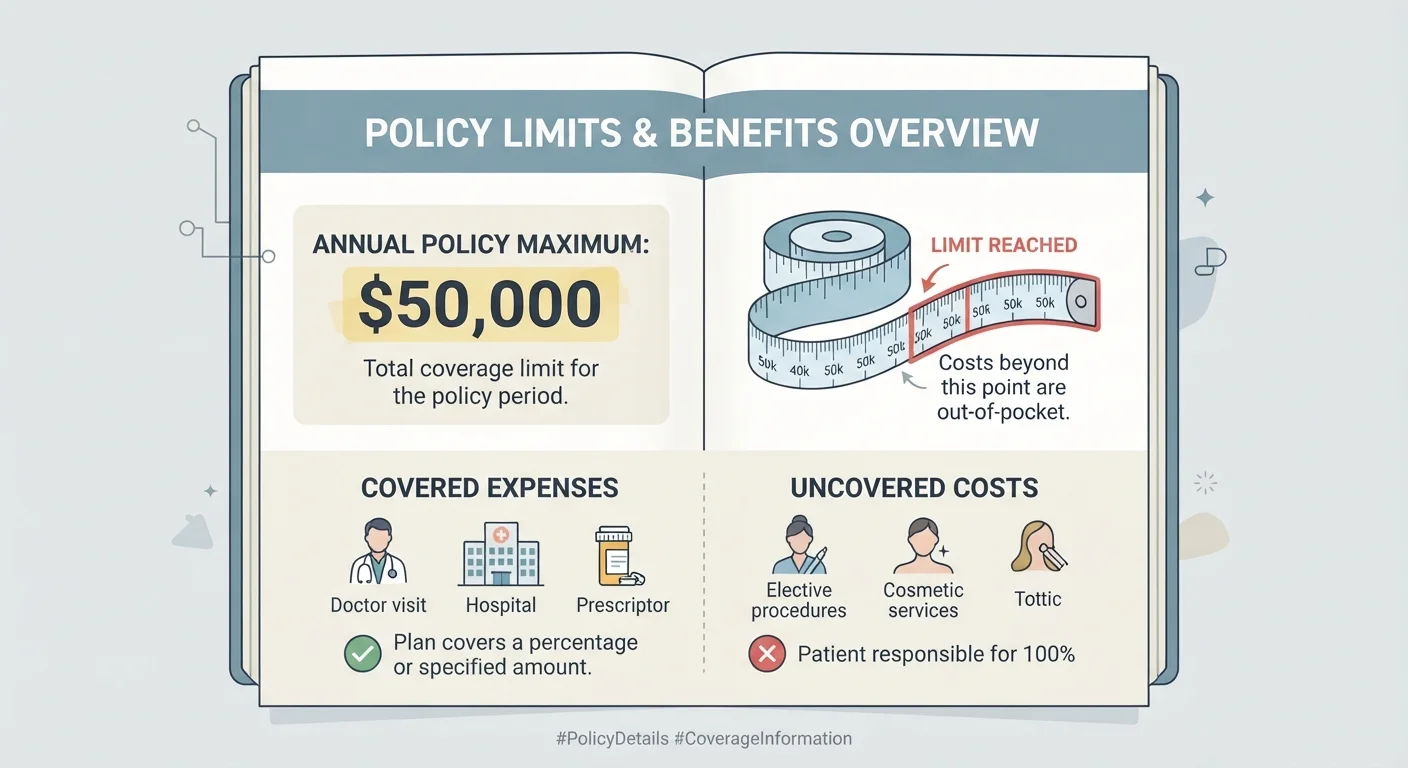
When you buy an insurance policy, you're not buying unlimited protection - you're buying protection up to a defined ceiling. That ceiling is your coverage limit. It sets the most your insurer will pay for a covered loss, whether that's a car accident, a hospital stay, or damage to your home.
Think of it like a store credit with a fixed balance. Once the balance is used up, the remaining bill is yours. This is distinct from your deductible, which is what you pay before insurance steps in. For a side-by-side look at how those two numbers interact, see our breakdown of deductibles vs. out-of-pocket maximums.
Coverage limits appear on your policy's declarations page - usually the first page of your policy documents - listed as a dollar figure next to each type of coverage. Understanding what those numbers mean before you file a claim is one of the most practical things a policyholder can do.
Where to Find Your Limits
Your coverage limits are listed on the declarations page - typically the first one or two pages of your policy documents. Insurers are also required to provide a Summary of Benefits and Coverage for health plans. If you're unsure what your current limits are, your insurance company or agent can provide a clear breakdown.
The Different Ways Limits Are Structured
Coverage limits aren't always a single number. They're structured in several ways depending on the policy type:
- Per-occurrence limit: The maximum paid for a single covered event, regardless of how many people or costs are involved.
- Per-person limit: Common in auto liability, this caps what the insurer pays for any one individual injured in an accident.
- Annual or aggregate limit: The total the insurer will pay across all claims during a policy period, often one year.
- Sub-limits: A lower cap within a broader policy for specific items or categories - for example, a jewelry or electronics sub-limit inside a homeowners policy.
These layers can interact in ways that aren't always obvious. A closer look at policy limits, sub-limits, and aggregate caps explains how these layers stack in practice.
1 in 7
U.S. homeowners estimated to be underinsured
Industry analysts have estimated that a significant share of insured homes carry coverage limits below actual rebuild costs, leaving owners exposed after major losses.
$100,000+
Common minimum liability exposure in serious auto accidents
Medical and legal costs from a serious multi-person auto accident can easily exceed $100,000, underscoring why minimum state liability limits are often insufficient.
What Happens When Costs Exceed the Limit
Exceeding a coverage limit creates what's called an excess loss - the portion of a claim the insurer won't pay. This shifts financial responsibility directly to you.
In liability situations, this can be particularly serious. If you're found legally responsible for an accident and the damages exceed your liability limit, you may be required to pay the difference from personal assets. In health insurance, an annual benefit maximum (less common since the Affordable Care Act eliminated them for most essential health benefits in marketplace plans) would leave remaining medical costs uncovered for that policy year.
This is one reason policyholders often discover they're underinsured only at claim time - the limit looked adequate when the policy was purchased but hasn't kept pace with rising costs or increased assets.
Review Limits Whenever Your Life Changes
Major life events - buying a home, starting a business, acquiring valuables, or growing your household - can all create gaps between your existing limits and your actual exposure. Setting a reminder to review your declarations page annually, and after any major change, takes only a few minutes and can prevent large uncovered losses.
For a full picture of how premiums, deductibles, and limits all connect within a single claim, see how insurance costs work from first dollar to policy limit.
Limits in Common Policy Types
Coverage limits show up differently depending on what kind of insurance you're looking at:
- Auto insurance: Liability limits are often written as three numbers, such as 25/50/25 - representing per-person bodily injury, per-accident bodily injury, and property damage maximums in thousands of dollars. See how liability and full coverage compare for more on auto coverage structure.
- Health insurance: Most plans no longer have lifetime dollar limits on essential health benefits, but out-of-pocket maximums act as a related cap on your own costs. Health insurance explained covers these terms in detail.
- Homeowners insurance: Policies typically carry a dwelling coverage limit based on estimated rebuild cost, separate from personal property limits and liability limits. Sub-limits often apply to valuables.
- Pet insurance: Many pet plans impose annual or per-condition limits. Pet insurance coverage and exclusions explains how these caps affect reimbursements.
Reviewing and Adjusting Your Limits
Coverage limits aren't permanent - most can be adjusted at renewal, and sometimes mid-term. Raising your limits typically increases your premium, while lowering them reduces it. For a clear look at the factors that influence premium pricing, see everything that can raise or lower your insurance premium.
A few situations that commonly prompt a limit review:
- Your income or assets have grown significantly since you bought the policy
- You've made major home improvements that increase rebuild costs
- Construction or medical costs in your area have risen sharply
- You're adding a young driver to an auto policy
It's also worth reviewing how your policy values property. Actual cash value versus replacement cost coverage is a closely related concept - the valuation method affects whether your limit is truly enough to recover after a loss.
This article is for general informational purposes only and does not constitute personalized insurance, financial, or legal advice. Coverage terms, limits, and regulations vary by insurer and state. Consult a licensed insurance agent or adviser for guidance specific to your situation.
Frequently Asked Questions
Once your insurer pays up to the policy limit, you become responsible for all remaining costs. For example, if your liability limit is $100,000 and a judgment against you is $150,000, you owe the $50,000 difference out of pocket. This is why choosing an adequate limit matters before a loss occurs.
No - they work in opposite directions. A deductible is the amount you pay first before insurance kicks in. A coverage limit is the ceiling on what the insurer pays after the deductible is met. Both affect your total financial exposure, but at different points in a claim.
Generally yes, though changes typically take effect going forward, not retroactively. You can request a limit increase when renewing or sometimes mid-term, which may raise your premium. Contact your insurer or a licensed agent to discuss options specific to your policy.
Virtually all insurance policies include some form of limit. Even policies marketed as 'comprehensive' set maximum payouts either per event or over the policy period. Reviewing the declarations page of any policy will show you the limits in plain numbers.
A sub-limit is a lower cap that applies to a specific category within a broader policy. For instance, a homeowners policy might have a $300,000 overall limit but a $5,000 sub-limit for jewelry. Even if you haven't hit the overall limit, the sub-limit restricts what the insurer pays for that category.
The right limit depends on your assets, income, and the potential cost of a loss in your situation. A licensed insurance agent or financial adviser can help you assess your exposure. This article provides general education - not personalized advice - so consult a professional for guidance specific to your circumstances.
The content on this site is for informational purposes only and is not a substitute for professional advice. Always consult a qualified professional for guidance specific to your situation.