

Why Winterizing Before the First Freeze Matters
Cold weather doesn't announce itself with enough warning to scramble for caulk and pipe insulation. Drafts, frozen pipes, and an overworked heating system are the three most common - and most preventable - winter home problems. Addressing them in late summer or early fall means you're working in comfortable temperatures with supplies still readily available.
Winterization also pays measurable dividends on energy costs. Uncontrolled air leakage through gaps around windows, doors, and attic penetrations can account for a significant share of heating loss in a typical home. Combine that with under-insulated pipes and a clogged furnace filter, and you're paying far more than necessary for an uncomfortable house.
This guide walks through the core tasks in a logical sequence - starting outside and working in - so nothing slips through the cracks. For a full year-round maintenance picture, see our seasonal home maintenance calendar.
What you will need
Step-by-Step: Sealing, Protecting, and Preparing
Work through the steps below over a weekend or split across several evenings. You don't need specialty skills - just basic tools, the right materials, and a methodical approach.
Inspect and Clean Gutters
Clear all leaves, debris, and standing water from gutters and downspouts. Check that downspouts direct water at least three feet away from the foundation. Blocked gutters trap snowmelt and form ice dams - ridges of ice that back water under shingles and into your walls.
Seal Air Leaks Around Windows and Doors
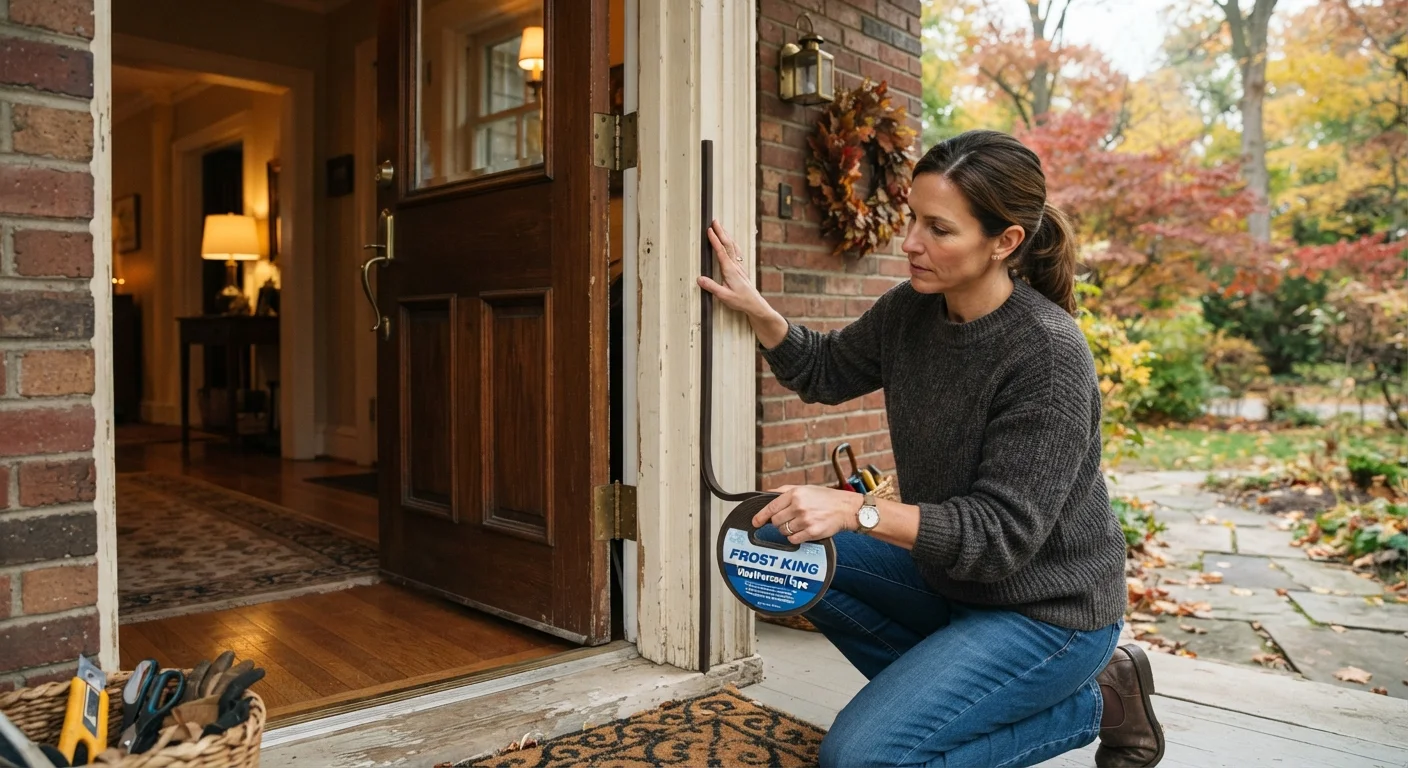
Run your hand along the perimeter of every exterior door and operable window on a windy day. Feeling a draft or seeing daylight at the edges means conditioned air is escaping. Apply fresh weatherstripping to door frames and door sweeps at thresholds where worn. Use paintable acrylic caulk for stationary gaps around window frames; silicone caulk is better for exterior use where the surface will get wet.
Seal Attic Air Bypasses
Attics are often the biggest source of heat loss in a home - not just through thin insulation, but through penetrations where plumbing, wiring, and framing create open paths between conditioned living space and the attic. Use fire-rated caulk or expanding foam to seal around any pipes, wires, or light fixtures that penetrate the attic floor. Check that existing insulation hasn't shifted away from the eaves.
Insulate Exposed Pipes
Pipes in unheated spaces - garages, crawl spaces, exterior walls, or an unfinished basement - are vulnerable to freezing when temperatures drop below 32°F. Wrap them in pre-slit foam pipe insulation, cutting it to length and taping the seams closed. For pipes in extremely cold zones or near exterior walls, self-regulating heat tape (also called heat cable) provides active protection when temperatures plunge.
Service Your Heating System
Replace the furnace or air handler filter - a clogged filter forces the system to work harder, shortens equipment life, and degrades air quality. Check that all supply vents and return-air grilles are unobstructed by furniture or drapes. If your system runs on a boiler, bleed any air from radiators. For a full furnace tune-up including burner inspection and flue check, schedule a certified HVAC technician.
Check the Chimney and Fireplace (If Applicable)
If you use a wood-burning fireplace or stove, the National Fire Protection Association recommends annual inspection and cleaning of chimneys. Creosote buildup is a leading cause of chimney fires. Make sure the damper opens and closes fully, and inspect the firebox and visible flue for cracks or debris. This work is typically done by a licensed chimney sweep.
Disconnect Outdoor Hoses and Shut Off Exterior Faucets
Disconnect and drain all garden hoses before the first freeze. For homes with interior shutoff valves feeding outdoor hose bibs, close the interior valve and then open the exterior faucet briefly to drain any remaining water from the line. Frost-free sill cocks (the type with a long stem) still require disconnecting hoses - a connected hose holds water against the interior valve and defeats the frost-free design.
Bundle Tasks to Save Time
Weatherization tasks cluster naturally by zone - exterior, attic, basement, and mechanical systems. Working zone-by-zone in a single session is more efficient than circling back across the house. Keep a notepad handy to log anything that needs a professional or a part ordered online.
Skipping these tasks now is a common path to expensive surprises in February. Our guide on commonly overlooked home maintenance issues covers what tends to go wrong when winterization is deferred.
What to Hand Off to a Professional
Most of the tasks above are safely DIY. A few, however, warrant a licensed contractor:
- Gas furnace servicing beyond filter replacement - burner inspection, heat exchanger checks, and flue cleaning involve combustion safety and should be done by a certified HVAC technician.
- Roof repairs - working on a roof carries serious fall risk. If you spot damaged shingles or flashing, get a roofing professional before the first snowfall.
- Structural insulation gaps in walls - blown-in insulation in wall cavities typically requires professional equipment. Our overview of residential insulation maintenance explains the full scope of what's involved.
- Crawl space and basement moisture - if you're seeing standing water or persistent dampness, address it before sealing anything up. See basement waterproofing approaches for an overview of your options.
Gas Lines and Electrical Work: Stop Here
Never attempt to seal, reposition, or inspect a gas line yourself. Similarly, adding electrical outlets or wiring in an attic or crawl space requires a licensed electrician and, in most jurisdictions, a permit. Cutting corners on gas or electrical work creates life-safety hazards and may void your homeowner's insurance.
This article provides general home maintenance information for educational purposes. Always verify local building codes and permit requirements before undertaking repairs, and consult a licensed professional for work involving gas lines, structural components, or roofing.
The content on this site is for informational purposes only and is not a substitute for professional advice. Always consult a qualified professional for guidance specific to your situation.