

The Quiet Costs of Doing Nothing
Most home damage doesn't announce itself. It builds slowly - behind walls, under floors, and above ceilings - until it's impossible to ignore. By that point, a task that once would have taken an afternoon and a few dollars has turned into a contractor estimate that makes your stomach drop.
The good news is that the majority of these expensive surprises are preventable. They don't require specialized skills or a large budget upfront. What they do require is attention. If you want a structured framework for managing all of this, our guide on what a home maintenance schedule actually looks like is a solid place to start.
Below are the most commonly skipped tasks - and what they quietly cost when ignored.
Clogged Gutters and Downspouts
Gutters exist to direct water away from your foundation. When they're clogged with leaves and debris, water pools along your roofline, seeps under shingles, and eventually works its way toward your foundation. Foundation repairs - depending on severity - can run anywhere from a few hundred to tens of thousands of dollars.
Cleaning gutters twice a year (typically in late spring and late fall) and checking that downspouts extend at least four to six feet from the house is a low-effort task that protects one of your home's most expensive systems. If your roof access is limited or steep, this is a job worth delegating to a professional for safety reasons.
Clogged gutters quietly redirect water toward your foundation - one of your home's most expensive repair zones.
HVAC Filter Neglect
A dirty air filter forces your HVAC system to work harder, raising energy bills and accelerating wear on the blower motor and compressor. In severe cases, a blocked filter causes the system to overheat or freeze up. Replacing a compressor can cost more than $1,500 - while a replacement filter costs a few dollars and takes two minutes to swap.
Most filters should be replaced every one to three months depending on household size, pets, and air quality. Check your system's documentation for the manufacturer's recommendation and mark it on your calendar.
A two-dollar filter swap every few months can prevent a compressor replacement costing over a thousand dollars.
Crawl Space Moisture
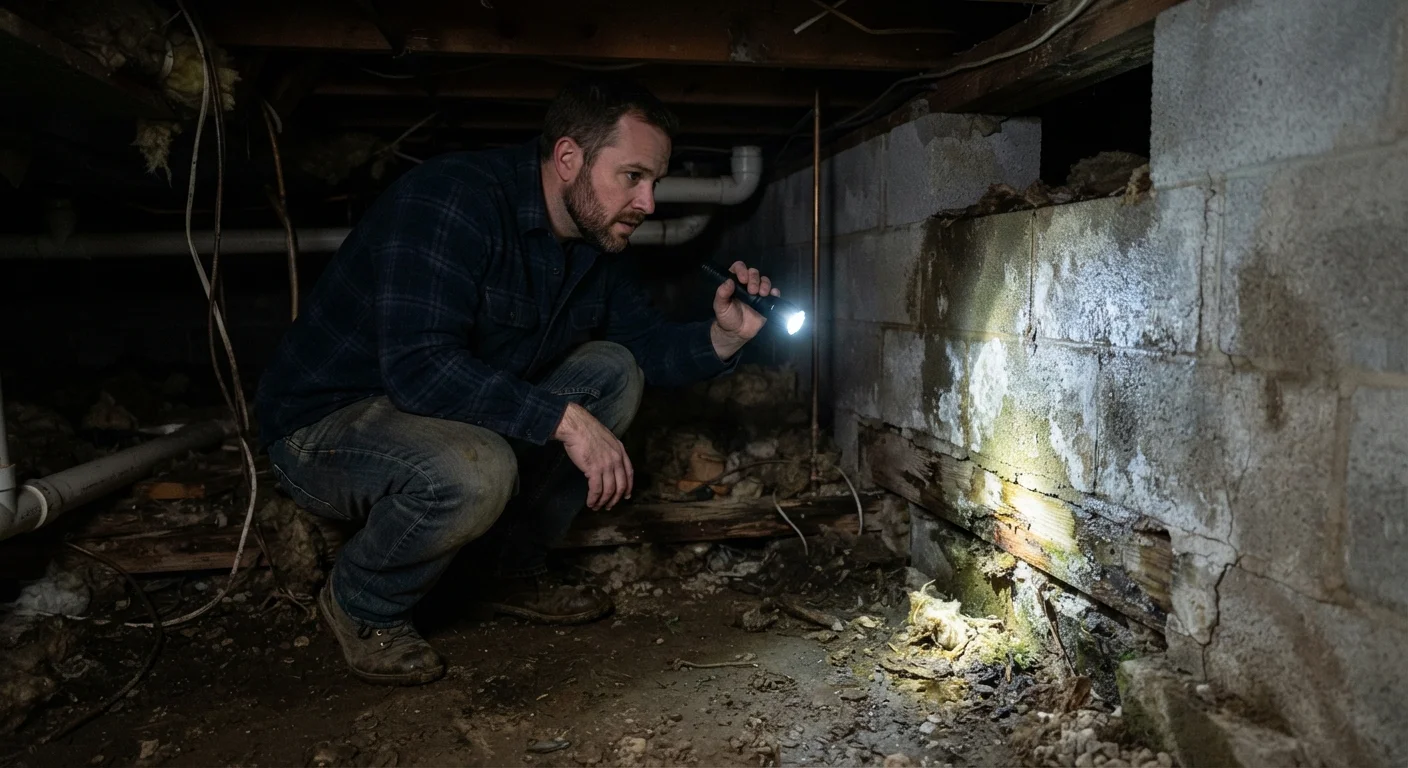
Crawl spaces are out of sight and easy to forget, but moisture that accumulates there can rot floor joists, promote mold growth, and degrade insulation over time. Signs of a problem include musty odors on the ground floor, soft spots underfoot, or visible condensation on pipes.
A vapor barrier - a heavy plastic sheeting laid across the crawl space floor - is one of the most cost-effective defenses against moisture intrusion. If you already have standing water or significant mold, bring in a licensed inspector before attempting any DIY remediation. For a broader look at how insulation connects to moisture control, see our guide on home insulation from attic to basement.
Crawl space moisture silently rots structural wood and degrades insulation long before you notice any symptoms.
Slow or Gurgling Drains
A drain that takes a little longer than usual to empty rarely feels urgent - until it backs up entirely or causes a pipe to burst from pressure. Slow drains often signal partial blockages that, if left unaddressed, can become full clogs requiring professional snaking or hydro-jetting.
Pouring boiling water down slow drains periodically, using a drain strainer in showers and sinks, and avoiding grease disposal down kitchen drains are simple preventive steps. For a more complete picture of what homeowners can manage themselves, plumbing maintenance every homeowner should understand covers the key checkpoints.
Slow drains are early warnings - ignoring them long enough turns a simple fix into a plumber's emergency call.
Attic Ventilation and Insulation Gaps
Attics that lack adequate ventilation trap heat in summer and moisture in winter - both of which degrade roofing materials from the inside out. Ice dams, a common winter problem in colder climates, form when heat escapes through a poorly insulated attic and melts snow on the roof, which refreezes at the cold eaves and backs water under shingles.
Checking that attic vents are unobstructed and that insulation is evenly distributed (without blocking soffit vents) is a straightforward annual task. What you can't easily see from the attic hatch is worth having a professional assess - our article on why DIY roof inspections miss what matters most explains what's commonly overlooked from the ground level.
Poor attic ventilation damages roofing from the inside, making an invisible problem very visible - and expensive - over time.
Water Heater Sediment Buildup
Over time, minerals from hard water settle at the bottom of a water heater tank. This sediment layer forces the heating element to work harder, increasing energy use and reducing the unit's lifespan. Rumbling or popping sounds from the water heater are often a sign sediment has built up significantly.
Flushing a water heater annually to remove sediment is a manageable DIY task for most homeowners, though the process varies by unit type. Consult your owner's manual first, and if you're unsure whether your unit has a pressure relief valve in good working order, have a plumber assess it - that valve is a key safety component.
Sediment buildup shortens water heater life and raises energy costs - an annual flush addresses both at once.
Build the Habit Before the Bill Arrives
None of the items on this list are complicated. But collectively, they represent thousands of dollars in preventable repairs each year for homeowners who simply didn't know to check. The pattern mirrors what happens in other areas of life: small, consistent action prevents expensive intervention later. Even vehicle owners run into this - the real cost of skipping oil changes follows the same logic as deferred home maintenance.
Track Tasks with a Simple Home Log
Keep a basic notebook or digital document listing each maintenance task, when it was last done, and any observations. This takes less than five minutes to update and gives you a clear record if you ever sell the home or need to file an insurance claim. It also removes the guesswork about when something was last serviced.
A useful next step is walking through your home systematically. Our annual home maintenance audit gives you a room-by-room checklist to spot issues before they escalate. And if you're unsure what's myth versus what's actually worth doing, common home maintenance myths is worth a read alongside this one.
This article is for general informational purposes only. For tasks involving electrical systems, structural components, gas lines, or permitted work, consult a licensed contractor and verify your local building code requirements before proceeding.
The content on this site is for informational purposes only and is not a substitute for professional advice. Always consult a qualified professional for guidance specific to your situation.