

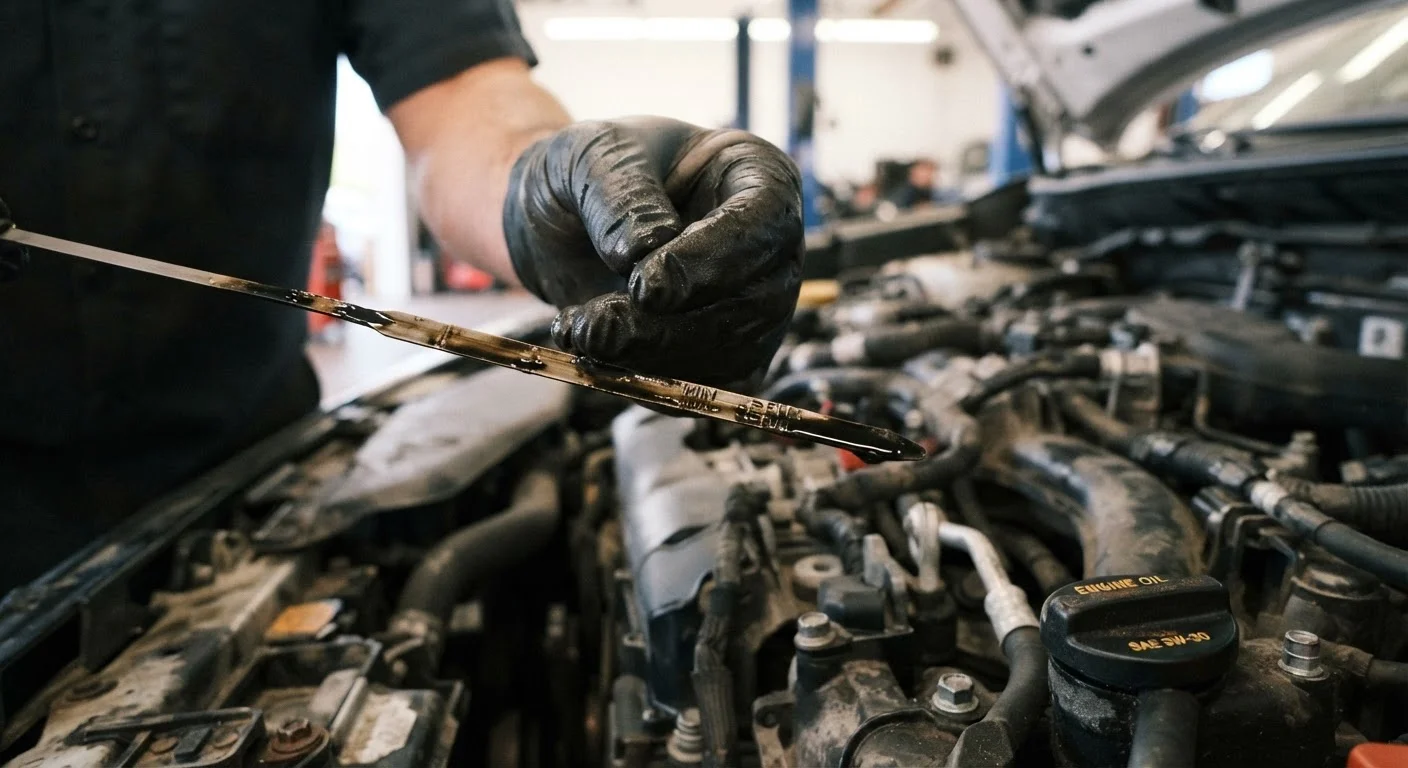
Why Oil Changes Matter More Than Most Drivers Realize
Motor oil performs several critical jobs simultaneously: it lubricates moving metal parts, carries heat away from the engine, suspends contaminants, and helps prevent corrosion. Over time and miles, the oil's protective additives deplete and the fluid itself breaks down. What starts as amber-colored liquid gradually becomes dark, thick, and acidic - far less capable of doing any of those jobs well.
The problem is that this degradation is invisible from the driver's seat. Unlike a flat tire or a warning light (which may not illuminate until damage has already begun), oil breakdown happens silently. That invisibility is exactly why skipping or delaying oil changes is so common - and so costly. If you're already thinking about long-term vehicle care, see what maintenance looks like past 100,000 miles - oil discipline is foundational to getting there.
The Most Costly Mistakes Drivers Make with Oil Changes
Understanding where drivers go wrong is the first step toward protecting your engine. Here are the most common errors - and what they actually cost.
Stretching oil changes well beyond the manufacturer's recommended interval.
Why it happens: Many drivers grew up with the old 3,000-mile rule and assume modern engines and oils are equally forgiving at higher mileage. Others simply delay out of inconvenience or budget concerns.
Relying solely on the dashboard oil life monitor without understanding what it measures.
Why it happens: Oil life monitors are convenient, so drivers treat them as absolute authorities. What many don't realize is that these algorithms estimate based on driving conditions - they don't directly measure oil quality.
Topping off low oil instead of changing it when the oil is already degraded.
Why it happens: Adding fresh oil to a low engine seems logical - it brings the level back up. But mixing fresh oil into heavily contaminated, sludgy oil doesn't restore protection; it just dilutes the problem slightly.
Ignoring oil changes during periods of low driving mileage.
Why it happens: Drivers who work from home or rarely use their vehicle assume that low mileage means oil stays fresh. In reality, time degrades oil too - moisture and combustion byproducts accumulate even in engines that sit.
Neglecting your oil is similar in spirit to other deferred maintenance traps. Homeowners face the same pattern - skipping small upkeep tasks until they become expensive structural problems.
What the Repair Bills Actually Look Like
$3,000-$7,000+
Typical engine replacement cost
Industry repair estimates from major automotive service organizations place full engine replacement in this range, often exceeding the car's value in older vehicles.
$30-$100
Average oil change cost
Routine oil changes - the primary preventive measure - cost a fraction of the repairs that result from skipping them.
Engine repairs caused by oil neglect are among the most expensive a vehicle owner can face. A sludge flush and cleaning can run $150-$400. Replacing worn bearings or camshaft components often costs $500-$1,500. A full engine replacement - the endpoint of severe, prolonged neglect - can easily run $3,000 to $7,000 or more, sometimes exceeding the vehicle's market value entirely.
By contrast, a standard oil change typically costs between $30 and $100 depending on oil type and service location. The math is straightforward: routine maintenance is almost always cheaper than the repairs that follow neglect. Depreciation compounds this problem - a vehicle with a documented maintenance history holds its value better and is more attractive to future buyers.
For drivers weighing oil type decisions, understanding the differences between synthetic and conventional oil can help you choose the right interval for your vehicle and driving habits.
Short Trips Are Harder on Oil Than You Think
If most of your driving involves trips under five miles, your engine rarely reaches the temperature needed to fully evaporate moisture and combustion gases from the oil. This accelerates breakdown even at low mileage. Short-trip drivers should lean toward the shorter end of any recommended interval range and consider annual changes regardless of miles driven.
The content on this site is for informational purposes only and is not a substitute for professional advice. Always consult a qualified professional for guidance specific to your situation.