

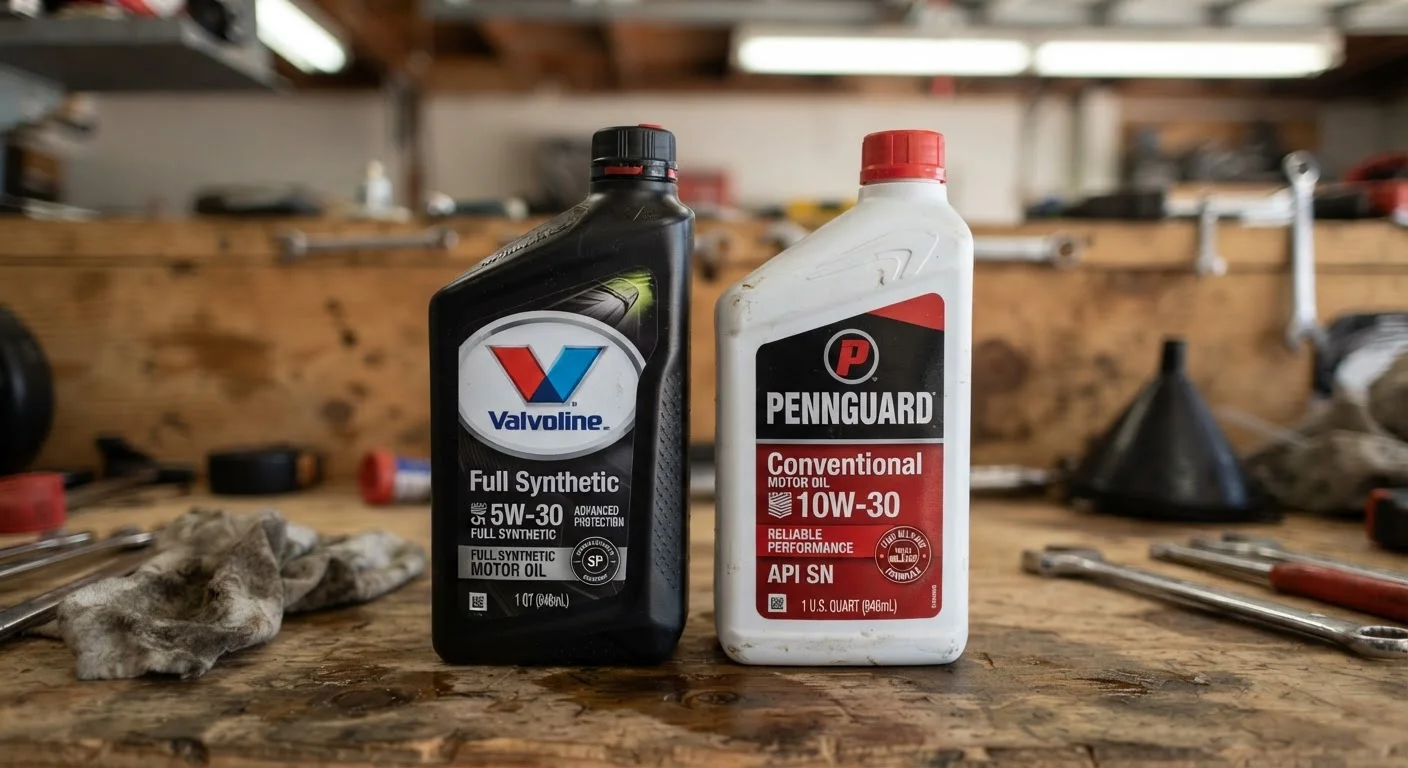
Option A
Synthetic Motor Oil
The engineered, high-performance option.
Best for: Best for newer vehicles, high-performance engines, extreme climates, and drivers who go longer between oil changes.
Option B
Conventional Motor Oil
The traditional, widely available standard.
Best for: Best for older engines, lower-mileage vehicles, and drivers following frequent oil change schedules on a tighter budget.
How Each Oil Is Made - and Why It Matters
Motor oil's primary job is to lubricate moving engine parts, reduce friction, carry away heat, and suspend contaminants until the oil is drained and replaced. Where conventional and synthetic oils diverge is in how they're produced and how consistently they perform under stress.
Conventional motor oil is refined from crude petroleum. During refining, impurities are removed, but the molecular structure remains somewhat irregular - a natural byproduct of working with a complex raw material. This irregularity means the oil's performance can vary slightly with temperature changes.
Synthetic motor oil is chemically engineered in a lab, starting from a base stock that's either derived from natural gas or built from scratch using chemical processes. The result is a highly uniform molecular structure that resists breakdown more effectively under heat and pressure. Synthetic oil also flows more readily at low temperatures, which is why it protects engines better during cold starts.
Understanding this difference sets the stage for every practical decision that follows - from how often you change your oil to which type your engine actually needs.
Side-by-Side: How They Compare Across Key Factors
Rather than relying on marketing language, it helps to look at specific performance factors. Here's how the two oil types compare across the criteria that matter most to everyday drivers.
| Criterion | Synthetic Oil | Conventional Oil |
|---|---|---|
| Source | Chemically engineered base stocks | Refined crude petroleum |
| Molecular consistency | Highly uniform | Naturally variable |
| Typical change interval | 7,500-15,000 miles | 3,000-5,000 miles |
| Cold-weather performance | Flows readily at low temps | Can thicken in extreme cold |
| High-heat resistance | Stronger resistance to breakdown | Degrades faster under heat |
| Cost per quart | Higher upfront cost | Lower upfront cost |
| Best engine fit | Newer, high-performance engines | Older or lower-stress engines |
One point worth highlighting: change intervals. Conventional oil is typically recommended every 3,000 to 5,000 miles under normal driving conditions, while many synthetic oils are rated for 7,500 to 15,000 miles - though always verify with your vehicle's manual. More frequent changes with conventional oil can narrow the cost gap with synthetic over time. For a fuller picture of what happens when oil changes are delayed, see The Real Cost of Skipping Oil Changes.
Which Oil Does Your Engine Actually Need?
The most reliable answer to this question lives in your vehicle's owner's manual - not on a shelf at the auto parts store. Manufacturers specify oil type and viscosity grade (such as 5W-30 or 0W-20) based on engine design, tolerances, and intended operating conditions.
A few rules of thumb that hold up broadly:
- Newer vehicles - particularly those with turbocharged engines, variable valve timing, or direct injection - are increasingly designed to run on full synthetic. Using conventional oil in these engines may not provide adequate protection.
- Older engines with higher mileage may have worn seals that behave differently with synthetic oil's thinner viscosity at low temperatures. This doesn't mean synthetic is always harmful to high-mileage engines, but it's worth discussing with a trusted mechanic before switching.
- Extreme climates - consistently sub-freezing winters or very hot summers - favor synthetic oil's wider temperature stability range.
Viscosity Grade Is Non-Negotiable
Regardless of whether you choose synthetic or conventional, always use the viscosity grade specified in your owner's manual (e.g., 5W-30, 0W-20). Viscosity refers to how thick or thin the oil is at different temperatures, and using the wrong grade can affect engine protection and fuel efficiency. The oil type (synthetic vs. conventional) and the viscosity grade are two separate specifications - both matter.
If you're uncertain about where to get the service done, our breakdown of dealership service vs. independent mechanics walks through the trade-offs clearly.
~7,500-15,000 mi
Typical synthetic oil change interval
Many synthetic oil manufacturers and vehicle OEMs rate full synthetic oil for significantly longer intervals than conventional, though actual intervals vary by vehicle and driving conditions.
3,000-5,000 mi
Conventional oil change interval
Traditional guidance for conventional oil, though some newer vehicles using conventional oil may allow up to 5,000 miles - always defer to your owner's manual.
Making a Practical Decision Without Overthinking It
For most drivers, choosing between synthetic and conventional oil doesn't need to be complicated. Start with the owner's manual, confirm the viscosity grade your engine requires, and use that as your baseline. If your manual calls for synthetic, use synthetic. If it permits conventional, weigh the cost-versus-interval trade-off for your driving habits.
One common misconception: once you switch to synthetic, you can't go back. In practice, most modern engines tolerate both types and can be switched without issue, though mixing oil types in the same reservoir is generally not recommended. Always drain fully before switching.
Staying consistent with the right oil - whichever type that is - matters more than optimizing for the most expensive option. As our guide on oil change costs explains, neglecting oil maintenance is where real engine damage begins. Similarly, understanding fuel grades follows the same logic: use what your vehicle is designed for, and you'll rarely go wrong.
The content on this site is for informational purposes only and is not a substitute for professional advice. Always consult a qualified professional for guidance specific to your situation.