

Why Depreciation Is the Cost Nobody Talks About
When drivers calculate the cost of owning a car, they typically add up fuel, insurance, and the occasional repair bill. What most skip entirely is the largest expense of all: depreciation. It doesn't show up as a monthly invoice, but it's quietly eroding the value of your vehicle every single day.
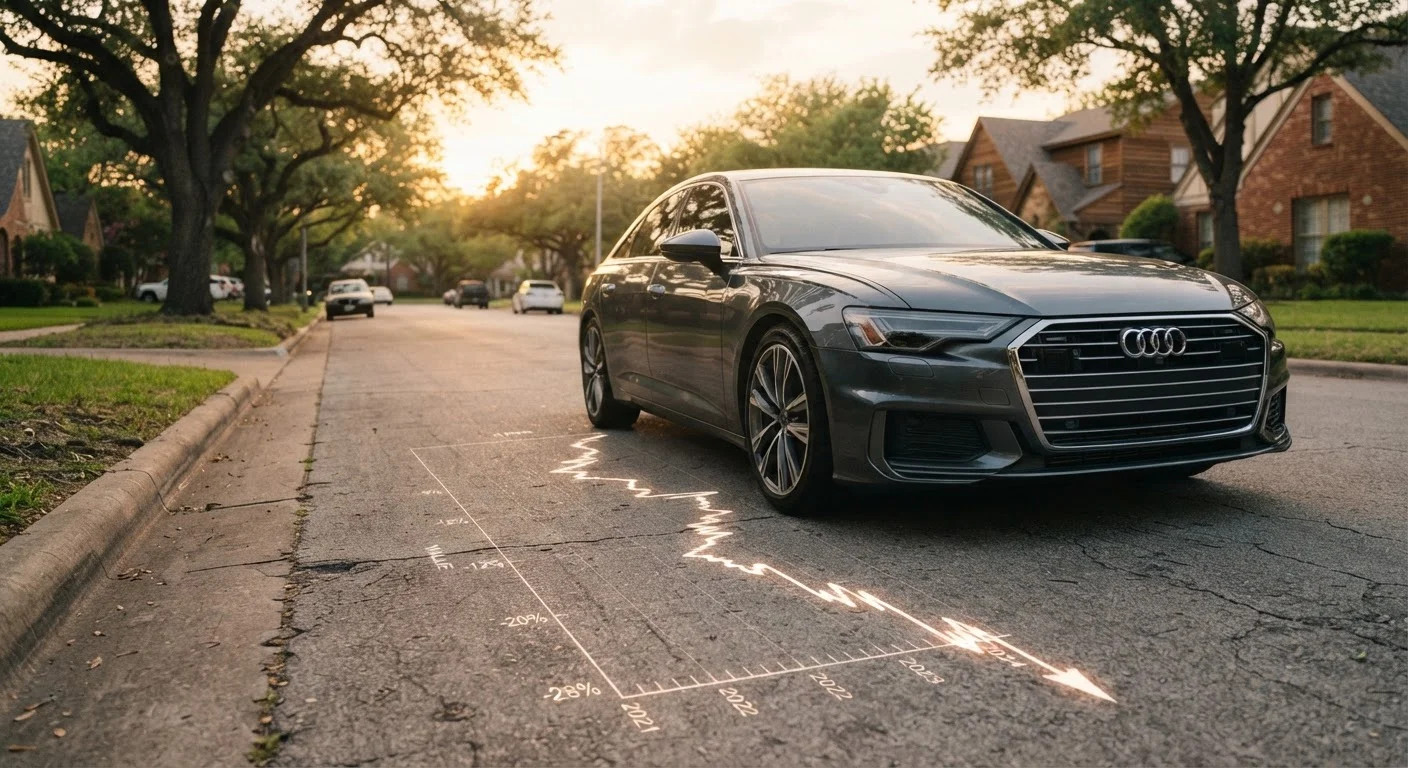
On average, a new vehicle can lose roughly 20% of its value in the first year alone, and close to 50% over five years - though exact figures vary widely by make, model, and market conditions. For a vehicle purchased at $35,000, that could mean $7,000 in lost value before the first scheduled maintenance is even due.
Understanding depreciation doesn't require an accounting degree. It simply means knowing that vehicles are depreciating assets - they lose value over time rather than gaining it - and that this loss has real financial consequences whether you sell in two years or ten.
~20%
Average first-year value loss for new vehicles
Industry estimates consistently show new vehicles lose a significant share of their value within the first 12 months of ownership.
~50%
Typical value lost over five years
Most mainstream vehicles retain roughly half their original purchase price after five years, though this varies considerably by model and market conditions.
#1
Rank of depreciation among vehicle ownership costs
For many drivers, depreciation exceeds fuel, insurance, and maintenance as the largest single cost of vehicle ownership over a typical ownership period.
What Drives a Vehicle's Depreciation Rate
Not all vehicles shed value at the same pace. Several factors determine how quickly - or slowly - a car's market value declines:
- Age and mileage: Both are strongly correlated with depreciation. More miles and more years generally mean a lower appraisal value.
- Brand and model reputation: Vehicles associated with long-term reliability and lower ownership costs tend to retain value better. Market perception matters.
- Supply and demand: When a particular model is scarce or in high demand, its used price stays elevated. When supply is abundant, values fall faster.
- Condition: Dents, interior wear, and mechanical neglect all reduce what a buyer is willing to pay. Neglected maintenance - like skipping routine oil changes - can cause damage that significantly lowers a vehicle's worth.
- Fuel type and efficiency: As fuel prices shift, so does buyer demand for certain vehicle types, which can accelerate or slow depreciation for specific segments.
Equally important: driver habits matter more than most people realize. Certain driving behaviors quietly accelerate wear, which feeds directly into faster depreciation and lower resale values.
Simple Way to Estimate Depreciation
Look up your vehicle's current private-party or trade-in value using a reputable automotive valuation resource, then compare it to what you paid. The difference is the depreciation you've already absorbed. Checking this annually helps you make informed decisions about when to sell or trade in.
How Depreciation Shapes the Buy vs. Keep Decision
The steepest part of the depreciation curve happens early. A vehicle that's two or three years old has already absorbed that first-year value drop - meaning the original buyer bore that cost, not you. Purchasing a well-maintained used vehicle in this window is one of the most practical ways to reduce the depreciation you personally absorb.
If you're deciding whether to keep an aging vehicle versus buying new, depreciation math is relevant in a different way. A paid-off car with moderate maintenance needs often costs far less per year than absorbing the depreciation on a new purchase. Vehicles that cross 100,000 miles can still deliver strong value when maintained properly - the depreciation curve flattens considerably by that point.
Financing decisions intersect with depreciation in an important way too. If you finance a vehicle that depreciates faster than you pay down the loan, you can find yourself "underwater" - owing more than the car is worth. This limits your options if you need to sell or trade in before the loan is paid off. For a fuller picture of how purchase method affects your financial position, consider the trade-offs between financing and paying cash.
Protecting Your Vehicle's Value Over Time
You can't stop depreciation, but you can slow it. A few consistent habits make a meaningful difference:
- Follow the manufacturer's maintenance schedule. Your owner's manual outlines exactly what's needed and when - and service records documenting that you followed it are tangible evidence of care that buyers and appraisers recognize.
- Address mechanical issues promptly. Small problems become expensive ones when ignored, and they show up clearly in pre-purchase inspections.
- Keep the interior and exterior in reasonable condition. Cosmetic damage sends a signal about overall care, even when mechanical systems are sound.
- Be mindful of mileage. If you're close to a high-mileage threshold that significantly affects resale value, timing your sale or trade-in can make a practical difference.
Whether you use a dealership service center or an independent mechanic, what matters most is consistency and documentation. Both options can serve you well as long as the work is done correctly and recorded.
Depreciation is a universal reality of vehicle ownership - but it doesn't have to be a surprise. Drivers who understand how value erodes over time are in a much better position to buy smarter, maintain consistently, and make sound decisions about when to sell.
This article is for general informational purposes only and does not constitute financial or legal advice. For guidance specific to your situation, consult a qualified financial professional.
Frequently Asked Questions
Most new vehicles lose between 15% and 25% of their original purchase price within the first 12 months. This sharp early drop is sometimes called the "new car premium" - buyers pay for novelty, but that premium evaporates almost immediately once the car is titled and driven.
Vehicles with strong reliability reputations, high resale demand, and limited supply tend to hold value better. Trucks and certain SUVs have historically shown slower depreciation than sedans in the U.S. market. That said, depreciation trends shift with fuel prices, consumer preferences, and inventory levels.
It matters less if you drive a vehicle until it's no longer roadworthy, since you'll extract the full utility regardless of resale value. However, depreciation still affects your net worth and your ability to trade in or sell if your plans change unexpectedly.
Yes. Mileage is one of the most significant factors in resale value. A vehicle with significantly above-average annual mileage will typically appraise lower than a comparable vehicle with average mileage, all else being equal.
Documented maintenance history signals to buyers that the vehicle was cared for, which can support a higher resale price. Keeping records of oil changes, inspections, and repairs is a straightforward way to protect your vehicle's value over time.
Leasing shifts depreciation risk to the leasing company - you return the vehicle rather than absorbing its loss in value. However, leasing also means you build no equity and may face mileage penalties. Whether it's a better deal depends on your driving habits and financial goals, so consider consulting a financial adviser.
The content on this site is for informational purposes only and is not a substitute for professional advice. Always consult a qualified professional for guidance specific to your situation.