

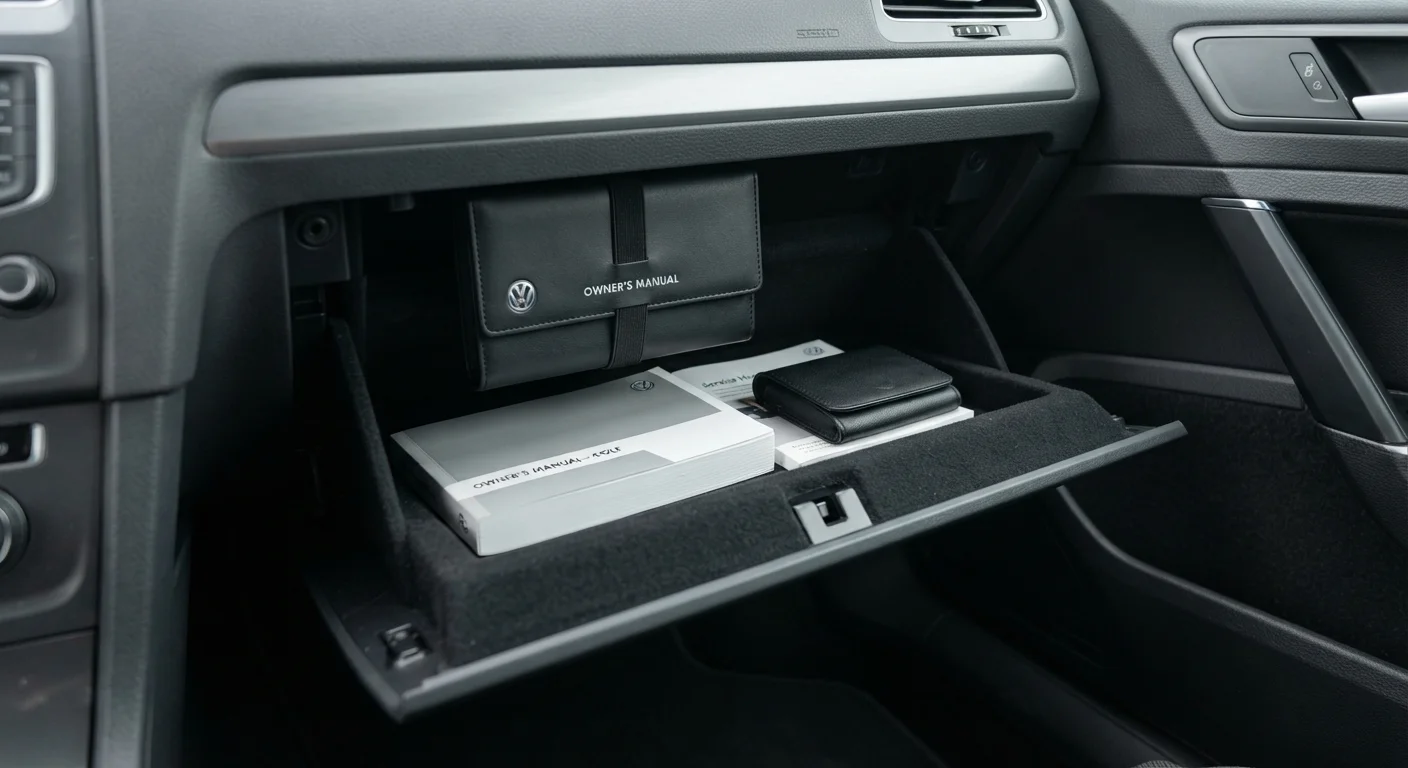
What's Actually Inside Your Owner's Manual
Most drivers treat the owner's manual as fine print - something to flip through once, then forget. In reality, it's a precision document written specifically for your vehicle's engine, drivetrain, and electronics, not a generic placeholder booklet.
A typical manual covers: recommended fuel octane rating, engine oil specification and capacity, tire size and inflation pressure, brake fluid and coolant types, scheduled maintenance intervals by mileage and time, load and towing limits, and explanations for every dashboard warning indicator. That last one alone makes it worth keeping within reach - see our guide to dashboard warning lights for a broader breakdown of what those symbols mean and when to act fast.
The manual also documents how driver-assistance systems, infotainment features, and safety technology in your specific trim are meant to operate - details that aren't covered in any third-party guide.
The Real Cost of Ignoring It
Skipping the manual isn't just a minor inconvenience - it can lead to premature wear, failed components, and denied warranty claims. Using the wrong engine oil, for example, can reduce lubrication efficiency. Running tires at incorrect pressure accelerates tread wear and affects fuel economy. Exceeding towing capacity strains the transmission, cooling system, and frame in ways that compound over time.
77%
Drivers who rarely or never read their owner's manual
According to a survey by AutoMD, the majority of vehicle owners report not consulting their owner's manual after the initial purchase period.
$1,200+
Average cost of a preventable engine repair
Industry repair data consistently shows that many common engine failures - such as those caused by incorrect oil or neglected fluid changes - cost well over $1,000 to fix.
Up to 10%
Fuel economy loss from incorrect tire pressure
The U.S. Department of Energy estimates that underinflated tires can reduce gas mileage by roughly 0.2% for every 1 PSI drop below recommended levels across all four tires.
These aren't edge-case scenarios. They're the kind of habits that quietly shorten a vehicle's lifespan - often invisible until a major repair bill arrives. The manual exists precisely to prevent them.
From a financial perspective, following manufacturer service intervals also supports resale value. A vehicle with documented, spec-compliant maintenance history is easier to sell - an important consideration given how depreciation shapes vehicle ownership costs over time.
Maintenance Schedules: Normal vs. Severe Conditions
One of the most misunderstood sections in any owner's manual is the dual maintenance schedule. Virtually every manual lists two tracks: normal and severe (sometimes called "special operating conditions"). Many drivers assume they fall into the normal category - but severe conditions are more common than the name implies.
Severe conditions typically include: frequent short trips under five miles, driving in extreme heat or cold, stop-and-go city traffic, dusty environments, and towing or hauling heavy loads regularly. If your driving fits one or more of these, your manual's severe-duty intervals apply - meaning more frequent oil changes, filter replacements, and fluid checks.
Photograph the Key Pages
Take clear photos of your maintenance schedule, fluid specifications, and tire pressure chart and save them in a dedicated folder on your phone. This way the information is always accessible - even when the physical manual is buried under maps and receipts. Some automakers also offer companion apps that surface this data automatically.
Just as a home maintenance schedule keeps a house in good condition, a vehicle maintenance schedule prevents small issues from becoming expensive structural failures. The difference is simply knowing which schedule applies to you - and that answer is in the manual.
How to Use Your Manual Effectively
You don't need to memorize the entire document. A practical approach: read the index carefully when you first get the vehicle, bookmark or tab the maintenance schedule section, and flag the pages that explain your dashboard indicators. After that, treat it as a reference tool rather than required reading.
If your manual is missing, don't simply rely on generic advice found online - specifications vary significantly even within the same model family across different years. Download the manufacturer's official PDF using your vehicle's VIN for the most accurate version. Before any major service or pre-purchase inspection, reviewing the manual gives you an informed baseline to compare against.
This article provides general vehicle information for educational purposes only. Always consult a qualified mechanic for maintenance decisions specific to your vehicle's condition and history.
Frequently Asked Questions
Most automakers publish digital versions of owner's manuals on their official websites, searchable by model year and VIN. You can also check sites like the National Highway Traffic Safety Administration (NHTSA) database. Simply searching '[your make and model] owner's manual PDF' usually surfaces the manufacturer's page quickly.
Yes, in a meaningful way. Warranty coverage can be disputed if a mechanical failure is linked to improper maintenance - for example, using the wrong oil grade or skipping a required service interval. Following the manual's schedule creates a documented record that you maintained the vehicle correctly.
At minimum, consult it when a dashboard warning light appears, before attempting any DIY maintenance, and at every major mileage milestone your schedule references. New owners benefit from reading it cover-to-cover at least once to understand their vehicle's specific features and limits.
Not always. Dealerships sometimes recommend service intervals more frequent than what the manufacturer specifies - such as oil changes every 3,000 miles when the manual states 7,500 or more. Your manual reflects what the engineers determined is necessary for normal conditions.
Not necessarily. Your manual specifies not just viscosity (like 5W-30) but also API service classification and sometimes a manufacturer-specific approval code. Using an oil that doesn't meet those specs - even at the right weight - may not provide adequate protection for your engine.
The content on this site is for informational purposes only and is not a substitute for professional advice. Always consult a qualified professional for guidance specific to your situation.