

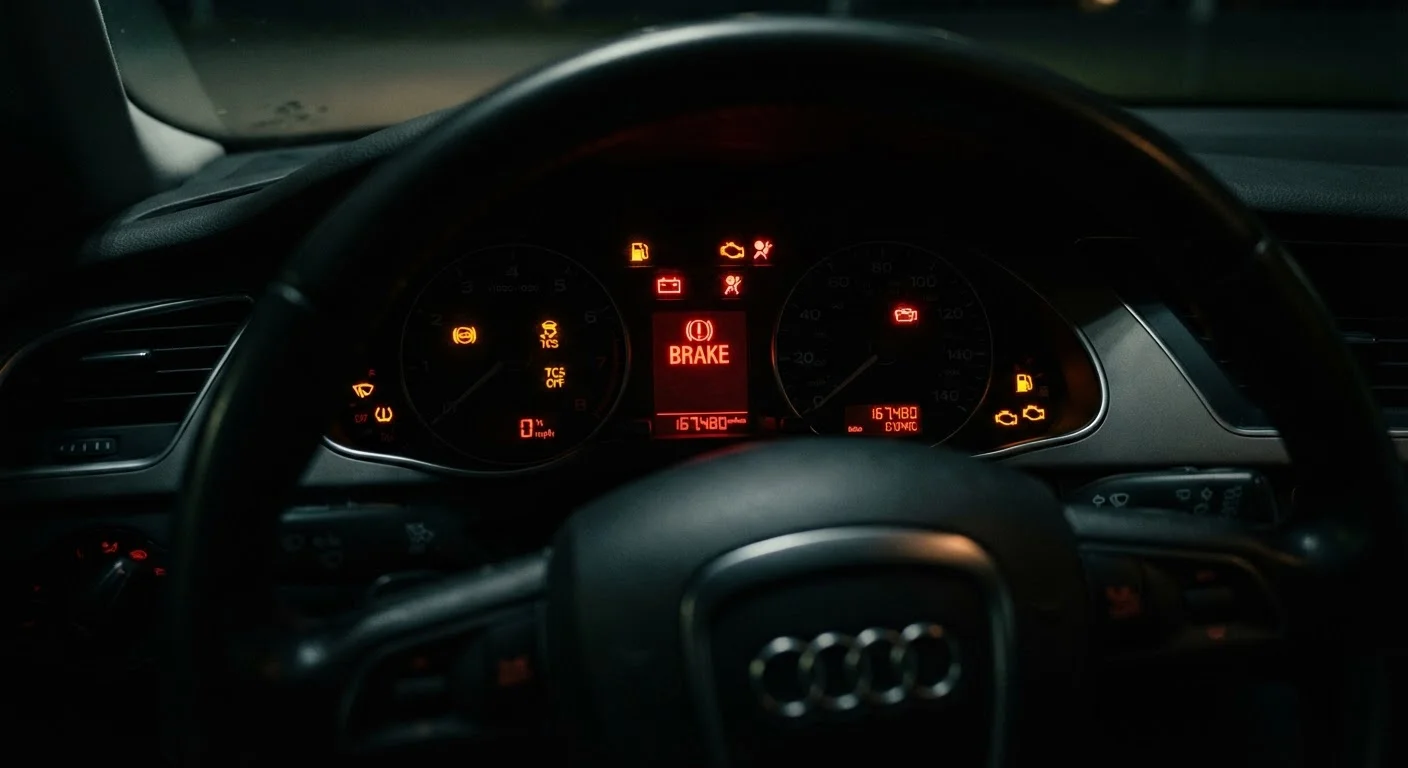
The Color Code: What the Light's Color Tells You First
Before you even read the symbol, the color of a dashboard warning light gives you your first critical piece of information. Most modern vehicles follow a consistent color system:
- Red: Requires immediate attention. Pull over safely as soon as possible.
- Yellow/Amber: Caution. Something needs attention, but you're not in immediate danger in most cases.
- Green or Blue: Informational only - a system is active (headlights, cruise control, etc.).
Understanding this hierarchy prevents the common mistake of treating every warning with equal urgency - or worse, ignoring a red light because a yellow one didn't cause a problem last time.
| Red Light Action | Pull over safely as soon as possible |
| Amber Light Action | Schedule service soon; monitor closely |
| Flashing vs. Steady Check Engine | Flashing = urgent; steady = schedule diagnostic |
| TPMS Trigger Threshold | Typically 25% below recommended PSI (NHTSA TPMS regulations) |
| Most Common Warning Light | Check Engine Light |
| Owner Manual Location | Glove box or digital download from manufacturer |
Lights That Mean Pull Over Now
Certain red warning lights signal conditions that can cause engine damage, fire risk, or complete loss of vehicle control within minutes of continued driving. Do not dismiss these.
Engine Oil Pressure (Red Oil Can Icon)
This light means your engine is not receiving adequate oil pressure. Continuing to drive can cause severe, often irreversible engine damage within a very short time. Pull over, shut off the engine, and check the oil level only after the engine cools. If the oil level is fine, do not restart - have the vehicle towed.
Engine Temperature Warning (Thermometer in Liquid)
An overheating engine can warp cylinder heads and destroy gaskets. If this light appears, turn off the air conditioning, turn on the heater (it draws heat away from the engine), and pull over safely. Never open a hot radiator cap.
Battery / Charging System (Battery Icon)
This light usually means the alternator has stopped charging the battery. Your vehicle is running entirely on battery reserve. Electrical systems will begin failing - typically within 30-60 minutes. Get to a safe location and seek service promptly.
Brake System Warning (Exclamation Mark in Circle)
If this light appears and your parking brake is fully released, you may have low brake fluid or a more serious hydraulic failure. Have the brakes inspected before driving further. Note: if the light appears only when the parking brake is engaged, that is normal operation.
When Multiple Lights Come On Together
If several warning lights illuminate simultaneously - especially red ones - this can indicate an electrical system failure rather than multiple unrelated problems. A failing alternator, for example, will commonly trigger the battery light, power steering light, and other warnings at the same time. In this situation, safely exit traffic and seek professional diagnosis rather than attempting to address each light individually.
Amber Lights: Attention Soon, Not Necessarily Right Now
Amber warning lights are your vehicle's way of saying, "You can finish your trip, but don't put this off."
Check Engine Light (Engine Outline Icon)
This is the most misunderstood light on the dashboard. It indicates the engine management system has logged a fault code. Causes range from a loose gas cap to a failing catalytic converter or oxygen sensor. A steady check engine light typically means schedule a diagnostic soon. A flashing check engine light indicates active engine misfiring - reduce speed and seek service promptly to avoid catalytic converter damage.
Low Tire Pressure (TPMS - Horseshoe with Exclamation)
The tire pressure monitoring system alerts you when one or more tires drops significantly below the recommended pressure. This affects handling, braking distance, and fuel efficiency. Check and inflate tires as soon as practical. For more on understanding tire pressure and safe inflation intervals, see our tire pressure and maintenance primer.
Transmission Temperature Warning
High transmission fluid temperature can shorten transmission life. Pull over, shift to park, and allow the vehicle to idle briefly. Persistent appearances of this light warrant professional inspection.
OBD-II Fault Code
A standardized diagnostic code stored by a vehicle's onboard computer when it detects a problem. A mechanic reads these codes with a scan tool to identify what triggered the check engine light.
TPMS
Tire Pressure Monitoring System - a sensor-based system that alerts the driver when tire pressure drops significantly below the recommended level. Required on all U.S. passenger vehicles manufactured after 2008.
Alternator
A generator driven by the engine that continuously recharges the battery while the vehicle is running. A failing alternator causes the battery warning light to illuminate.
Catalytic Converter
An exhaust system component that converts harmful engine emissions into less harmful gases. Engine misfires - indicated by a flashing check engine light - can overheat and permanently damage this expensive part.
Oil Pressure
The force at which engine oil is circulated through the engine's internal passages. Critically low oil pressure can cause metal-on-metal contact and irreversible engine damage within minutes.
Using Your Owner Manual and Building Good Habits
No article can substitute for your specific vehicle's documentation. Dashboard symbols are not fully standardized - the same icon can mean different things across makes and models. Your owner manual contains a complete, manufacturer-specific guide to every warning light your vehicle can display.
Addressing warning lights promptly is one of the simplest ways to avoid the common habits that shorten a vehicle's life. Ignored minor warnings frequently become major, expensive failures.
Before any long drive, a quick pre-trip check can prevent a warning light from catching you off-guard on the highway. Our road trip preparation checklist walks through the key systems to verify.
This article provides general educational information about vehicle dashboard warning lights and is not a substitute for professional mechanical diagnosis. Always consult a qualified mechanic for any safety-related concern with your vehicle. Warning light meanings can vary by make, model, and year - refer to your owner's manual for vehicle-specific guidance.
The content on this site is for informational purposes only and is not a substitute for professional advice. Always consult a qualified professional for guidance specific to your situation.