

Start here
Why Tires Matter More Than Most Drivers Realize
Next
Tire Pressure: The Right Number and How to Check It
Then
Tread Depth: Knowing When Your Tires Are Worn Out
When you're ready
Tire Rotation: Why It Extends Tire Life
Put it into practice
Putting It All Together: A Simple Tire Maintenance Routine
Why Tires Matter More Than Most Drivers Realize
Your tires are the only part of your vehicle that actually contacts the road. Every braking, steering, and acceleration input you make is transmitted through roughly a palm-sized patch of rubber per tire. When tires are underinflated, worn, or unevenly degraded, that contact patch shrinks or distorts - reducing your control over the vehicle in ways that aren't always obvious until an emergency.
Beyond safety, tire condition directly affects fuel economy. The U.S. Department of Energy notes that properly inflated tires can improve gas mileage. Worn or mismatched tires also stress suspension components, creating a cascade of maintenance costs. The good news: tire care requires only a few minutes per month and a couple of straightforward service intervals each year. Understanding the three core concepts - pressure, tread, and rotation - gives you everything you need to stay ahead of problems. For a broader look at how small habits affect your vehicle, see habits that quietly wear out your car faster.
Tire Pressure: The Right Number and How to Check It
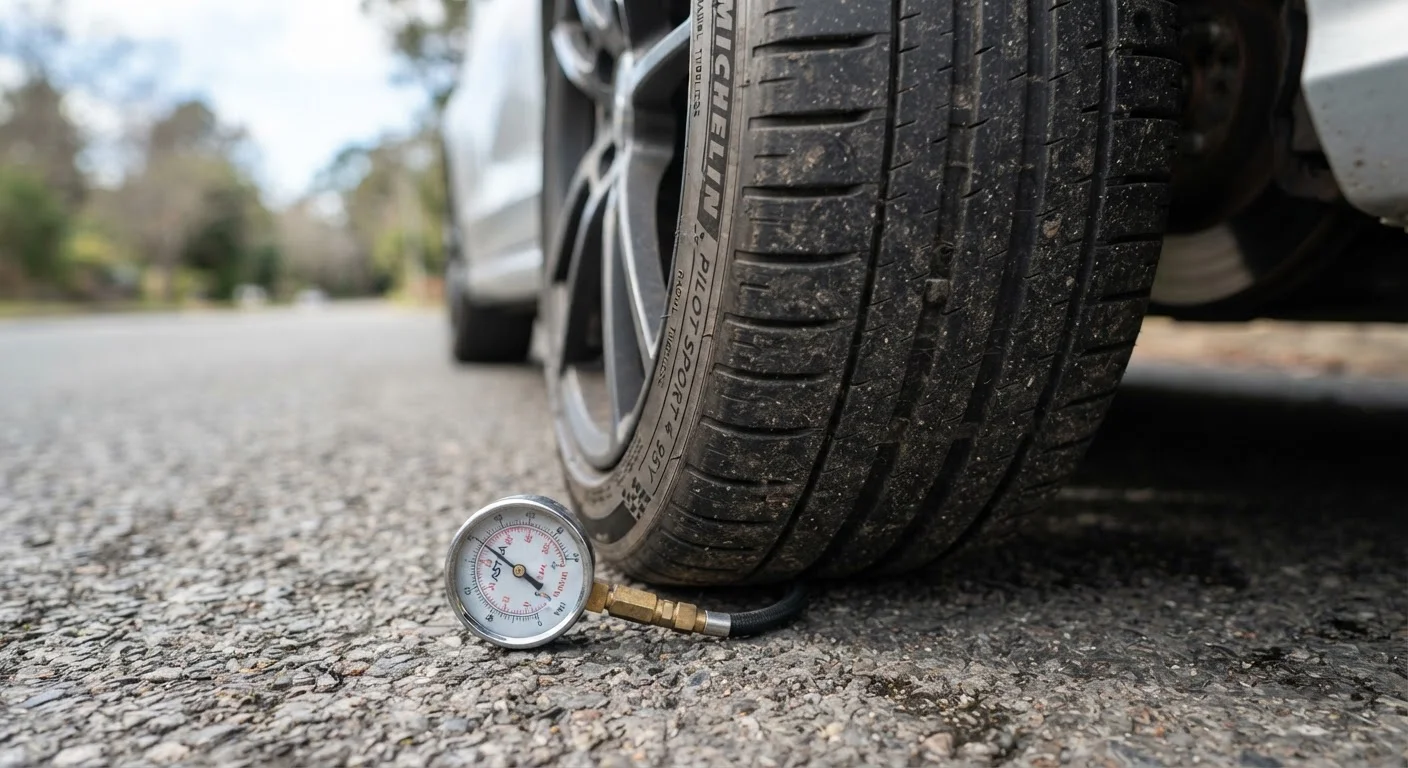
Tire pressure is measured in PSI. The correct PSI for your vehicle is printed on a sticker inside your driver's door jamb or in the owner's manual. Do not use the maximum PSI stamped on the tire sidewall - that figure is the tire's physical limit, not the recommended operating pressure.
PSI (pounds per square inch)
The unit used to measure how much air pressure is inside a tire. Higher PSI means more air; too much or too little affects handling and wear.
TPMS (Tire Pressure Monitoring System)
A built-in sensor system that alerts you via a dashboard warning light when one or more tires drops significantly below the recommended pressure.
Tread depth
The measurement of the grooves in a tire's surface. Deeper grooves channel water away and improve grip; shallow grooves reduce traction, especially in wet conditions.
Tire rotation
Moving tires from one position on the vehicle to another on a regular schedule so they all wear at a similar rate over time.
Sidewall
The side surface of a tire between the tread and the wheel rim. Bulges or cracks here indicate structural damage that requires immediate attention.
To check pressure accurately, use a quality gauge (digital or stick-style) when tires are cold - meaning the car has been parked for at least three hours or driven fewer than a mile. Driving heats the air inside tires, raising the reading by several PSI and producing a false result.
Check all four tires monthly. Most passenger vehicles run between 30 and 35 PSI, though this varies. Temperature matters: tire pressure drops roughly 1 PSI for every 10°F decrease in ambient temperature, which is why fall and winter often trigger low-pressure warnings. Your vehicle's TPMS warning light typically illuminates only after pressure drops 25% below recommended levels - so monthly manual checks catch problems the system misses. If you notice a persistent TPMS warning, consult what your dashboard warning lights are actually telling you.
Don't Rely Solely on Your TPMS Light
The TPMS warning typically triggers only after pressure has dropped 25% or more below the recommended level - at that point, handling and fuel economy are already affected. Monthly manual checks with a gauge catch gradual losses that the system won't flag. Treat the warning light as a minimum safety backstop, not a substitute for regular checks.
Tread Depth: Knowing When Your Tires Are Worn Out
Tread depth determines how well a tire evacuates water, maintains grip on loose surfaces, and stops within a safe distance. It's measured in 32nds of an inch. New passenger tires typically start at 10/32 to 11/32 inch of tread. Legal minimums in most U.S. states set the replacement threshold at 2/32 inch - but many safety organizations recommend replacing tires at 4/32 inch, particularly if you drive in wet or winter conditions.
The quickest field check is the penny test: place a penny into the tread groove with Lincoln's head facing down. If the top of Lincoln's head is visible, you're at or below 2/32 inch. Swap to a quarter for an early-warning check - if you can see the top of Washington's head, you're at 4/32 inch and approaching replacement territory.
Also inspect tires for uneven wear patterns. Wear concentrated in the center suggests chronic overinflation; wear on both outer edges suggests underinflation; wear on one edge points to an alignment problem. Sidewall cracks, bulges, or blisters indicate structural damage and warrant immediate professional inspection - do not continue driving on a visibly damaged tire.
Use the Quarter Test as an Early Warning
The penny test catches tires that are already at the legal minimum - by then, wet-road performance is already compromised. Build a habit of using a quarter first: if you can see the top of Washington's head, you have about 4/32 inch of tread remaining and should plan for replacement soon. This gives you time to budget and shop without urgency.
Tire Rotation: Why It Extends Tire Life
Tires do not wear at the same rate across all four positions. On a front-wheel-drive vehicle, the front tires handle steering, braking, and power delivery simultaneously - they wear faster than the rears. On rear-wheel-drive vehicles, the opposite is true. Even all-wheel-drive systems distribute load unevenly depending on road conditions and driving habits.
Rotation moves tires to different positions in a deliberate pattern so each tire takes turns bearing heavier workloads. This evens out cumulative wear, allowing all four tires to reach the end of their useful life at roughly the same time - meaning you replace a full set rather than constantly replacing individual tires.
Most manufacturers and tire industry guidelines recommend rotation every 5,000 to 7,500 miles, or roughly every oil change if you follow a 5,000-mile oil change interval. Your owner's manual is the authoritative source for your specific vehicle. Some directional or staggered tires have limited rotation options; a shop can advise on the appropriate pattern.
If you're building a broader vehicle maintenance routine, keeping a car past 100,000 miles covers how tire and suspension care become even more critical at higher mileage.
Putting It All Together: A Simple Tire Maintenance Routine
Effective tire care doesn't require expertise - it requires consistency. Here's a practical framework most drivers can follow:
- Monthly: Check all four tire pressures with a cold gauge. Adjust to the door jamb specification. Visually inspect sidewalls for damage.
- Every 5,000-7,500 miles: Schedule a rotation, ideally timed with your oil change so both happen together.
- Twice per year: Perform a tread depth check using the penny or quarter method. Note any uneven wear patterns.
- At 6 years: Have tires professionally inspected for age-related rubber degradation, even if tread appears adequate.
Before any extended drive, a quick tire check is especially worthwhile. See preparing your car for a long road trip for a complete pre-trip checklist covering tires alongside fluids, brakes, and emergency essentials.
Staying consistent with these steps keeps your tires performing as designed, protects the rest of your vehicle, and helps you avoid the much larger costs of a blowout or premature replacement set. When in doubt about tire condition, a qualified mechanic or tire professional can inspect and advise based on your specific vehicle and driving environment.
This article is for general informational purposes only. Always consult a qualified mechanic or tire professional for advice specific to your vehicle's condition and your local driving environment.
Frequently Asked Questions
Check tire pressure at least once a month and before any long trip. Temperature swings - especially seasonal changes - can alter pressure by several PSI. Don't rely solely on your TPMS warning light, which typically activates only after a significant pressure loss.
Follow the PSI listed on the sticker inside your driver's door jamb or in your owner's manual - not the maximum PSI printed on the tire sidewall. The door jamb figure is the manufacturer's recommendation for your specific vehicle and load.
Insert a penny into a tread groove with Lincoln's head pointing down. If you can see the top of Lincoln's head, the tread is at or below 2/32 inch and the tire should be replaced. A quarter used the same way flags 4/32 inch, a useful early-warning threshold.
Rotation is technically possible with a floor jack and jack stands, but it requires proper safety precautions and knowing your vehicle's correct rotation pattern. Most drivers find it easier and safer to have a shop handle it during an oil change.
Yes. Front and rear tires wear at different rates depending on drivetrain layout and braking load. Rotation evens out that wear, helping all four tires reach the end of their life together rather than replacing them in pairs or individually.
Replace tires when tread depth reaches 2/32 inch, when sidewall bulges or cracks appear, or when a tire is more than six years old regardless of appearance. Age degrades rubber compounds even when visual wear looks acceptable.
The content on this site is for informational purposes only and is not a substitute for professional advice. Always consult a qualified professional for guidance specific to your situation.