

Our Verdict
Basement waterproofing is rarely a one-size-fits-all fix. Interior sealants suit minor condensation and damp walls but fall short against active seepage. Drainage systems manage water effectively once it infiltrates but do not prevent it from reaching the foundation. Exterior waterproofing is the most comprehensive solution but demands the highest investment. Most homeowners benefit from a layered approach - combining exterior grading corrections, proper gutter drainage, and an interior system as a backup.
Homeowners dealing with active water infiltration, musty odors, or efflorescence who want to understand their options before committing to a contractor quote or DIY project.
Why Basements Get Wet in the First Place
Basement moisture typically enters through one of three pathways: hydrostatic pressure pushing water through pores in concrete or block walls, surface runoff seeping through cracks or window wells, or interior condensation forming when warm humid air meets cool basement surfaces. Correctly identifying the source matters enormously - applying the wrong fix wastes money and leaves the underlying problem unresolved.
A simple diagnostic: tape a piece of plastic sheeting (roughly 12 inches square) against a damp wall and seal all four edges with tape. Leave it for 24 to 48 hours. If moisture collects on the wall side, water is migrating through the foundation from outside. If moisture collects on the room side, condensation is the culprit. Many basements have both problems.
Before investing in any waterproofing system, address the obvious contributors first. Gutters that are clogged or improperly pitched can dump thousands of gallons of water directly against the foundation each year. The ground slope around the house - called the grade - should fall away from the foundation at least six inches over the first ten feet. Correcting these issues often reduces basement moisture noticeably before any waterproofing product is applied.
Interior Sealants and Coatings
Masonry sealants and hydraulic cement are applied directly to basement walls from the inside. They fill surface pores and hairline cracks, reducing the passage of moisture vapor through the wall.
Interior sealants are affordable and DIY-accessible
Masonry waterproofing paints and hydraulic cement are widely available and can be applied without professional help for minor damp walls or hairline cracks.
Interior drainage systems work in finished basements
Because they operate below the floor slab, interior drain systems can often be installed without gutting walls or disrupting above-grade finishes.
Exterior waterproofing stops water at the source
Applying a membrane directly to the exterior foundation wall is the most comprehensive approach, preventing moisture from reaching the interior wall face altogether.
Sump pumps provide active, reliable water removal
A properly sized sump pump with a battery backup can handle significant water infiltration events, reducing flood risk even when drainage is overwhelmed.
Grading and gutter fixes offer high return for low cost
Correcting the slope around the foundation and maintaining gutters are inexpensive measures that can dramatically reduce water load against basement walls.
The main limitation is that these products work against vapor transmission, not liquid water under pressure. If hydrostatic pressure is forcing water through the wall, a coating will eventually blister or delaminate. They are most reliable as a supplement to other strategies - for example, sealing minor damp spots after an exterior or drainage solution has already reduced the primary water load.
Interior Drainage Systems
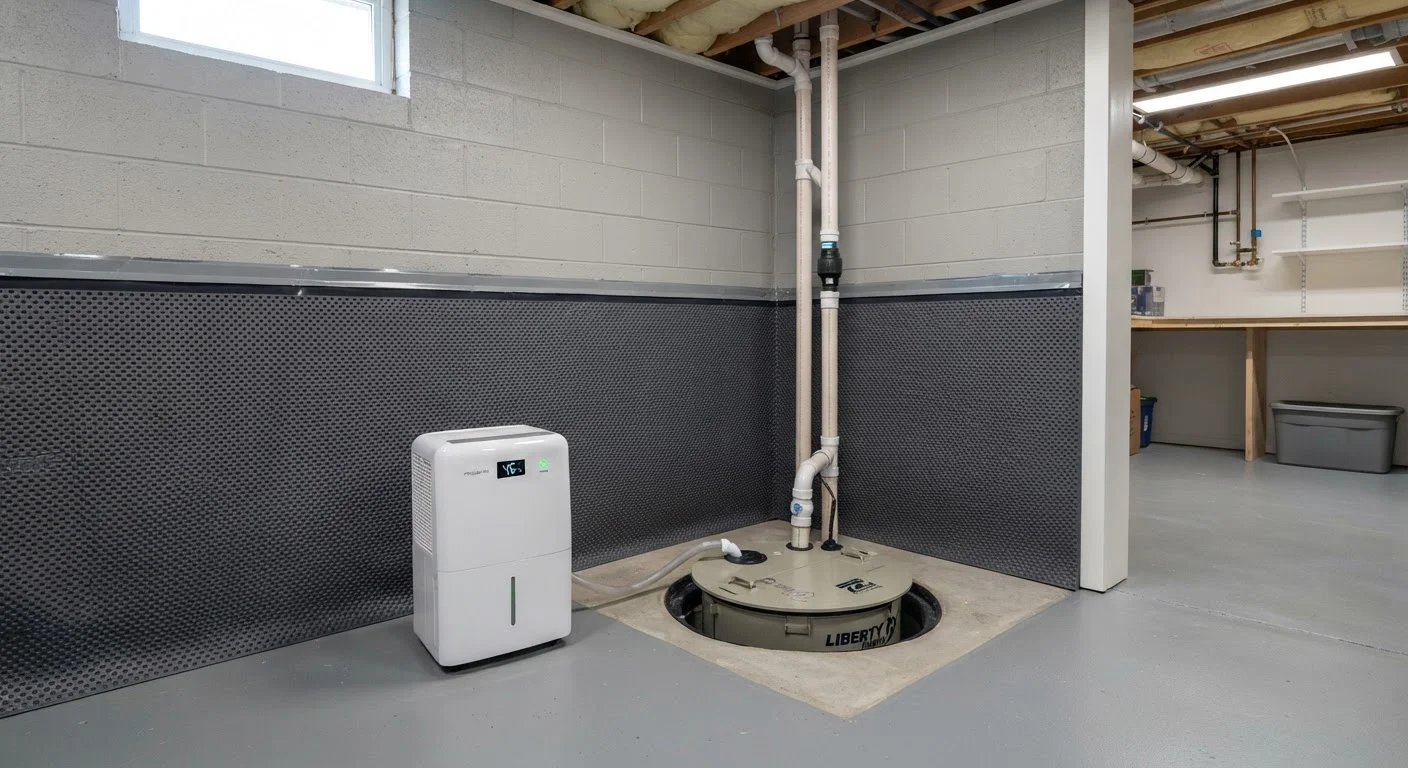
An interior drainage system - often called a French drain or perimeter drain - is installed inside the basement perimeter, typically by cutting a channel in the concrete floor near the footing, laying perforated pipe, covering it with gravel, and repouring the concrete. Water that enters through the walls or floor is captured and directed to a sump pit, where a sump pump expels it away from the house.
Interior sealants cannot resist active hydrostatic pressure
When soil water presses against the wall with force, interior coatings typically blister and fail, making them unreliable as a standalone fix for wet climates or high water tables.
Exterior excavation is costly and highly disruptive
Full perimeter excavation can disturb landscaping, patios, and driveways, and typically requires professional equipment and permitting - making it among the most expensive home improvement projects.
Interior drain systems manage water rather than block it
By design, these systems allow moisture to enter the foundation wall and collect it before it spreads - meaning the wall itself continues to be exposed to water over time.
Sump pumps depend on electricity and mechanical reliability
Power outages during heavy storms - precisely when the pump is needed most - can cause flooding. Pumps also require periodic testing and eventual replacement.
Misdiagnosing the moisture source wastes money
Applying an interior sealant to a condensation problem, or a drainage system where exterior wall cracks are the issue, will not resolve the underlying cause and may mask it temporarily.
Permits and professional licensing often required
Many municipalities require permits for drainage system installation and any excavation near the foundation. Unlicensed or unpermitted work can create liability issues when selling the home.
This approach does not stop water from entering the foundation wall but intercepts it before it can spread across the floor. It is a widely used professional solution because it is effective, less disruptive than exterior excavation, and works even in finished basements. The sump pump is a critical component - a power outage during a heavy storm can still lead to flooding, making a battery backup pump a worthwhile addition. Interior drainage systems are generally considered professional-grade work due to the concrete cutting and waterproofing membrane installation involved.
98%
Of basements that experience some moisture
The American Society of Home Inspectors has reported that the vast majority of basements in the U.S. experience some form of water intrusion over the life of the home.
$4,000-$10,000+
Typical interior drainage system cost range
Contractor pricing varies considerably by region, basement size, and system complexity; these figures represent commonly cited general ranges and are not guarantees.
$8,000-$25,000+
Typical exterior excavation waterproofing cost range
Full exterior waterproofing involves excavation, membrane application, and drainage tile installation - costs vary widely based on foundation perimeter length and soil conditions.
Exterior Waterproofing and Excavation
Exterior waterproofing addresses the problem at its source. The process involves excavating the soil around the foundation down to the footing, cleaning the exterior wall surface, applying a waterproof membrane or coating, installing a drainage board, and placing a perforated drain pipe at the footing that directs water away from the house. The excavation is then backfilled with gravel and soil.
This is the most thorough method available, but it is also the most expensive and disruptive. Excavation typically requires professional equipment, may affect landscaping, driveways, or decks, and can cost significantly more than interior alternatives. However, for homes where exterior walls have deteriorated, where cracks allow bulk water entry, or where previous interior fixes have repeatedly failed, exterior waterproofing is often the most durable long-term solution.
Because this work involves the structural integrity of the foundation and may require permits depending on your municipality, always consult a licensed waterproofing or foundation contractor and verify local permit requirements before proceeding. This is not a DIY task.
For a broader look at how moisture control fits into whole-home maintenance, see our insulation and moisture overview for every level of the home.
Permits and Licensed Contractors
Exterior excavation and interior drainage installation may require building permits in many jurisdictions. Some states also require waterproofing contractors to hold specific licenses or bonds. Before signing any contract, ask the contractor to confirm whether a permit is needed and who is responsible for pulling it. Working without required permits can complicate home sales and insurance claims.
Putting It All Together: A Layered Strategy
Most waterproofing professionals recommend thinking in layers. The first layer is site management - grading, gutters, and downspout extensions that keep surface water away from the foundation. The second layer is exterior protection - membranes and drain tile at the footing that stop soil water from ever reaching the wall. The third layer is interior management - drainage channels and sump pumps that handle any water that does infiltrate.
Homeowners dealing with mild dampness often find that fixing gutters and grading alone - without spending on interior or exterior systems - resolves the problem. Moisture management is one of the most commonly deferred maintenance tasks in residential homes, and deferring it consistently leads to mold, efflorescence (white mineral deposits on concrete), and structural deterioration.
If active water intrusion is present, get at least two or three contractor evaluations. Ask each contractor to explain what they believe the moisture source is and why their proposed solution addresses that source specifically - not just the symptoms. This conversation will tell you a great deal about the quality of their diagnosis.
This article is for general informational and educational purposes only. Basement waterproofing work may require permits, licensed contractors, or engineering assessment depending on your location and the scope of work. Always verify local building codes and consult qualified professionals before undertaking significant foundation or structural work.
The content on this site is for informational purposes only and is not a substitute for professional advice. Always consult a qualified professional for guidance specific to your situation.