

How Gutters Actually Work
Every time it rains, your roof sheds a substantial volume of water. A modest 1,000-square-foot roof can produce more than 600 gallons of runoff during a single inch of rainfall. Without gutters, all of that water drips directly off the eaves, saturating the soil immediately beside your foundation and splashing against siding and trim.
Gutters intercept that flow at the roofline, channel it horizontally toward downspouts, and route it vertically down to a discharge point - ideally a splash block, underground drain, or extension that carries water at least four to six feet away from the foundation. Every component in that chain has to work: the channel must be clear, the pitch must be correct, the joints must be sealed, and the downspouts must discharge freely.
When any piece of that system breaks down, the consequences aren't always immediately visible - which is part of why gutters are one of the most commonly overlooked maintenance items. See our guide to commonly overlooked home maintenance tasks for more on this pattern.
The Most Common Reasons Gutters Fail
Understanding what goes wrong helps you catch problems early. Gutter failures generally fall into a handful of predictable categories:
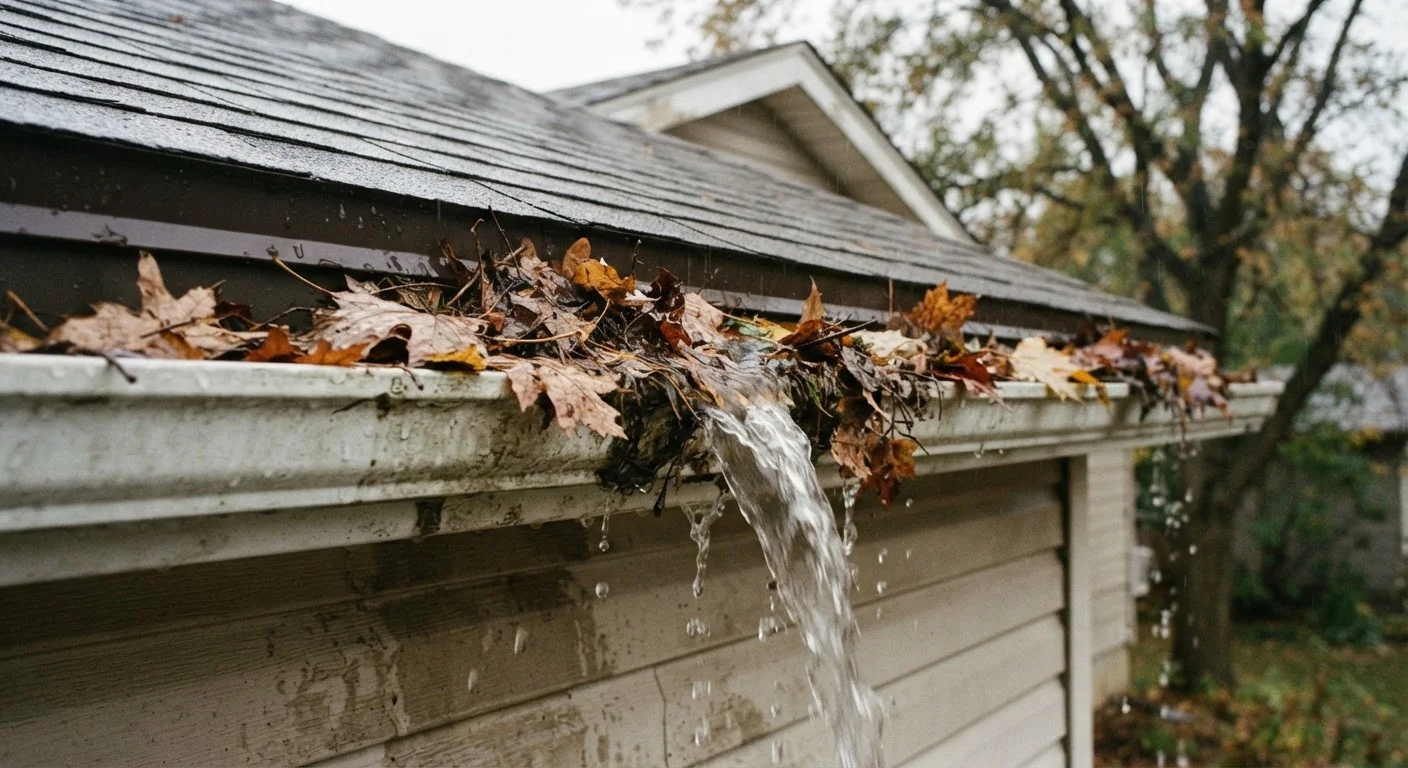
- Clogs: Leaves, twigs, seed pods, and roof granules accumulate in the channel, blocking water flow. Water backs up, overflows the edge, and in winter can contribute to ice dams.
- Sagging: Over time, the hangers (the brackets that attach gutters to the fascia) can loosen or fail - especially after heavy debris loads or ice. A sagging gutter loses its pitch, causing water to pool rather than drain.
- Leaky joints and end caps: Sectional gutters are sealed at their seams with lap sealant. That sealant degrades over years of thermal expansion and contraction. When it fails, water drips directly onto fascia boards and behind the gutter, quietly rotting wood.
- Improper pitch: Gutters that were installed with too little slope - or that have shifted - retain standing water after rain. That standing water breeds mosquitoes, accelerates corrosion, and adds weight that further stresses hangers.
- Downspout blockages: Debris that passes the channel often collects at the downspout elbow or underground drain connection. A blocked downspout can cause the entire gutter run to overflow during heavy rain.
600+
Gallons of runoff per inch of rain
A standard 1,000-square-foot roof sheds over 600 gallons during a single inch of rainfall, illustrating why gutter capacity and flow matter.
~20 years
Typical aluminum gutter lifespan
With regular cleaning and minor repairs, aluminum gutters commonly last two decades or more before requiring full replacement.
4-6 feet
Minimum downspout discharge distance
Industry guidance generally calls for downspouts to discharge water at least four to six feet from the foundation to protect against moisture intrusion.
What Proper Gutter Maintenance Actually Involves
Effective gutter upkeep isn't complicated, but it does require consistency. Here's what a complete maintenance routine covers:
Twice-Annual Cleaning
Remove all debris from the channel using a gutter scoop, gloved hands, or a wet/dry vacuum with a gutter attachment. Flush with a garden hose to check flow and confirm the downspouts are clear. Do this in late spring and late fall as part of your broader seasonal routine - our seasonal home maintenance calendar explains exactly where gutter tasks fit throughout the year.
Inspecting for Damage
While cleaning, look for rust spots, cracks, holes, separated seams, and sagging sections. Check that all hangers are firmly attached to the fascia. If fascia boards feel soft or spongy, that's a sign water has already been getting behind the gutter - a situation worth evaluating carefully alongside a professional roof inspection.
Resealing Leaky Joints
Clean and dry the joint thoroughly, then apply fresh gutter sealant (typically a flexible, waterproof lap sealant) to the interior seam. This is a straightforward DIY repair that can add years to sectional gutters.
Realigning Sagging Sections
Replace loose hangers with new ones spaced every 24-36 inches, and verify the pitch is approximately 1/4 inch of drop per 10 feet of run toward the downspout. A simple line level and tape measure are all you need for this check.
Extending Downspout Discharge
Downspouts that terminate at the foundation wall are a leading contributor to basement water intrusion. Adding a flexible extension or splash block to direct water several feet away is a low-cost step with meaningful impact. For persistent moisture issues, basement waterproofing strategies may also be worth reviewing.
Check Downspout Flow After Every Cleaning
After clearing debris from the channel, always run a garden hose down the length of the gutter to verify water flows freely through the downspout and exits at the discharge point. A blockage hiding in the downspout elbow or underground drain connection can cause the entire run to overflow just as badly as a clogged channel - and it won't be visible from the ground.
When to Call a Professional
Many gutter tasks are safely within a homeowner's capability - cleaning, resealing joints, and replacing individual hangers are all DIY-friendly on single-story homes. However, some situations call for professional involvement:
- Gutters on two-story or multi-story homes where ladder access is unsafe
- Widespread sagging, crushing, or separation across multiple sections
- Rotted fascia boards that need replacement before new gutters can be rehung
- Evidence of ice damming damage that may extend to the roof underlayment
If you're uncertain whether a problem is cosmetic or structural, a gutter contractor or roofing professional can give you a straightforward assessment. Protecting gutters fits naturally into the broader mindset described in our home maintenance schedule for new owners - proactive small tasks consistently prevent expensive reactive repairs.
This article is for general informational purposes only. Always follow appropriate safety precautions when working on ladders, and consult a licensed contractor for work beyond your comfort or skill level. Local building codes and permit requirements vary - verify requirements with your local authority before undertaking significant repairs.
Frequently Asked Questions
Most homes benefit from cleaning twice a year - in late spring after tree pollen and seed season, and in late fall after leaves have dropped. Homes surrounded by pine trees may need cleaning three to four times annually because pine needles shed year-round and compact quickly inside gutters.
Watch for water overflowing during rain, visible sagging or separation from the fascia, rust stains or peeling paint on siding, and water pooling near the foundation after storms. Inside the home, unexplained basement dampness is sometimes traceable to overflowing gutters above.
Yes, for single-story homes with a stable ladder and safe conditions, gutter cleaning is a manageable DIY task. Always follow ladder safety guidelines, work with a spotter, and avoid leaning the ladder against the gutter itself. For two-story or steeply pitched rooflines, hiring a professional is strongly recommended.
Gutter guards significantly reduce how much debris enters the channel, but they do not eliminate maintenance entirely. Fine particles like roof grit, seed pods, and shingle granules can still accumulate over time. Periodic inspection and light cleaning remain necessary even with guards installed.
Aluminum gutters, the most common residential type, typically last 20 years or more with proper maintenance. Vinyl gutters may last 10-20 years but are more prone to cracking in cold climates. Copper gutters can last 50 years or longer. Lifespan is heavily influenced by climate, maintenance frequency, and installation quality.
If gutters show widespread rust, have multiple failing seams, are pulling away from the fascia in several sections, or are visibly bent or crushed, replacement is usually more cost-effective than repeated patching. A roofing or gutter professional can assess whether spot repairs will hold or if full replacement makes more sense.
The content on this site is for informational purposes only and is not a substitute for professional advice. Always consult a qualified professional for guidance specific to your situation.