

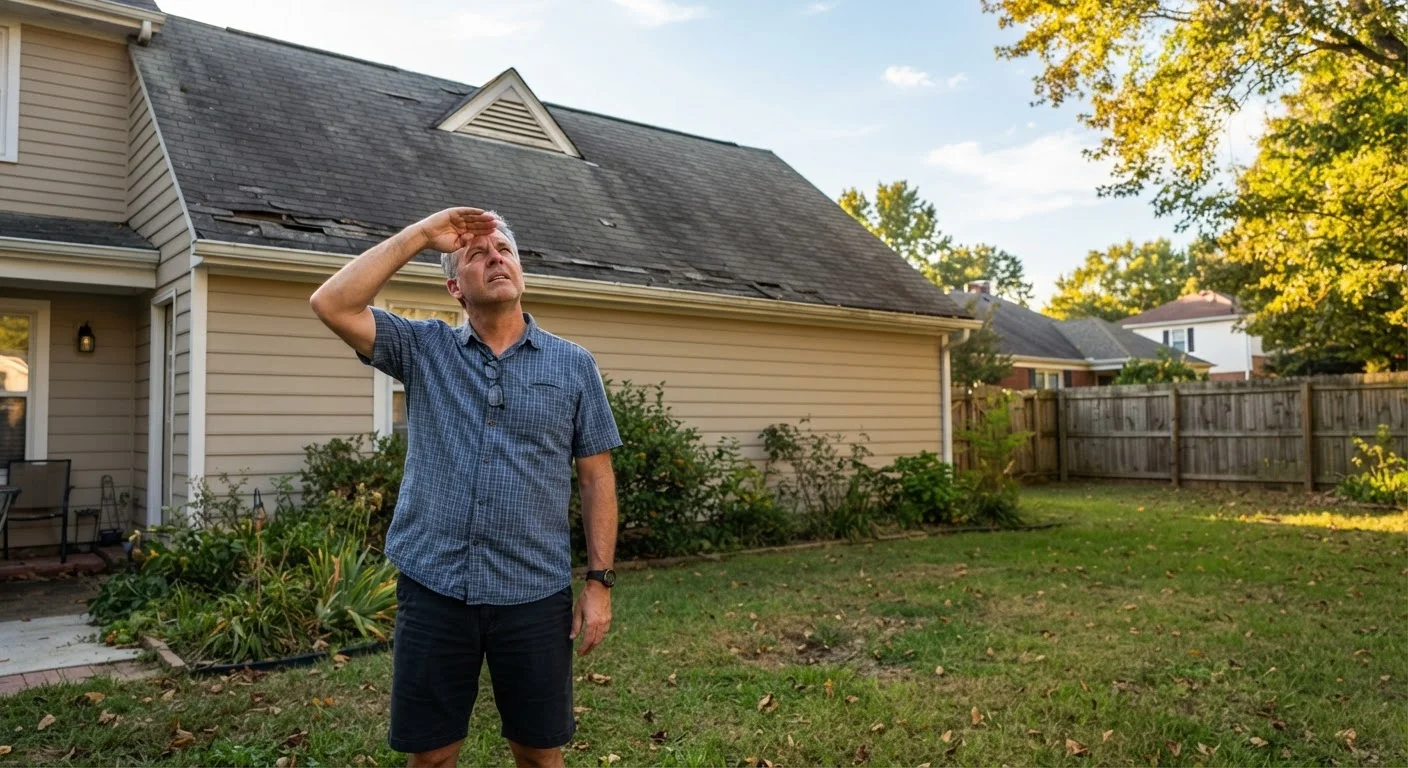
What Ground-Level Checks Actually Catch
Standing in the yard and scanning your roofline feels thorough, but it's one of the least reliable ways to assess roof health. From 30 feet away, you can confirm obvious missing shingles or a visible hole - but the damage that drives most repair bills is far subtler than that.
Curling shingle edges, micro-cracks in flashing sealant, granule loss, and early-stage moisture intrusion are invisible from street level. The result: homeowners frequently believe their roof is in good shape right up until water appears on a ceiling or a contractor delivers a costly estimate.
Building a more complete inspection habit means combining what you can see from the ground with what's accessible from a ladder at the eave level and - critically - from inside the attic. For context on how roof checks fit into broader upkeep, see what a practical home maintenance schedule looks like for new owners.
40%
Of home insurance claims involve water damage
According to the Insurance Information Institute, water damage and freezing account for roughly 40% of homeowner insurance claims - many of which originate at the roof.
20 years
Typical lifespan of asphalt shingle roofs
The National Roofing Contractors Association estimates standard three-tab asphalt shingles last 15-20 years under normal conditions, though improper maintenance can shorten that significantly.
The Most Common DIY Inspection Mistakes
Knowing what to look for changes what you find. The mistakes below account for the majority of damage that goes undetected during homeowner roof checks - often until a minor issue becomes a major one.
Relying solely on ground-level visual inspection.
Why it happens: Most homeowners assume a scan from the yard is sufficient to catch damage, especially if no shingles are visibly missing.
Ignoring flashing around chimneys, skylights, and vents.
Why it happens: Flashing - the thin metal strips that seal transitions between the roof surface and vertical structures - looks intact from afar even when it has separated, corroded, or cracked.
Overlooking granule loss on asphalt shingles.
Why it happens: Granule loss happens gradually and isn't obvious until shingles start looking bare or granules accumulate heavily in gutters.
Skipping the attic as part of the roof inspection.
Why it happens: Most people think of a roof inspection as an exterior task, not connecting interior attic conditions to roof performance.
Mistaking cosmetic aging for damage - or damage for normal aging.
Why it happens: Without a reference point, homeowners either dismiss cracked or curling shingles as normal wear or panic over surface discoloration that's actually benign algae growth.
Roof Walking Carries Real Risk
Walking on a residential roof without proper safety equipment - including non-slip footwear, a safety harness, and a secured ladder - puts you at serious risk of falls. Most states also have local code requirements about roof access for unlicensed individuals. When in doubt, stay on the ground or in the attic and leave roof surface inspections to a qualified professional.
Building a More Reliable Routine
No DIY inspection fully replaces a professional assessment, but a more systematic approach dramatically improves what you catch early. Aim to inspect twice a year - typically in the fall before cold weather arrives and in the spring after winter stress - plus after any significant storm.
Each inspection should include three components: a ground-level visual scan with binoculars, a close-up check of gutters and visible eave flashings from a safely positioned ladder, and an attic walkthrough. Document what you find with photos so you can track changes over time. Incorporate this into your annual home maintenance audit to ensure nothing slips through the cracks.
When to Call a Professional Immediately
If you notice sagging roof decking, water stains spreading across interior ceilings, or daylight visible through attic rafters, stop your DIY inspection and contact a licensed roofing contractor. These signs suggest structural compromise that can escalate quickly into major damage and safety hazards. Do not walk on a roof you suspect may have compromised decking - it can give way without warning.
This article is for general informational purposes only. Roof work involves fall hazards and may require permits or licensed contractors depending on your local codes. Always verify local requirements and consult a qualified roofing professional before undertaking any repair work.
The content on this site is for informational purposes only and is not a substitute for professional advice. Always consult a qualified professional for guidance specific to your situation.