

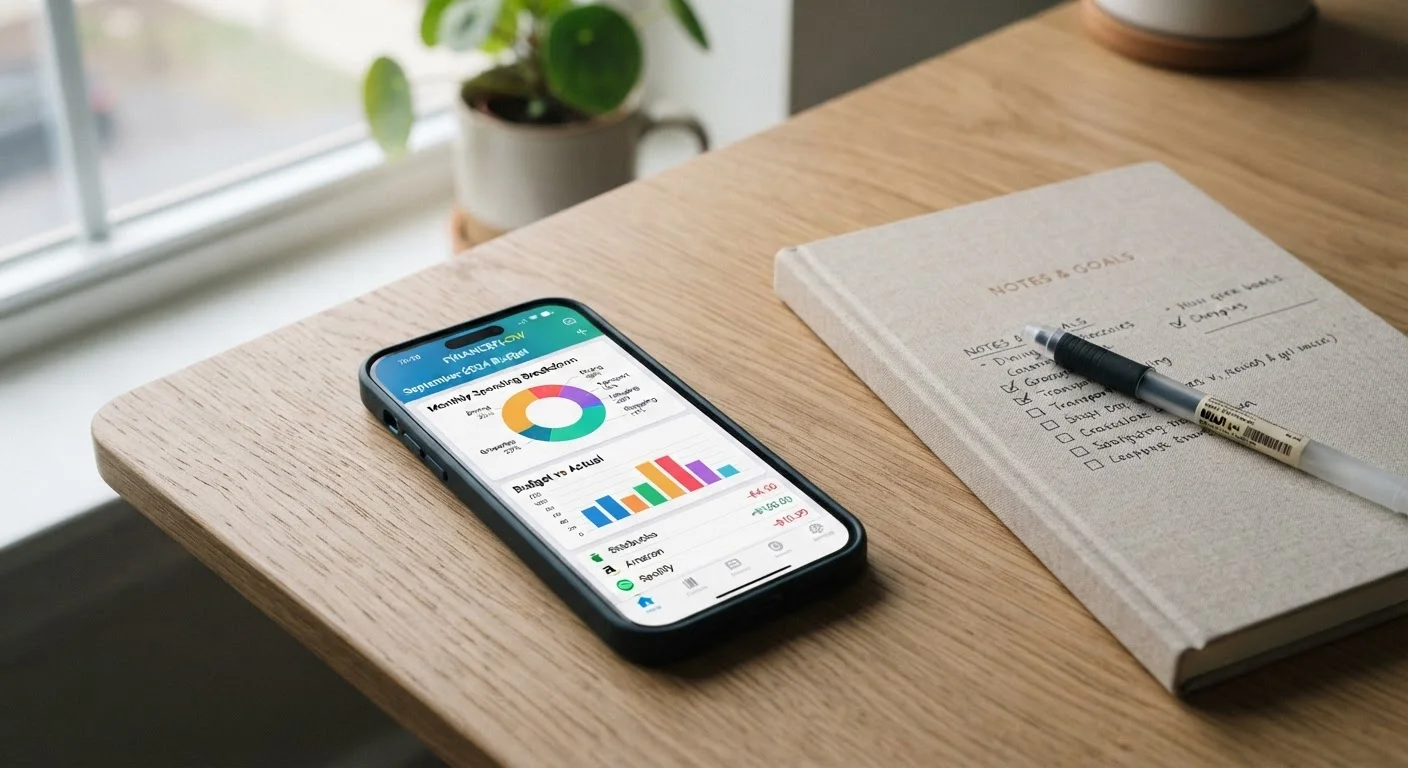
Why Budgeting Apps Have a Retention Problem
The budgeting app market is crowded, and downloads are easy. Sticking with any of them is the real challenge. High early abandonment is a known pattern — not a personal failing. Understanding why it happens is the first step to avoiding it.
The core issue is a mismatch between what apps are designed to do and what users actually need. Apps automate data collection. What they cannot automate is the reflection, decision-making, and habit reinforcement that make a budget meaningful. Without those human inputs, even the most polished dashboard is just a record of what already happened.
If you are evaluating your options, the comparison between spreadsheets and budgeting apps is worth reading before you commit to any digital tool. And if apps feel like too much friction, manual tracking methods remain a genuinely viable alternative for many people.
~80%
Users who stop using finance apps within weeks
Industry analysts and app stores consistently report high early abandonment rates for personal finance applications, often within the first month.
3 in 10
Americans who track spending regularly
Surveys from organizations such as the National Foundation for Credit Counseling have found that a minority of U.S. adults consistently monitor their day-to-day spending.
The Mistakes That Derail Most Users
The following patterns appear repeatedly among people who try — and abandon — budgeting apps. Recognizing them before you start can make the difference between a tool that works and one that collects digital dust.
Choosing an app based on feature count rather than personal fit.
Why it happens: Marketing for budgeting apps emphasizes capabilities — investment tracking, bill negotiation, credit monitoring — making feature-rich options seem more valuable.
Skipping the initial setup and hoping the app figures out your categories automatically.
Why it happens: Auto-categorization is prominently marketed, leading users to expect the app will understand their finances without any configuration.
Setting budget limits that are aspirational rather than realistic.
Why it happens: People often open a budgeting app during a motivation spike and set targets based on what they wish they spent, not what they actually spend.
Using the app passively — letting it collect data without ever reviewing it.
Why it happens: Notifications and dashboards create an illusion of being on top of finances without requiring active engagement.
Abandoning the app after one bad week instead of adjusting the plan.
Why it happens: Users interpret overspending in one category as evidence that budgeting doesn't work for them, rather than as normal variance that needs a plan adjustment.
Budgeting Apps Are Tools, Not Solutions
No app can create financial discipline on its own. Research in behavioral economics consistently shows that awareness alone — seeing your spending — does not reliably change it. An app becomes useful only when paired with intentional review habits and clearly defined goals. Treat it as a mirror, not a manager.
For a broader look at how these patterns connect to budgeting behavior in general, the complete personal budgeting framework provides useful context on building a system that holds up over time.
What Actually Makes Digital Budgeting Work
The apps that users stick with share a few characteristics that have nothing to do with features. They are quick to open, forgiving of imperfect data entry, and structured around goals the user genuinely cares about — not generic financial milestones.
Connecting your budget to a specific outcome — paying off a credit card, building a three-month emergency fund, saving for a move — gives the weekly review session a reason to matter. Abstract discipline is hard to sustain; progress toward a concrete goal is easier to stay motivated by. The saving and debt hub covers strategies for setting those kinds of targets in a way that integrates with everyday budgeting.
Be Cautious With Account Linking
Many budgeting apps request read-only access to your bank accounts via third-party aggregators. Before connecting accounts, review the app's privacy policy and data-sharing practices. Understand who has access to your transaction data and whether it is sold or used for advertising. If you are uncomfortable linking accounts, most apps also support manual entry.
Users with variable income face additional challenges that standard app configurations often do not handle well. Budgeting frameworks for irregular income address this gap specifically. And if you find yourself running into the same motivational obstacles month after month, it may be worth examining the common myths that prevent people from starting — some of the resistance is belief-based, not circumstantial.
This article is for general informational purposes only and does not constitute personalized financial advice. For guidance tailored to your specific situation, consider consulting a qualified financial professional.
The content on this site is for informational purposes only and is not a substitute for professional advice. Always consult a qualified professional for guidance specific to your situation.