

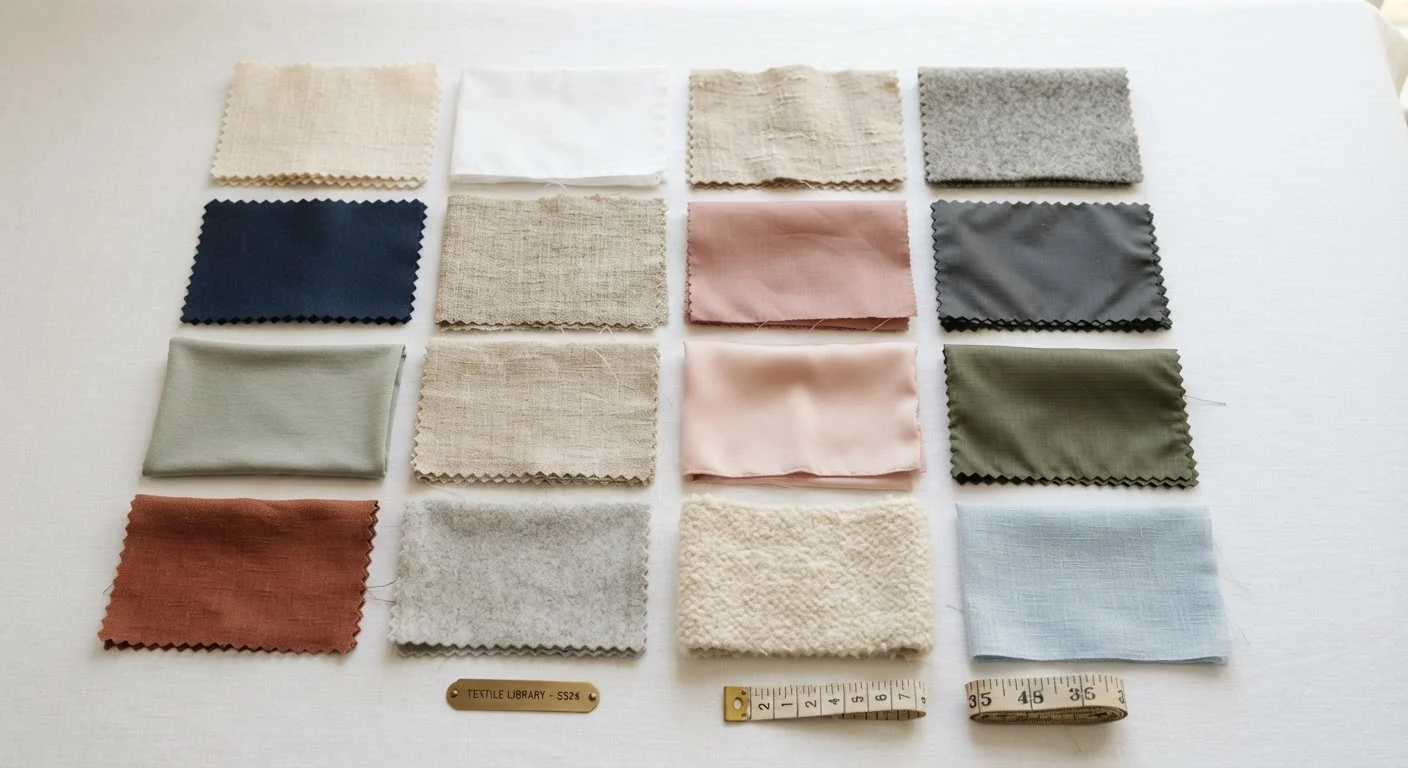
Option A
Natural Fibers
The breathable, time-tested classic.
Best for: Everyday comfort, sensitive skin, and warm-weather or layering wear where breathability and feel matter most.
Option B
Synthetic Fabrics
The durable, low-maintenance modern workhorse.
Best for: Active lifestyles, outdoor use, and anyone who wants wrinkle-resistant, long-lasting garments with minimal upkeep.
What Separates Natural from Synthetic?
The distinction starts at the source. Natural fibers come directly from plants or animals — cotton from cotton bolls, linen from flax stalks, wool from sheep, and silk from silkworm cocoons. Synthetic fabrics are manufactured from petrochemical compounds processed into fiber form: polyester, nylon, acrylic, and spandex are the most common examples.
That origin difference has real downstream effects on how a fabric feels, performs, and holds up over time. Understanding both helps you shop with intention rather than guesswork — which is the foundation of a functional wardrobe. For a broader look at how fabric investment connects to clothing value, see our piece on the real cost of fast fashion.
| Criterion | Natural Fibers | Synthetic Fabrics |
|---|---|---|
| Source | Plants or animals (cotton, wool, linen) | Petrochemical manufacturing (polyester, nylon) |
| Breathability | Generally high | Variable; lower in standard weaves |
| Moisture management | Absorbs moisture | Wicks moisture (performance types) |
| Durability | Moderate; varies by fiber | High; resists shrinking and fading |
| Care requirements | More careful laundering needed | Machine-wash friendly, wrinkle-resistant |
| Skin comfort | Generally soft and gentle | Can feel rough or trap heat |
| Biodegradability | Biodegradable | Not biodegradable; sheds microplastics |
| Typical cost | Varies widely; quality affects price | Often lower cost at similar quality |
Comfort, Breathability, and Skin Feel
Natural fibers consistently earn high marks for next-to-skin comfort. Cotton is soft, absorbs moisture, and allows air to circulate — attributes that make it a go-to for everyday basics. Linen is even more breathable, though it wrinkles more readily. Wool regulates temperature surprisingly well in both cool and mild conditions, and high-quality merino is soft enough for direct skin contact.
Synthetics have improved dramatically but still behave differently. Polyester tends to trap heat and can feel clammy during sustained activity. However, performance-engineered synthetics — moisture-wicking fabrics used in activewear — are specifically designed to pull sweat away from the body efficiently. For high-output activities, these outperform most natural options.
~65%
Share of global fiber production that is synthetic
According to Textile Exchange's Preferred Fiber & Materials Market Report, synthetic fibers — primarily polyester — account for roughly two-thirds of all fiber produced globally.
700+ gallons
Water to produce one cotton t-shirt
The World Wildlife Fund estimates that producing a single cotton t-shirt requires approximately 700 gallons of water, highlighting the resource demands of conventional cotton farming.
35%
Of ocean microplastics attributed to synthetic textile washing
Research published in environmental science literature estimates that washing synthetic garments is responsible for approximately 35% of primary microplastic pollution entering the ocean.
People with sensitive skin often report fewer irritation issues with natural fibers, though this varies by individual and fabric finish. If you're curious how the natural-versus-synthetic debate plays out in personal care products more broadly, our article on natural vs. synthetic ingredients in personal care covers similar ground.
Durability, Care, and Everyday Practicality
Synthetics generally win on durability and ease of care. Polyester resists shrinking, fading, and pilling; nylon is exceptionally strong for its weight. Most synthetics can handle machine washing and quick drying without complaint, and they emerge from the dryer wrinkle-free.
Natural fibers require more attention. Cotton can shrink in hot water; wool needs gentle cycles or hand washing; linen wrinkles easily and may need ironing. That said, well-cared-for natural fiber garments can last decades — and they often soften and improve with wear. Knowing how to read care labels is essential for both fabric types. Our plain-English guide to clothing care labels decodes the symbols so you can launder confidently without accidentally damaging your clothes.
A Note on Fabric Blends
Many everyday garments combine natural and synthetic fibers — a 60/40 cotton-polyester blend, for example, aims to deliver cotton's softness alongside polyester's durability and wrinkle resistance. Blends aren't a compromise so much as a deliberate engineering choice. When shopping, check the fiber content label (usually found at the back neckline or inside seam) to understand exactly what you're buying and how to care for it.
Fabric blends — such as cotton-polyester or wool-nylon — are engineered to merge the strengths of both categories, and they make up a significant share of everyday clothing. These hybrids are worth considering when you want comfort without sacrificing durability.
Environmental and Long-Term Considerations
Neither category is a clear environmental winner. Natural fibers are biodegradable and renewable, but conventional cotton farming is resource-intensive, requiring significant water and pesticide use. Linen and hemp tend to have lighter footprints. Synthetics, meanwhile, are derived from non-renewable petroleum and shed microplastics with each wash — a growing concern in textile sustainability research.
From a practical standpoint, the garment that lasts longest and gets worn most often is often the most sustainable choice, regardless of fiber type. Buying fewer, higher-quality pieces — whether natural or synthetic — reduces overall consumption. That applies equally whether you're reaching for a linen shirt or a durable nylon jacket. The goal isn't perfection; it's making deliberate choices that align with how you actually live and dress.
The content on this site is for informational purposes only and is not a substitute for professional advice. Always consult a qualified professional for guidance specific to your situation.