

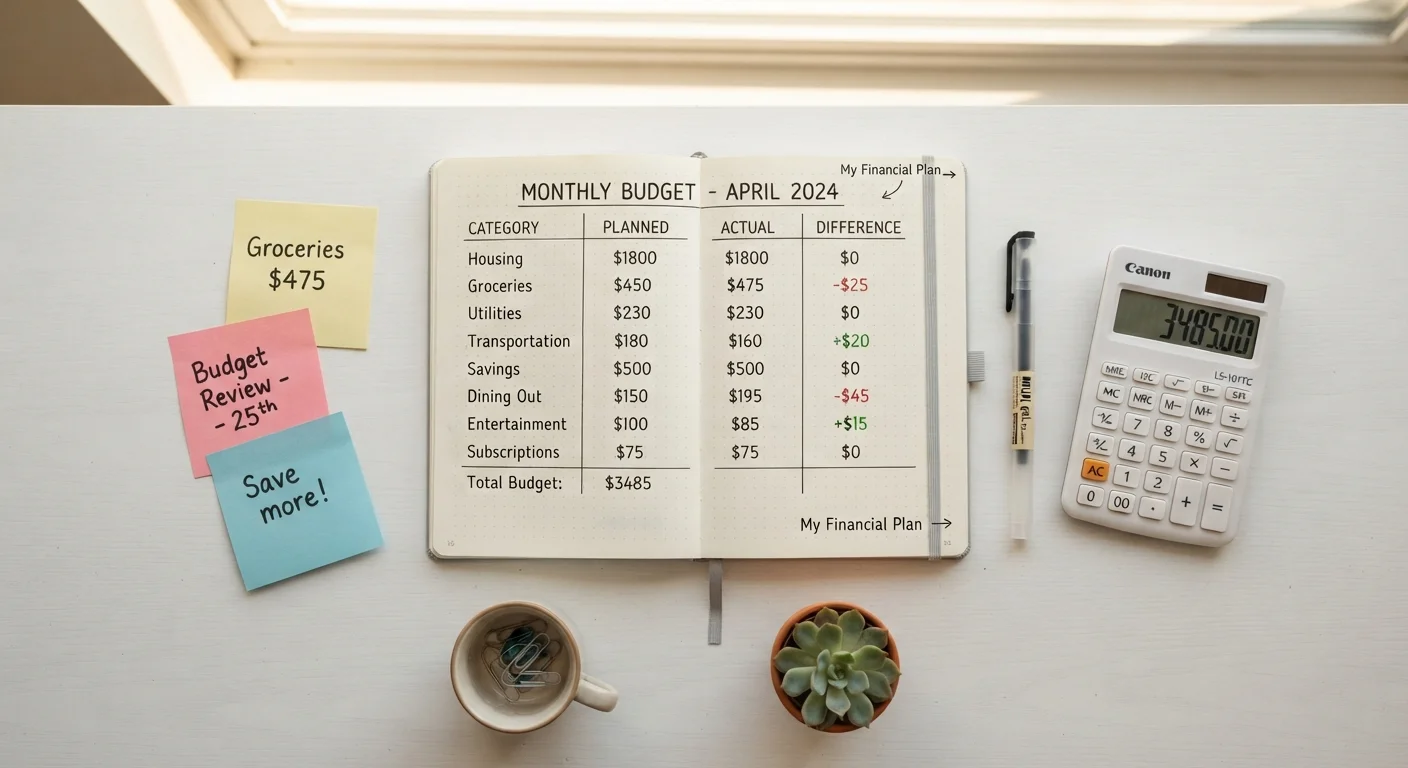
Why Categorization Is the Quiet Engine of Budgeting
Most people approach budgeting by focusing on totals - how much came in, how much went out. But the real insight lives one level deeper: where the money went. Without named categories, spending is invisible. You end up knowing you overspent without knowing why.
Organizing expenses into clear buckets gives your budget structure. It turns a pile of transactions into a readable map of your financial habits. That map is what lets you make adjustments - not guesses. If you're building your first budget or refining an existing one, see the complete personal budgeting framework for context on how categorization fits the larger picture.
The Core Spending Buckets Most Households Need
There is no universal list of budget categories - your life dictates your buckets. That said, most American households benefit from organizing expenses into a handful of reliable groupings:
- Housing: Rent or mortgage, property taxes, renter's or homeowner's insurance, and regular maintenance costs.
- Transportation: Car payments, fuel, insurance, public transit, parking, and routine upkeep.
- Food: Groceries and dining out - kept separate so you can see both clearly.
- Utilities & Services: Electricity, gas, water, internet, and phone.
- Health: Insurance premiums, prescriptions, copays, and dental or vision costs.
- Personal & Household: Clothing, personal care, cleaning supplies, and similar recurring needs.
- Savings & Debt: Emergency fund contributions, retirement savings, and debt payments beyond minimums.
- Discretionary: Entertainment, subscriptions, hobbies, and lifestyle spending.
Understanding which of these are fixed versus variable helps you know where flexibility exists. The difference between fixed and variable expenses is worth understanding before you assign dollar amounts to any of these buckets.
33%
Americans with a detailed household budget
Gallup polling has consistently found that roughly one-third of American adults maintain a detailed monthly budget, suggesting the majority rely on informal spending tracking.
$1,000+
Average monthly discretionary spending per household
Bureau of Labor Statistics Consumer Expenditure data indicates discretionary spending - entertainment, dining, apparel - often exceeds $1,000 monthly for average US households.
Handling Irregular and Annual Expenses
One of the most common budget-breaking mistakes is leaving irregular expenses out of the monthly system entirely. Car registration, holiday gifts, annual subscriptions, and tax preparation fees are predictable - they just don't arrive every month. When you treat them as surprises, they become emergencies.
The solution is to estimate each irregular expense annually, divide by 12, and set that monthly amount aside in a dedicated bucket. This approach - sometimes called a sinking fund - converts unpredictable timing into manageable monthly contributions. For a deeper look at how this works, the sinking funds guide walks through setup and common use cases.
Keeping Your Category System Honest Over Time
A spending category that doesn't reflect reality will quietly undermine your entire budget. If your "dining out" budget is $100 but you consistently spend $300, the problem isn't willpower - it's an inaccurate category. Adjust the number or restructure the bucket.
Review your categories every one to three months. Life changes - a new job, a move, a growing family - and your spending buckets should change with it. Budgets that fall apart often do so because the categories were set once and never revisited. The most common reasons budgets collapse include exactly this kind of category drift.
If you prefer a structured method for allocating money to categories before spending begins, the envelope budgeting method offers a disciplined framework. For those who want a percentage-based shortcut, the 50/30/20 rule provides a starting allocation across needs, wants, and savings.
Your Categories Will Evolve - That's Normal
A budget category system built at 28 may look very different at 38. Major life events - marriage, children, job changes, buying a home - shift where money needs to go. Treating your category structure as a living document rather than a permanent fixture helps your budget stay accurate and useful over time. Revisit the structure at least once a year, even if the numbers within categories change more frequently.
This article is for general informational and educational purposes only. It does not constitute personalized financial advice. For guidance specific to your financial situation, consult a qualified financial professional.
The content on this site is for informational purposes only and is not a substitute for professional advice. Always consult a qualified professional for guidance specific to your situation.