

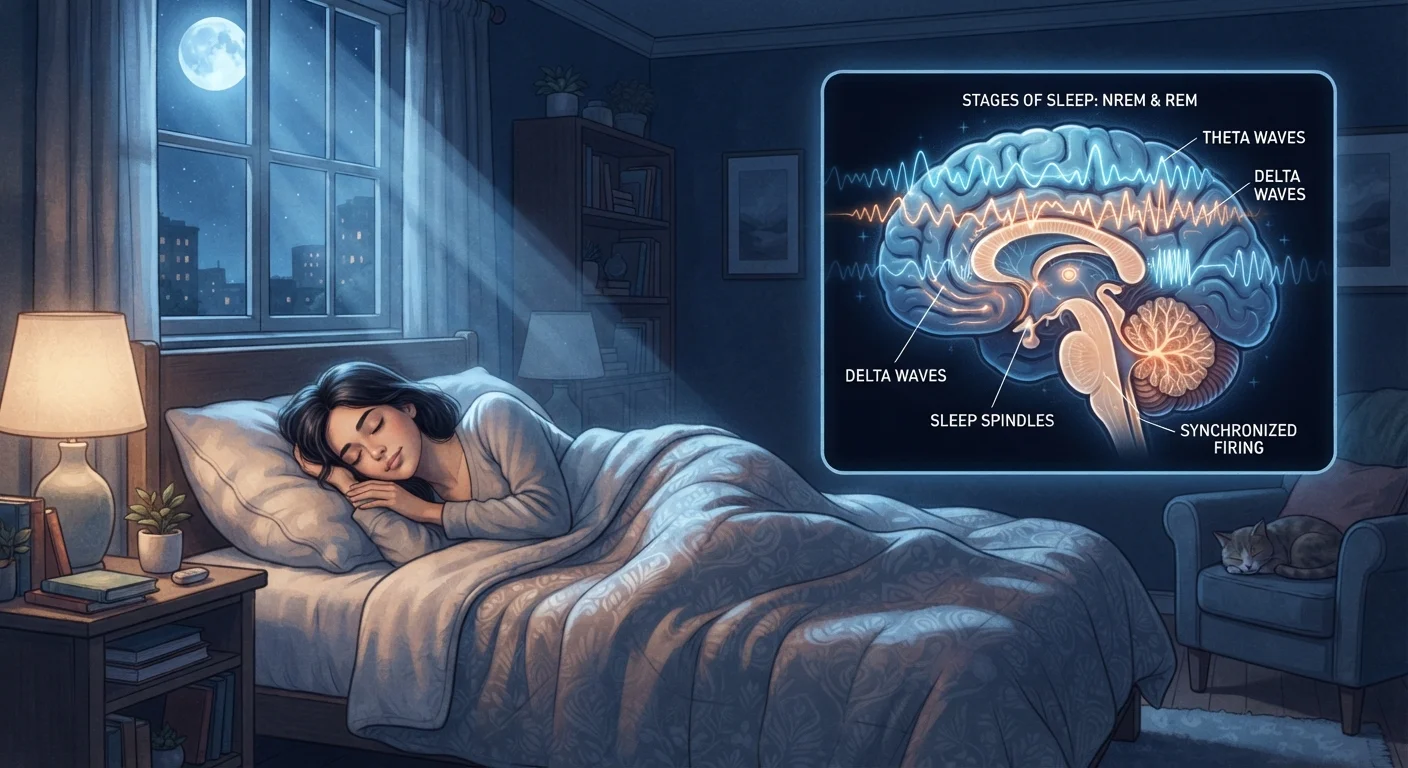
Sleep Is Active, Not Passive
Many people think of sleep as simply "switching off" - a pause between productive hours. The science tells a very different story. From the moment you fall asleep, your brain and body enter a coordinated series of biological programs that are impossible to run while you are awake.
Sleep is structured into repeating cycles, each containing distinct stages with unique physiological signatures. Understanding what happens inside those stages helps explain why sleep quality matters just as much as sleep quantity. For a deeper look at how each stage is defined, see our guide to sleep cycles.
7-9 hrs
Recommended nightly sleep for adults
According to the American Academy of Sleep Medicine and the Sleep Research Society consensus guidelines for adults aged 18-60.
~90 min
Average length of one sleep cycle
Most adults complete four to six of these cycles per night, with the composition of each cycle shifting across the night.
70%+
Of daily growth hormone released during deep sleep
Research indicates the majority of pituitary growth hormone secretion occurs during slow-wave (deep) sleep stages.
The Brain During Sleep: Memory, Waste Clearance, and Emotional Processing
During non-REM sleep - particularly the slow-wave, deep sleep stage - the brain replays and consolidates the day's experiences, transferring information from short-term to long-term memory. This process, known as memory consolidation, is why sleep before and after learning something new significantly improves retention.
Simultaneously, the brain's glymphatic system becomes dramatically more active during sleep. This network of channels flushes out metabolic waste products, including proteins associated with neurodegenerative conditions. Researchers believe this nightly "cleaning cycle" is one reason sleep deprivation is linked to cognitive decline over time.
REM (rapid eye movement) sleep plays a separate but equally critical role in emotional processing. During REM, the brain revisits emotional memories in a neurochemical environment that is lower in stress-related noradrenaline, which may help reduce the emotional intensity of difficult experiences. Poor sleep's impact on this process is explored further in our article on sleep and emotional regulation.
“Sleep is the single most effective thing we can do to reset our brain and body health each day - affecting our cognitive function, emotional well-being, and physical health in ways no other factor can fully replicate.”
— Matthew Walker, Professor of Neuroscience and Psychology, University of California, Berkeley; author of 'Why We Sleep'
The Body During Sleep: Repair, Hormones, and Immunity
Physical restoration happens primarily during deep, slow-wave sleep. The pituitary gland releases the majority of its daily growth hormone output during this stage, driving tissue repair, muscle protein synthesis, and cellular regeneration. This is why athletes and people recovering from injury particularly depend on high-quality sleep.
The cardiovascular system also benefits. Blood pressure and heart rate drop during non-REM sleep, reducing the workload on the heart. Chronic sleep deprivation disrupts this nightly "pressure dip," a pattern associated with elevated cardiovascular risk.
Immune function is another major beneficiary. Sleep supports the production of cytokines - signaling proteins that coordinate the immune response - as well as T-cells, which are key to fighting pathogens. Even a single night of poor sleep has been shown in research settings to measurably reduce immune cell activity.
Protect Your Deep Sleep Window
Deep slow-wave sleep is concentrated in the first half of the night, while REM sleep dominates the second half. Going to bed consistently at the same time helps ensure you capture adequate amounts of both. Alcohol, even in moderate amounts, is known to suppress REM sleep and fragment overall sleep architecture - something worth considering when evaluating your evening routines.
Hormones, Metabolism, and the Cost of Sleep Debt
Sleep exerts significant control over the hormones that regulate hunger and metabolism. Ghrelin (which stimulates appetite) rises with sleep loss, while leptin (which signals fullness) falls - a hormonal shift that can drive increased calorie intake without a corresponding increase in energy expenditure. Cortisol rhythms also depend on consistent sleep timing to remain well-regulated.
These effects compound over time. When sleep deprivation becomes chronic, the physiological costs accumulate in ways that are not fully reversed by a single extended night of rest. For more on how this debt builds and what recovery actually looks like, see the science behind sleep debt.
This article provides general health information for educational purposes only and is not a substitute for professional medical advice. If you have concerns about your sleep or health, consult a qualified healthcare provider.
Frequently Asked Questions
During sleep, the body repairs muscle tissue, synthesizes proteins, and releases growth hormone to support cellular restoration. The immune system also produces cytokines - proteins that help fight infection and inflammation - making adequate sleep essential for immune function.
The brain uses sleep to consolidate memories, process emotions, and clear out metabolic waste products through the glymphatic system. Without sufficient sleep, cognitive performance, mood regulation, and decision-making all decline significantly.
Most adults complete four to six sleep cycles per night, each lasting approximately 90 minutes. Each cycle includes stages of light sleep, deep (slow-wave) sleep, and REM sleep, with the proportion of REM increasing in later cycles.
Yes. Heart rate and blood pressure naturally decrease during non-REM sleep, giving the cardiovascular system a period of reduced strain. During REM sleep, heart rate can become more variable and similar to waking levels.
Research suggests that some - but not all - effects of sleep deprivation can be offset by recovery sleep. However, cumulative sleep debt carries real cognitive and physiological costs that are not fully reversed in a single night of extended sleep.
Chronic sleep insufficiency is linked to impaired immunity, hormonal disruption, increased inflammation, weight changes, and higher risk of cardiovascular and metabolic conditions. It also significantly worsens emotional regulation and mental health outcomes.
The content on this site is for informational purposes only and is not a substitute for professional advice. Always consult a qualified professional for guidance specific to your situation.