

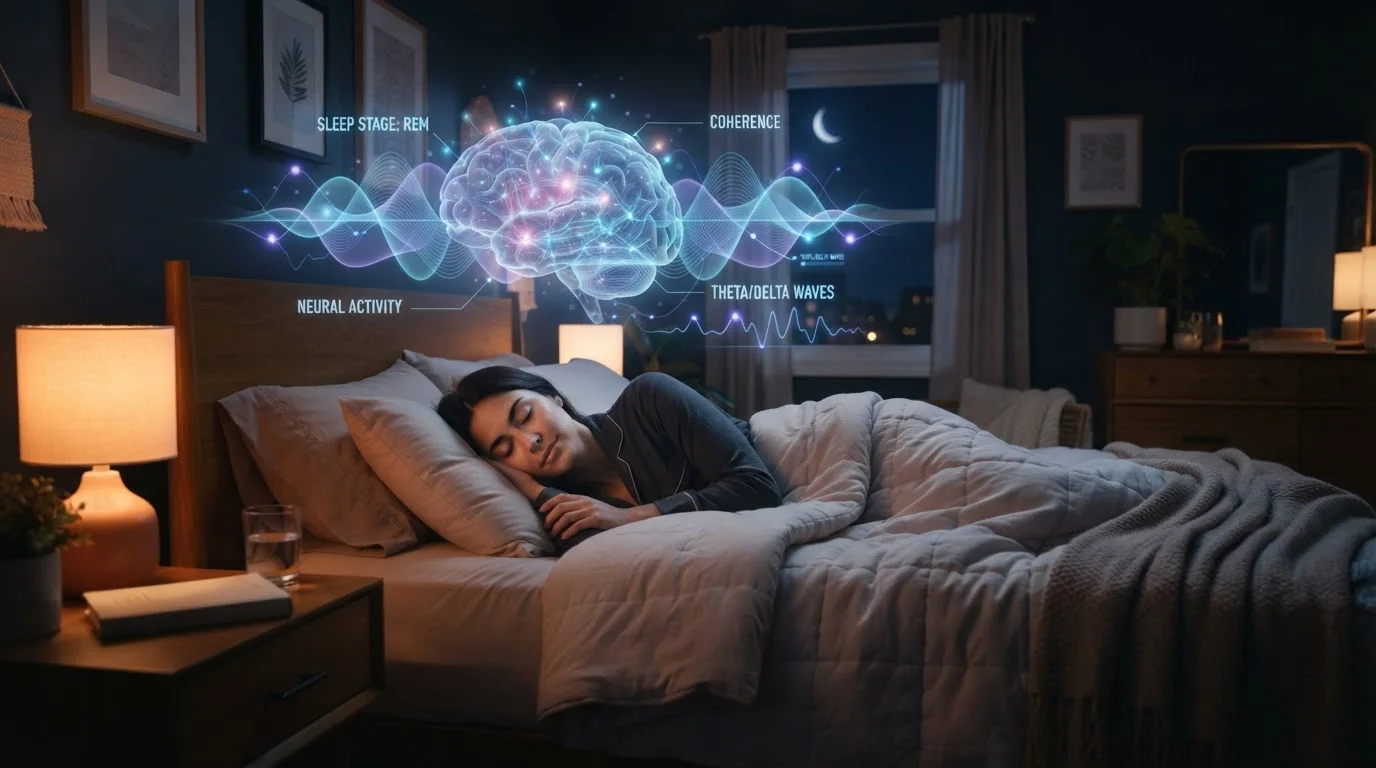
What Happens in the Brain When You Don't Sleep Enough
Most people are familiar with feeling cranky after a bad night's sleep. What's less understood is that this isn't just a mood inconvenience - it reflects a measurable shift in how your brain processes emotional information.
Two brain regions are at the center of this: the amygdala, which flags threats and generates emotional responses, and the prefrontal cortex, which helps evaluate those responses and apply context and restraint. During normal, sufficient sleep, these regions work in balance. After sleep deprivation, research consistently shows the amygdala becomes up to 60% more reactive to negative stimuli, while the prefrontal cortex's regulatory influence weakens significantly.
The result is a brain that is faster to react emotionally and slower to moderate that reaction - a combination that affects everything from how you respond to a frustrating email to how you navigate conflict in a close relationship.
“Sleep is not the absence of wakefulness. It is a complex, active process in which the brain performs essential maintenance - and emotional recalibration is one of its most important tasks.”
— Matthew Walker, Professor of Neuroscience and Psychology, University of California, Berkeley; author of 'Why We Sleep'
This neurological shift doesn't require dramatic sleep loss. Studies using functional MRI have observed significant changes in amygdala reactivity after just one night of restricted sleep in otherwise healthy adults.
The Special Role of REM Sleep in Emotional Processing
Not all sleep stages contribute equally to emotional regulation. REM sleep - the stage associated with vivid dreaming - appears to serve a specific function: helping the brain process and emotionally defuse memories from the day.
During REM, emotionally significant experiences are reactivated in a neurochemical environment that is notably low in norepinephrine, a stress-related neurotransmitter. This combination of memory replay without the chemical signature of stress may be what allows the brain to retain the information from an experience while reducing the emotional weight attached to it.
When REM sleep is consistently disrupted - whether by alcohol, certain medications, fragmented sleep, or chronic deprivation - this nightly emotional recalibration is interrupted. Over time, this can leave people more emotionally reactive and less resilient to stressors they might otherwise handle with relative ease.
~60%
Increase in amygdala reactivity after sleep loss
Neuroimaging research has found that sleep-deprived individuals show markedly greater amygdala responses to negative emotional stimuli compared to well-rested counterparts.
1 in 3
U.S. adults not getting enough sleep
According to the Centers for Disease Control and Prevention (CDC), more than a third of American adults regularly sleep less than the recommended seven hours per night.
20-25%
Of total sleep time spent in REM
In healthy adult sleepers, REM sleep typically accounts for roughly one-fifth to one-quarter of total nightly sleep, with the largest REM periods occurring in the final hours of sleep.
For more on how sleep interacts with mental health more broadly, see Sleep and Mental Health: Understanding the Two-Way Relationship.
When Poor Emotional Regulation Becomes a Pattern
The occasional rough night won't derail your emotional health. But when inadequate sleep becomes a habit, the effects compound. Chronic sleep restriction is associated in research with elevated rates of anxiety, depression, and emotional dysregulation that persists even during waking hours when the individual feels relatively alert.
One reason this matters is that emotional dysregulation often leads to behaviors that further undermine sleep - rumination, late-night screen use, or reaching for stimulants - creating a reinforcing cycle that's difficult to break without deliberate intervention. Emotional avoidance is one pattern that research suggests can emerge when people are consistently under-rested and struggling to process difficult feelings effectively.
Treat Sleep as an Emotional Health Investment
If you find yourself more irritable, anxious, or emotionally reactive than usual, consider your recent sleep history before attributing the shift solely to external circumstances. Prioritizing consistent, quality sleep is one of the most evidence-supported steps you can take to support emotional stability. Small, consistent improvements to your sleep environment and evening routine often yield noticeable results within days.
Sleep quality is also shaped by the environment you sleep in. Evidence-backed adjustments to temperature, light, and noise - detailed in this guide to bedroom design for better sleep - can have meaningful effects on both sleep depth and emotional recovery.
Practical Implications: Sleep as a Mental Health Habit
Understanding the sleep-emotion connection shifts how we think about rest. Sleep isn't a passive activity or a luxury - it's an active process the brain uses to maintain emotional stability. Treating it as a genuine health priority, rather than something to sacrifice when life gets busy, is supported by the evidence.
Some practical considerations supported by general sleep research include maintaining a consistent sleep and wake schedule, reducing exposure to stimulating content and bright screens in the hour before bed, and creating an environment that supports uninterrupted sleep. Evening routines matter more than many people realize - small pre-bed behaviors have documented effects on sleep quality, which in turn affects how emotionally resourced you feel the next day. See evening habits that support or undermine sleep quality for a practical breakdown.
For a broader foundation, the Sleep & Recovery hub covers sleep quality, rest habits, and recovery strategies across life stages and health goals.
This article is for general informational purposes only and does not constitute medical or mental health advice. If sleep difficulties or emotional health concerns are affecting your daily life, please consult a qualified healthcare professional.
Frequently Asked Questions
Even a single night of insufficient sleep can increase emotional reactivity and reduce your tolerance for frustration. Research shows the amygdala - the brain's emotional alarm system - becomes more reactive after sleep loss, while the prefrontal cortex's ability to put the brakes on that reactivity is reduced. Most people notice this as irritability, heightened anxiety, or difficulty staying patient.
Yes, and the relationship runs in both directions. Poor sleep can heighten anxiety symptoms by amplifying the brain's threat-detection response. At the same time, anxiety can disrupt sleep, creating a reinforcing cycle. For a deeper look at this bidirectional relationship, general guidance on sleep and mental health explains the underlying mechanisms.
REM sleep is when the brain actively processes emotionally significant experiences from the day. During this stage, emotional memories are replayed in a neurochemical environment lower in stress hormones, which appears to help reduce the emotional charge attached to difficult experiences. Disrupted REM sleep can interfere with this processing.
Evidence suggests yes. Consistent, quality sleep supports the brain circuits involved in emotional control, and people who prioritize sleep tend to report better mood stability and stress tolerance. Sleep hygiene improvements are increasingly recognized as a component of mental health care, though they work best as part of a broader approach.
Most public health guidance recommends seven to nine hours per night for adults, though individual needs vary. What matters as much as duration is sleep quality and consistency. Chronically cutting sleep short - even by an hour or two - accumulates a sleep debt that has real effects on emotional functioning.
If disrupted sleep and mood difficulties are persistent or significantly affecting daily life, consulting a qualified healthcare professional is strongly recommended. Conditions such as insomnia, sleep apnea, anxiety disorders, and depression often involve sleep disruption and benefit from professional assessment and treatment.
The content on this site is for informational purposes only and is not a substitute for professional advice. Always consult a qualified professional for guidance specific to your situation.