

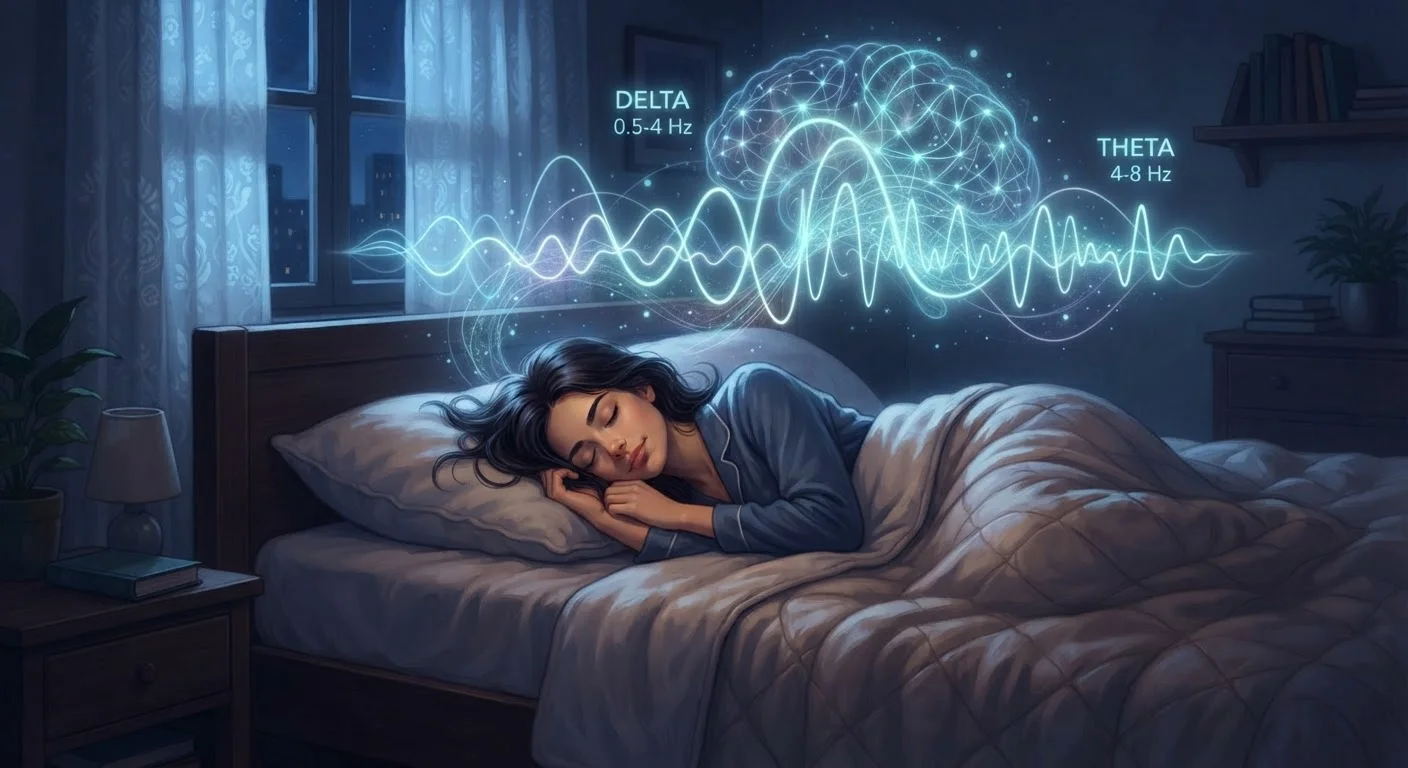
What a Full Night of Sleep Actually Looks Like
Sleep is not a single, uniform state. Each night, your brain cycles through four distinct stages roughly four to six times, with each full cycle lasting approximately 90 minutes. These stages fall into two broad categories: non-REM (NREM) sleep, which includes three stages, and REM sleep. How much time you spend in each stage - and how often those cycles complete without interruption - determines how rested, sharp, and emotionally regulated you feel the next day.
To understand why disrupted sleep feels so punishing, it helps to know what each stage is actually doing for your body and brain.
The Four Sleep Stages Explained
Stage 1: Light NREM Sleep
This is the transition between wakefulness and sleep, typically lasting just one to seven minutes. Your heartbeat, breathing, and eye movements slow, and muscles begin to relax - sometimes twitching briefly, a phenomenon called a hypnic jerk. Brain activity shifts from alert waking patterns toward slower rhythms. Stage 1 is easily disrupted; a noise or minor discomfort can push you back to wakefulness.
Stage 2: Deeper Light Sleep
Stage 2 accounts for roughly 50% of total sleep time in most adults. Body temperature drops, heart rate slows further, and the brain produces distinct activity bursts called sleep spindles and K-complexes - believed to play a role in memory consolidation and filtering out external stimuli. Although still classified as light sleep, Stage 2 is harder to wake from than Stage 1.
Stage 3: Deep (Slow-Wave) Sleep
Often called deep sleep or slow-wave sleep (SWS), Stage 3 is dominated by slow, high-amplitude delta brain waves. This is the most physically restorative stage: tissue repair occurs, growth hormone is released, immune function is reinforced, and the glymphatic system clears metabolic waste - including proteins linked to neurodegenerative disease - from the brain. Deep sleep is concentrated in the first half of the night. Waking someone from Stage 3 is difficult; they often feel groggy and disoriented, a state called sleep inertia.
Stage 4: REM Sleep
Rapid Eye Movement (REM) sleep is when most vivid dreaming occurs. The brain becomes highly active - nearly as active as during wakefulness - while the body's voluntary muscles are temporarily paralyzed. REM is critical for emotional processing, creativity, and declarative memory consolidation. REM periods grow longer with each cycle, meaning the majority of your REM occurs in the final two hours of a full night's sleep. Cutting sleep short disproportionately robs you of REM. Research suggests poor REM sleep is closely tied to how you regulate mood - a connection explored further in our article on sleep and emotional regulation.
REM Sleep
Rapid Eye Movement sleep is a stage characterized by vivid dreaming, high brain activity, and temporary muscle paralysis. It is critical for memory consolidation and emotional regulation.
Slow-Wave Sleep (SWS)
Also called deep sleep or Stage 3 NREM, this is the most physically restorative sleep stage, dominated by slow delta brain waves and associated with tissue repair and immune support.
Sleep Spindles
Brief bursts of synchronized brain activity occurring during Stage 2 sleep, thought to protect sleep continuity and support memory processing.
Glymphatic System
A waste-clearance network in the brain that is most active during deep sleep, flushing out metabolic byproducts including proteins associated with neurological conditions.
Sleep Inertia
The groggy, disoriented feeling that results from being awakened during deep sleep, caused by an abrupt transition from slow-wave brain activity to wakefulness.
Circadian Rhythm
The body's internal 24-hour biological clock that regulates sleep timing, hormone release, and other physiological processes in response to light and environmental cues.
Why Disruption Matters More Than Total Hours
Sleeping eight hours but waking frequently - due to noise, temperature, stress, or sleep disorders like apnea - can prevent your brain from completing full cycles. Stage 3 and REM sleep are especially vulnerable to disruption. Even one missed cycle reduces the restorative benefit significantly.
13%
Reduction in deep sleep from one alcoholic drink
Research published in JMIR Mental Health found even moderate alcohol consumption measurably reduced slow-wave sleep efficiency.
~25%
Of total sleep time spent in REM for healthy adults
According to the American Academy of Sleep Medicine, healthy adults typically spend about one-quarter of sleep time in the REM stage.
90 min
Average length of one full sleep cycle
This figure is consistent across major sleep research bodies including the National Sleep Foundation and the American Academy of Sleep Medicine.
Alcohol is a common but underappreciated disruptor: while it may accelerate sleep onset, it suppresses REM in the first half of the night, fragmenting the cycle architecture. Caffeine consumed in the afternoon can delay Stage 3 onset even when you feel fully awake at bedtime. Your pre-sleep behaviors matter more than many people realize - our evening habits checklist can help you audit what's undermining your cycles.
Consistent sleep and wake times anchor your circadian rhythm, which governs when each stage appears. Irregular schedules - even on weekends - compress deep sleep and delay REM, compounding over time.
This article is for general informational and educational purposes only and is not a substitute for professional medical advice. If you have concerns about your sleep quality or a potential sleep disorder, please consult a qualified healthcare provider.
The content on this site is for informational purposes only and is not a substitute for professional advice. Always consult a qualified professional for guidance specific to your situation.