

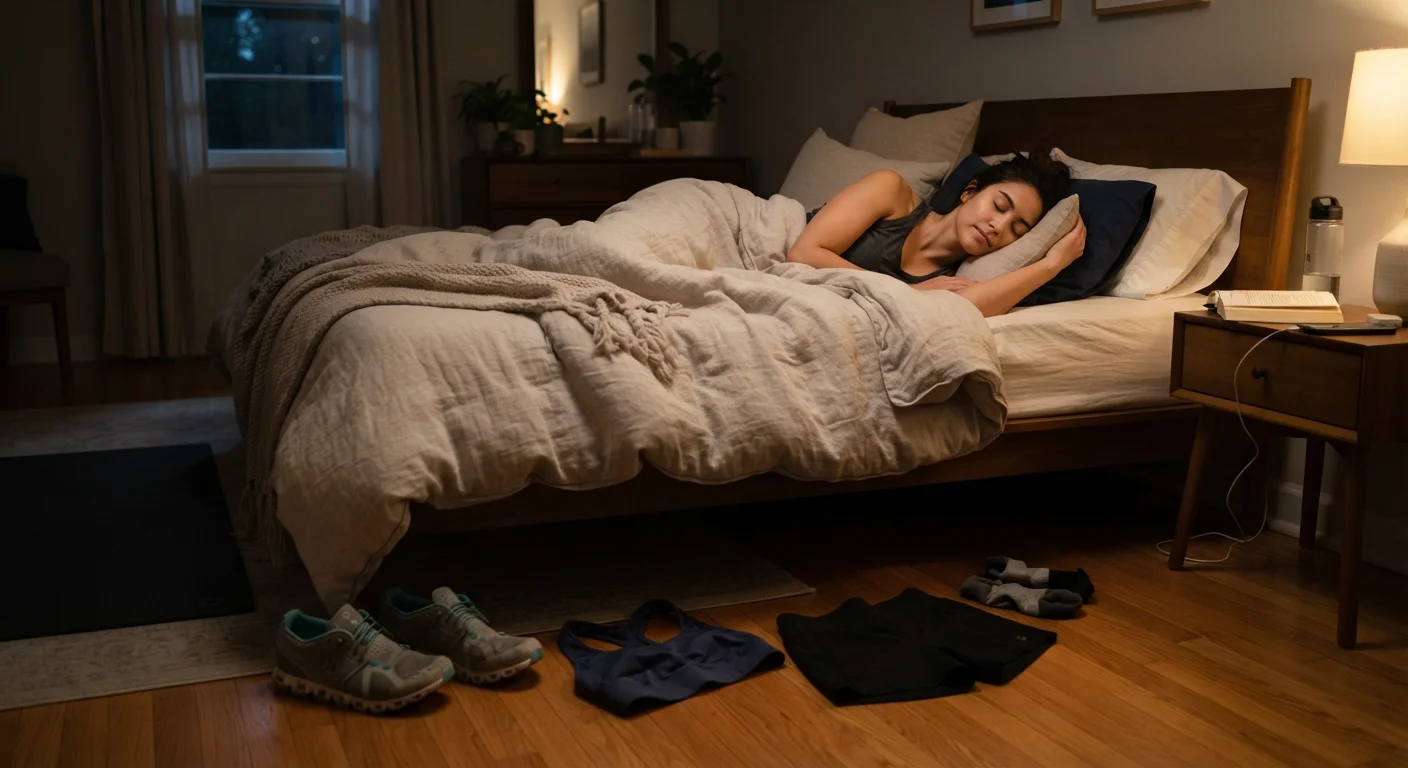
Why Fitness Plans Overlook Sleep
Most training programs are meticulously designed: sets, reps, macros, progressive overload. Sleep rarely earns the same attention, even though it's where a significant portion of adaptation actually happens. This gap isn't just a cultural habit - it reflects a genuine misunderstanding of what physical training is.
Exercise itself doesn't build muscle or improve cardiovascular capacity; it creates the stimulus for those changes. The adaptation occurs during recovery, and the most biologically potent recovery window is sleep. Overlooking it is roughly equivalent to planting seeds and skipping watering.
Understanding what your body does during sleep reframes rest from passive inactivity to an essential training variable - one that deserves the same deliberate management as any workout session.
7-9 hrs
Recommended nightly sleep for adults
According to the American Academy of Sleep Medicine, adults should target 7-9 hours of sleep per night for optimal health and recovery.
~70%
Of daily growth hormone released during sleep
Research in sleep physiology indicates that the large majority of daily growth hormone secretion occurs during slow-wave sleep stages.
Up to 30%
Reduction in athletic performance with sleep loss
Studies in sports science have documented meaningful decreases in strength, endurance, and reaction time following even short periods of insufficient sleep.
The Biology of Sleep-Based Recovery
Several critical physiological processes converge during sleep to support physical recovery:
- Growth hormone release: The pituitary gland secretes the majority of daily growth hormone during slow-wave (deep) sleep. This hormone drives protein synthesis - the process by which damaged muscle fibers are repaired and rebuilt stronger. Shortened or disrupted sleep directly reduces this output.
- Protein synthesis and muscle repair: The biological process of muscle recovery depends on an adequate window for protein synthesis to occur. Deep sleep extends and optimizes this window in ways that waking rest does not.
- Cortisol regulation: Sleep deprivation elevates cortisol - a stress hormone that, in chronically elevated states, promotes muscle breakdown rather than repair. Sufficient sleep keeps cortisol within healthy ranges overnight.
- Glycogen replenishment: Muscle glycogen - the primary fuel for high-intensity exercise - is restored during sleep, supporting energy availability for subsequent sessions.
These aren't theoretical benefits. They represent measurable biological events that are either supported or undermined depending on sleep quality and duration.
Track Recovery, Not Just Training
If you log workouts, consider tracking sleep as well - duration, consistency, and how rested you feel on waking. Patterns in sleep quality often correlate with patterns in performance and recovery. This information can help you and your healthcare provider identify whether rest is limiting your progress.
What Sleep Deprivation Actually Does to the Exercising Body
The consequences of chronic short sleep extend well beyond next-day fatigue. Research across sports science and sleep medicine documents consistent, significant effects:
- Reduced muscular strength and power output
- Impaired reaction time and motor coordination, raising injury risk
- Blunted immune function, increasing vulnerability to illness during hard training blocks
- Decreased motivation and increased perceived exertion - the same workout feels harder on less sleep
- Elevated inflammatory markers, which can slow tissue repair
It's also worth noting that poor sleep and inadequate sleep are not the same problem. Logging eight hours doesn't guarantee restorative sleep - fragmented or shallow sleep disrupts the deep-stage cycles where the most critical recovery work occurs.
For adults over 40, these effects can compound. Recovery time and hormonal shifts already change with age, making sleep quality an even more consequential variable.
Practical Sleep Habits That Support Recovery
There's no supplement or technique that replaces consistent, quality sleep - but several evidence-informed habits can meaningfully improve it:
- Maintain a consistent sleep schedule: Going to bed and waking at the same time daily - including weekends - stabilizes circadian rhythms, which regulate the timing of hormone release tied to recovery.
- Prioritize the sleep environment: A cool, dark, quiet room supports deeper sleep stages. Even low light exposure can suppress melatonin and reduce slow-wave sleep duration.
- Time training thoughtfully: Vigorous exercise close to bedtime can elevate core temperature and cortisol, delaying sleep onset in some people. Individual responses vary, so pay attention to how your body responds.
- Manage pre-sleep nutrition: Avoiding heavy meals or high caffeine intake in the hours before bed is generally supported by sleep research, though specific timing varies by individual.
- Consider the role of naps carefully: Strategic naps can support recovery, but napping too long or too late can undermine nighttime sleep quality.
It's also worth understanding the distinction between complete rest and active recovery. Active recovery and rest days serve different purposes, and sleep underpins the effectiveness of both.
This article is for general informational and educational purposes only and is not a substitute for professional medical advice. Consult a qualified healthcare provider with any questions about your health, fitness, or sleep concerns.
Frequently Asked Questions
During deep sleep, the body releases growth hormone and increases protein synthesis, repairing the microscopic muscle damage caused by exercise. Without adequate sleep, this rebuilding process is incomplete, leaving muscles weaker and more prone to injury. Sleep is, in effect, where training adaptations are consolidated.
General guidance from sleep researchers suggests most adults need 7-9 hours per night. Athletes undergoing heavy training loads may require toward the higher end of that range, or even slightly beyond it, to support full recovery. Individual needs vary, so monitoring energy levels and performance is useful. Consult a healthcare professional if persistent fatigue is a concern.
Yes, meaningfully. Research consistently links sleep deprivation with reduced endurance, slower reaction time, impaired coordination, and decreased motivation to train. Even a single night of poor sleep has measurable effects on next-day performance.
Recovery sleep can partially offset short-term sleep debt, but it cannot fully reverse the cumulative effects of chronic sleep restriction. Consistent nightly sleep is far more effective than trying to catch up on weekends. For more on this, see the evidence around sleep debt and its limits.
Slow-wave sleep - also called deep sleep or stage 3 non-REM sleep - is considered most critical for physical recovery, as it's when growth hormone peaks and tissue repair is most active. REM sleep also plays a role in motor learning and memory consolidation related to movement patterns.
The content on this site is for informational purposes only and is not a substitute for professional advice. Always consult a qualified professional for guidance specific to your situation.