

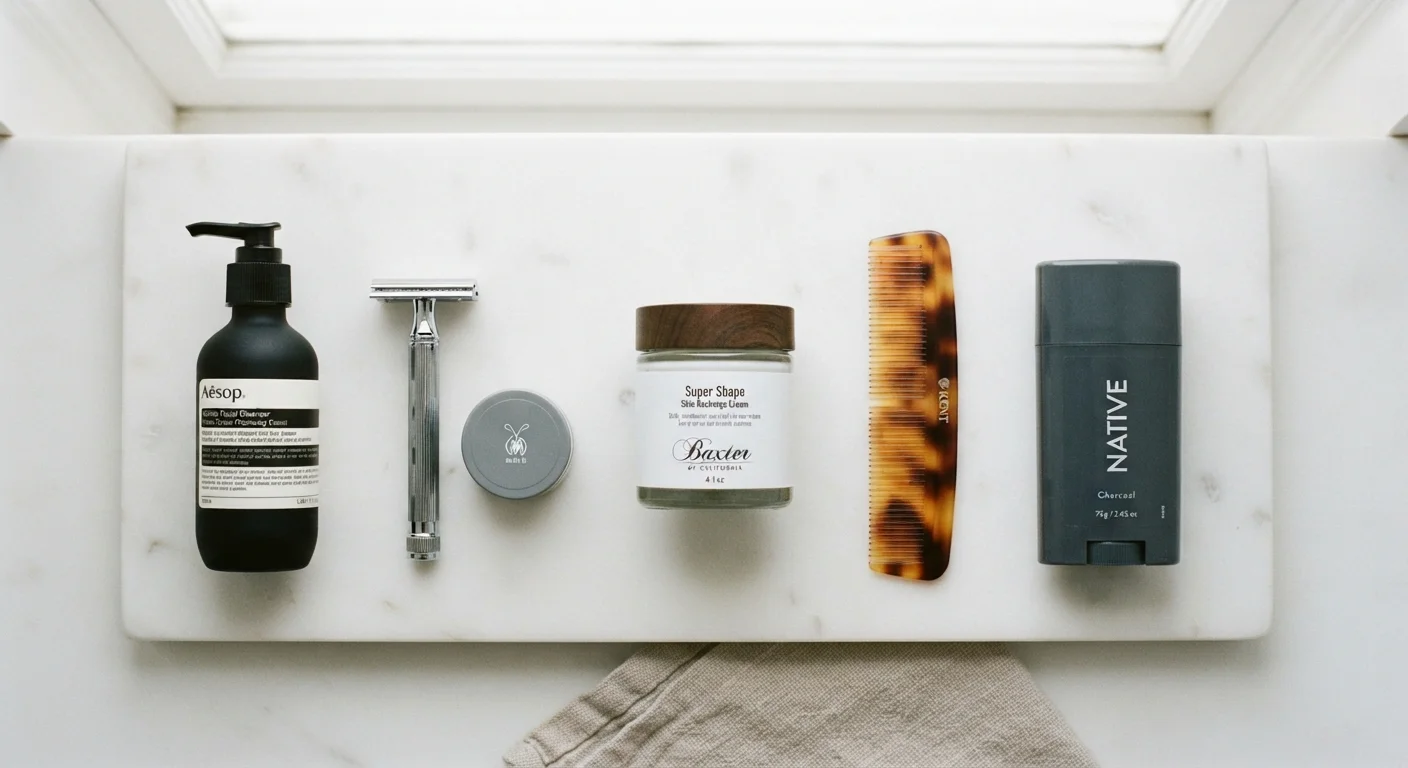
Why a Daily Grooming Routine Matters
Grooming isn't about vanity — it's a foundational part of personal health. Consistent habits keep skin functioning as a barrier, prevent infections, and support overall confidence. Think of it the same way you'd think about everyday body care: small, repeated actions compound into real results over time.
The good news is that an effective men's grooming routine doesn't need to be expensive or time-consuming. A handful of targeted steps — done consistently — covers the vast majority of daily needs. For a streamlined starting point, check out a simple grooming routine for men that takes under ten minutes.
90%
Skin cancers linked to UV exposure
The Skin Cancer Foundation estimates that roughly 90% of nonmelanoma skin cancers are associated with UV radiation from the sun — making daily SPF a genuine health priority, not just a cosmetic one.
2x/day
Recommended tooth brushing frequency
The American Dental Association recommends brushing twice daily for two minutes with fluoride toothpaste as the baseline for oral health maintenance.
Face Care: Cleansing, Moisturizing, and Sun Protection
Men's skin tends to be thicker and oilier than women's, but it still needs daily attention. The core three-step face routine is:
- Cleanse: Wash your face morning and night with a gentle, water-soluble cleanser. This removes excess oil, sweat, and environmental residue without stripping the skin's natural moisture barrier.
- Moisturize: Apply a lightweight, fragrance-free moisturizer while skin is still slightly damp. Even oily skin benefits — skipping this step can actually trigger more oil production.
- SPF: Apply a broad-spectrum sunscreen with at least SPF 30 every morning, rain or shine. UV exposure is the leading cause of premature skin aging and increases the risk of skin cancer.
Apply your SPF as the last step in your morning face routine — after moisturizer — so it forms an uninterrupted layer on the skin's surface. Mixing it into your moisturizer dilutes its effectiveness.
Sunscreen efficacy depends on being applied as an intact film at the recommended concentration. Diluting it with another product reduces the actual SPF delivered to the skin.
If your skin feels tight or looks dull after cleansing, your cleanser is likely too harsh. Switch to a fragrance-free, pH-balanced formula and give your skin about two weeks to recalibrate.
Over-cleansing disrupts the skin's natural moisture barrier, leading to dryness and compensatory oil production — a cycle that a gentler cleanser can break.
If you have specific skin concerns — acne, sensitivity, hyperpigmentation — a dermatologist can tailor recommendations to your skin type. This article provides general guidance, not personal medical advice.
Shaving and Beard Maintenance
Whether you shave daily or maintain a beard, a little technique goes a long way toward preventing the most common problems: razor burn, ingrown hairs, and dryness.
For shavers:
- Prep with warm water: Shaving after a warm shower — or pressing a warm towel to your face — softens hair and opens follicles, reducing drag and irritation.
- Use a quality shave gel or cream: This creates a protective layer between the blade and skin. Avoid products with heavy alcohol content, which can dry skin out.
- Shave with the grain first: Going with the direction of hair growth minimizes irritation. If you need a closer shave, do a second pass across the grain — never against it on sensitive areas.
- Rinse with cool water and moisturize: Cool water helps close pores; a fragrance-free post-shave moisturizer or balm soothes the skin.
For beard growers:
- Wash the beard regularly with a gentle cleanser or dedicated beard wash to prevent flaking and buildup.
- Apply a lightweight beard oil or balm to keep the underlying skin hydrated and reduce itch.
- Trim regularly to maintain shape and remove split ends.
Ingrown Hairs: Don't Pick or Squeeze
Picking at ingrown hairs breaks the skin and increases the risk of infection and post-inflammatory scarring. Instead, use a warm compress to soften the area, exfoliate gently, and allow the hair to surface on its own. If you experience frequent or painful ingrown hairs, a dermatologist can recommend targeted treatments.
Hair Care Basics
How often you should shampoo depends on your hair type. Fine or oily hair may need washing daily or every other day; coarse, curly, or dry hair generally does better with less frequent washing — two to three times a week is common. Over-shampooing strips the scalp of its natural oils, which can lead to dryness and increased oil production as compensation.
A basic hair care approach for most men:
- Use a shampoo suited to your scalp type (oily, dry, normal, or dandruff-prone).
- Follow with a conditioner on the lengths and ends if your hair is more than an inch long or tends to feel dry or rough.
- Avoid aggressively towel-drying wet hair — gentle patting reduces breakage and frizz.
- For scalp concerns like persistent dandruff or flaking, a dermatologist can recommend targeted treatments. General over-the-counter dandruff shampoos containing zinc pyrithione or selenium sulfide are well-established options for mild cases.
Body Hygiene Essentials
Showering daily — or at minimum every other day — remains the cornerstone of body hygiene. Pay particular attention to areas prone to odor and bacterial buildup: underarms, groin, and feet. Beyond the shower, a complete body hygiene routine includes:
- Deodorant/antiperspirant: Applied to clean, dry underarms. Antiperspirants reduce sweating; deodorants primarily address odor. Many products combine both functions.
- Nail care: Trim fingernails and toenails regularly — roughly every one to two weeks — and keep them clean to prevent bacteria and fungi from accumulating beneath them.
- Oral hygiene: Brush twice daily for two minutes with a fluoride toothpaste, and floss once daily. Oral health is closely linked to overall systemic health.
- Ear and nose care: Gently clean outer ear areas during bathing; avoid inserting cotton swabs into the ear canal. Trim visible nose hair as needed with a dedicated trimmer.
For a quick daily reference, this personal care checklist covers all the key bases in one place.
Simplify With a Consistent Order
Performing your grooming steps in the same sequence every day reduces decision fatigue and makes the routine feel automatic within a few weeks. Lay out your products in the order you use them — your brain will start moving through the steps on autopilot.
Putting It All Together
The most effective grooming routine is one you'll actually stick to. Start by anchoring habits to an existing behavior — most people find morning routines easiest to maintain. For a detailed walkthrough on building consistent habits, see how to build a morning routine that sticks.
A realistic daily framework might look like this:
- Morning (5–8 minutes)
- Cleanse face → apply moisturizer → apply SPF → brush teeth → apply deodorant → style hair
- Evening (3–5 minutes)
- Cleanse face → apply moisturizer → floss and brush teeth
- Weekly
- Trim nails → shave or trim beard → deeper hair care if needed
Grooming is a form of self-respect, not a burden. Building these habits into your existing schedule — rather than treating them as extra tasks — makes consistency feel effortless over time. Your skin, scalp, and overall health will thank you for it.
This article is for general informational and educational purposes only and is not a substitute for professional medical advice. For concerns about your skin, scalp, or any aspect of personal health, consult a qualified healthcare provider.
The content on this site is for informational purposes only and is not a substitute for professional advice. Always consult a qualified professional for guidance specific to your situation.