

Start here
Why Scalp Health Matters
Next
Reading the Signals: Flaking, Itching, and Oiliness
Then
Daily Habits That Support a Healthy Scalp
When you're ready
When to See a Professional
Why Scalp Health Matters
Your scalp is skin — specialized skin with a high density of hair follicles and sebaceous (oil-producing) glands, but skin nonetheless. Like the rest of your body's outer layer, it has its own microbiome, moisture balance, and protective barrier that can be disrupted by environment, products, stress, and underlying health factors.
Healthy hair growth begins at the follicle level, which sits in the scalp. When the scalp environment is out of balance — too oily, too dry, inflamed, or irritated — that can affect how hair grows and feels over time. This doesn't mean every bad hair day signals a medical crisis, but it does mean paying attention to what your scalp is communicating is genuinely worthwhile.
For a broader look at how skin signals work across the body, see our guide on understanding your skin type.
Sebum
The natural oil produced by sebaceous glands in the skin, including the scalp. It helps moisturize and protect skin and hair, but too much or too little can cause imbalance.
Seborrheic Dermatitis
A common skin condition that causes scaly patches, redness, and dandruff, typically appearing in oily areas like the scalp. It is associated with an overgrowth of a naturally occurring yeast.
Scalp Microbiome
The community of microorganisms — bacteria, fungi, and others — that naturally live on the scalp. A balanced microbiome supports scalp health; disruptions can contribute to irritation or flaking.
Contact Dermatitis
Skin inflammation caused by direct contact with an irritant or allergen. On the scalp, it often results from a reaction to a specific ingredient in a shampoo, conditioner, or styling product.
Malassezia
A genus of yeast that naturally lives on human skin, including the scalp. In some people, overgrowth of Malassezia contributes to dandruff and seborrheic dermatitis.
Reading the Signals: Flaking, Itching, and Oiliness
Most scalp concerns fall into a few recognizable categories. Understanding what each signal typically means is the first step toward addressing it effectively — without judgment or guesswork.
Flaking
Not all flakes are the same. Dandruff — clinically known as seborrheic dermatitis in more pronounced forms — tends to produce larger, yellowish or oily-looking flakes associated with an overgrowth of Malassezia, a fungus naturally present on the scalp. Dry scalp flaking, by contrast, produces smaller, whiter flakes and is caused by a lack of moisture rather than microbial imbalance. Identifying which type you're dealing with shapes which care approach makes sense.
Itching
An itchy scalp can stem from dryness, product sensitivity, dandruff, or inflammation. It can also be a sign of contact dermatitis (a reaction to a specific ingredient) or, less commonly, conditions like psoriasis or scalp ringworm. Persistent itching without an obvious cause is worth investigating further.
Excess Oiliness
Sebaceous glands on the scalp produce sebum, which is natural and protective. Overproduction — triggered by hormonal shifts, over-washing, stress, or genetics — can make hair look greasy quickly and may contribute to dandruff. Interestingly, washing too frequently can sometimes encourage the scalp to produce more oil in response.
Don't Self-Diagnose Persistent Symptoms
Dandruff, psoriasis, ringworm, and contact dermatitis can look strikingly similar to an untrained eye. If your symptoms are intense, spreading, or accompanied by hair loss, please consult a dermatologist rather than relying solely on over-the-counter treatments. An accurate diagnosis makes a meaningful difference in outcomes.
Understanding your hair's texture and structure can also help you interpret what your scalp needs. Our article on hair porosity, density, and texture is a helpful companion read.
Daily Habits That Support a Healthy Scalp
The good news: most common scalp concerns respond well to consistent, gentle habits. There's no need for an elaborate or expensive routine.
- Wash at the right frequency for your scalp type. Oily scalps generally benefit from more frequent cleansing; dry or textured hair types may thrive with less washing. There is no single correct schedule — tune in to how your scalp feels.
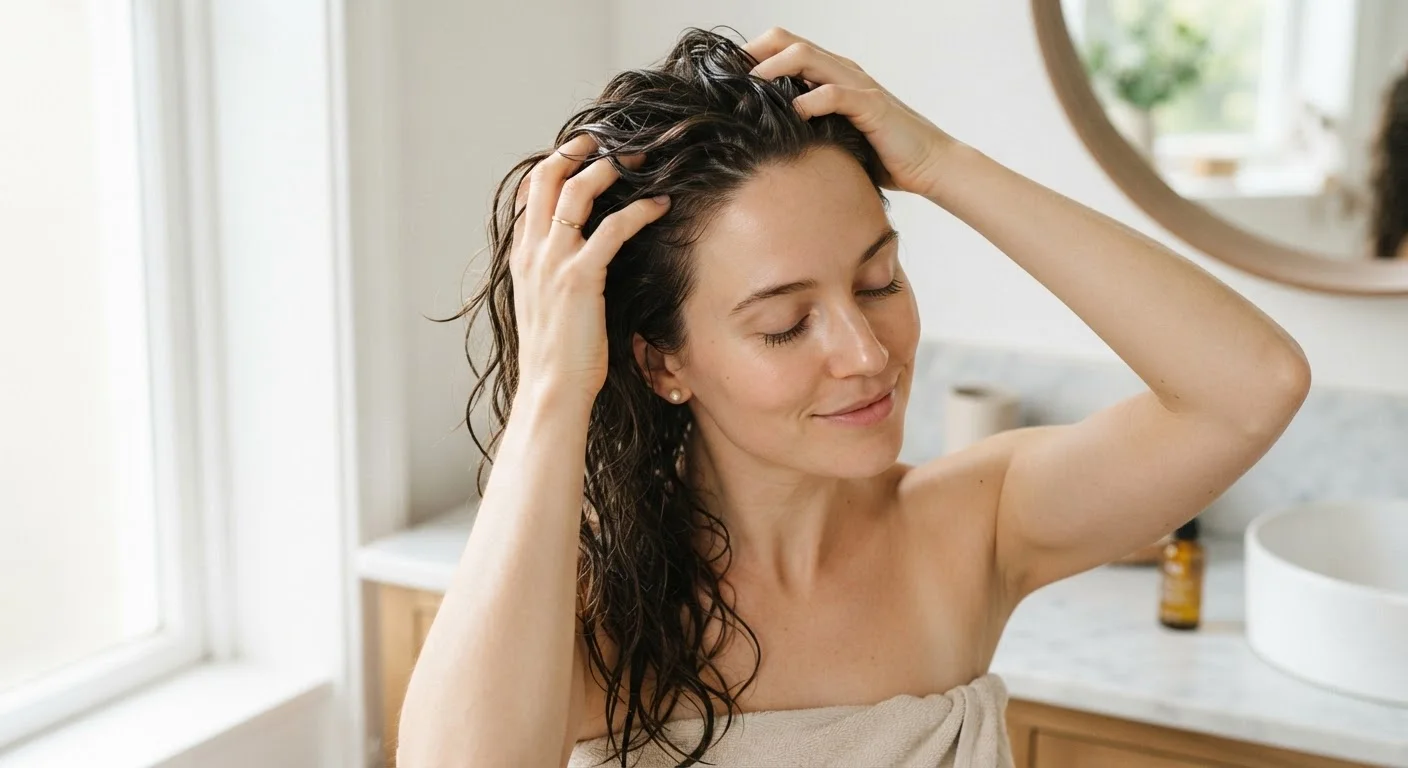
- Massage while you wash. Gently massaging the scalp during shampooing stimulates circulation and helps loosen buildup. Use the pads of your fingers, not your nails.
- Rinse thoroughly. Shampoo and conditioner residue left on the scalp can contribute to irritation and buildup. Take an extra moment to rinse completely.
- Simplify your product lineup. Fewer products mean fewer potential irritants. If you're experiencing flaking or itching, temporarily scaling back on styling products can help you identify whether buildup or an ingredient is contributing.
- Protect from environmental stress. UV exposure, hard water, and dry air can all affect scalp condition. Light protective layers in harsh conditions, and hydration from the inside (adequate water intake), are small but meaningful supports.
Start With One Small Change
If your scalp has been feeling off, resist the urge to overhaul your entire routine at once. Swap one product at a time — starting with your shampoo — and give each change two to three weeks before evaluating. This makes it much easier to pinpoint what's actually helping.
Building these habits into a broader personal care routine is easier than it sounds. Our daily personal care audit checklist can help you see the full picture.
When to See a Professional
Gentle, consistent self-care handles the majority of everyday scalp concerns. But there are situations where professional guidance is the right call — and recognizing them early can prevent more significant issues down the line.
Consider consulting a dermatologist or healthcare provider if you notice:
- Flaking, redness, or scaling that is severe, spreading, or not responding to basic care after several weeks
- Noticeable hair thinning or shedding alongside scalp symptoms
- Pain, open sores, or crusting on the scalp
- Signs of infection, such as warmth, swelling, or discharge
- A sudden change in your scalp that has no obvious cause
Conditions like psoriasis, seborrheic dermatitis, alopecia areata, and scalp ringworm all require professional diagnosis and tailored treatment. No amount of at-home trial and error substitutes for an accurate assessment.
This article is for general informational and educational purposes only and is not a substitute for professional medical advice, diagnosis, or treatment. Always consult a qualified healthcare provider with questions about your scalp or skin health.
Frequently Asked Questions
Dandruff is usually caused by an overgrowth of a naturally occurring scalp fungus, producing larger, oily flakes and often itchiness. A dry scalp, by contrast, lacks moisture and sheds smaller, finer flakes — similar to dry skin elsewhere on the body. The underlying causes are different, so the care approaches differ too.
There is no universal answer — it depends on your scalp type, hair texture, and lifestyle. Oily scalps generally benefit from more frequent washing, while dry or coarse hair types may do better with less frequent cleansing. A good starting point is washing whenever your scalp feels noticeably oily or itchy, then adjusting from there.
Yes, stress can influence sebum production and may aggravate conditions like dandruff or seborrheic dermatitis. This is a well-documented connection in dermatological literature. Managing stress through sleep, movement, and other self-care strategies can be a helpful supporting measure alongside topical scalp care.
Occasional light scratching is generally harmless, but aggressive or repeated scratching can create small wounds that increase the risk of infection or worsen inflammation. If itching is persistent or intense, it is worth investigating the underlying cause rather than relying on scratching for relief.
If symptoms are severe, spreading, accompanied by hair loss, or do not improve with gentle at-home care after several weeks, a dermatologist can help identify the cause and recommend appropriate treatment. Conditions like psoriasis, ringworm, or contact dermatitis require professional diagnosis.
Absolutely — harsh sulfates, fragrances, or preservatives in shampoos can irritate or dry out the scalp. Product buildup from conditioners and styling products can also clog follicles and cause irritation. Simplifying your routine and choosing fragrance-free, gentle formulas can help identify whether products are a contributing factor.
The content on this site is for informational purposes only and is not a substitute for professional advice. Always consult a qualified professional for guidance specific to your situation.