

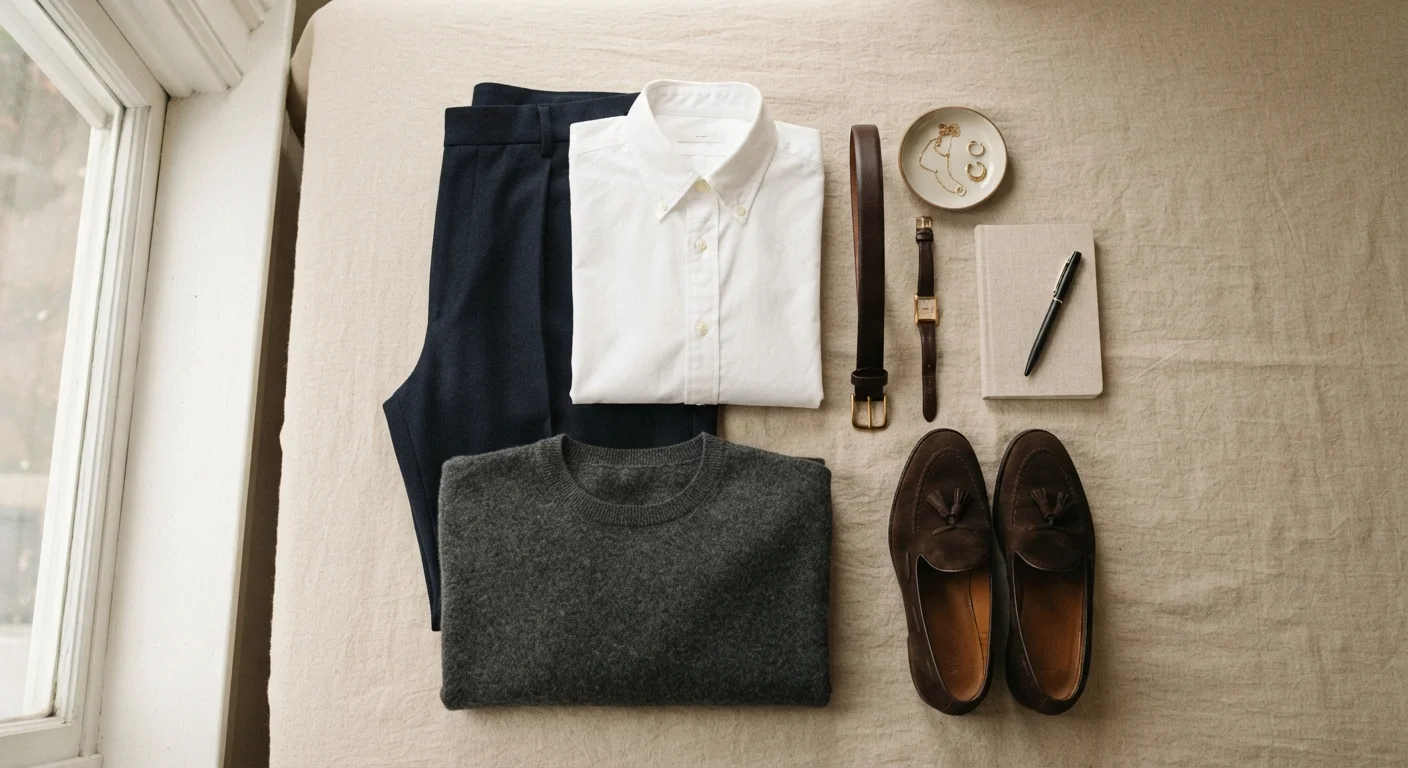
Option A
Fit
The silent foundation of every great outfit.
Best for: Anyone who wants to look polished and put-together regardless of what they're wearing or what's trending.
Option B
Style
The personal expression layer that makes clothes feel like yours.
Best for: Readers ready to communicate personality, mood, and identity through intentional clothing choices.
What We Mean by Fit vs. Style
Fit refers to how a garment sits on your specific body — whether fabric pulls, bunches, or drapes naturally across your shoulders, chest, waist, and hips. It's a structural question: does this piece work with your proportions?
Style, on the other hand, is the aesthetic dimension — the silhouette, color palette, patterns, and visual personality you project. It's the story your clothes tell before you say a word.
These two concepts are often conflated, but they operate independently. A beautifully styled outfit in the wrong size reads as uncomfortable and unintentional. A simple, unfussy garment that fits perfectly can look effortlessly sharp. Understanding the difference is the first step toward dressing with real confidence. For practical guidance on this, see our article on dressing for your body, not the mirror.
Why Fit Almost Always Wins
Ask most professional stylists and tailors where to invest your energy, and fit comes up first — consistently. Here's why: fit is visible immediately. When a jacket shoulder seam sits where it should, when trousers break cleanly at the ankle, when a shirt lies flat across the chest, the whole look settles. The brain reads it as intentional and well-considered.
Poor fit, by contrast, is distracting in ways that can't be styled around. A too-big blazer reads as borrowed; too-tight trousers pull the eye to tension lines. No amount of trend-awareness fixes this.
~$10–40
Typical cost of basic garment alterations
Common tailoring tasks like hemming or taking in seams are widely available at local tailors for a fraction of the cost of replacing a garment.
80%
Of wardrobe worn only 20% of the time
The 80/20 principle is frequently cited by professional organizers and stylists to illustrate how most people over-own and under-wear their clothing.
The good news: fit is often fixeable. Basic tailoring — hemming, taking in a seam, adjusting a waistband — is widely available and frequently far less expensive than buying a new piece. Even modest adjustments can transform how a garment performs. If you'd like to rethink your closet through this lens, our guide on wardrobe organization approaches can help you audit what you already own.
Head-to-Head: Fit vs. Style Across Key Criteria
Both elements shape how you look and feel — but they serve different functions. Here's how they compare across the dimensions that matter most to everyday dressing.
| Criterion | Fit | Style |
|---|---|---|
| Visual impact | Immediate and structural | Expressive and contextual |
| Fixes with tailoring | Yes, often inexpensively | No — it's a choice, not a flaw |
| Shelf life | Timeless when done well | Can date quickly if trend-driven |
| Learning curve | Objective — measurable on your body | Subjective — develops with experience |
| Effect on confidence | Strong, consistent boost | High when aligned with identity |
| Budget sensitivity | Low — fit elevates any price point | Higher — trends can drive spending |
Notice that style and fit aren't competing for the same job. Fit is structural; style is expressive. They're most powerful when working together, but if you had to build only one skill first, fit delivers more consistent, immediate returns.
Style Still Matters — Here's Why
Dismissing style as shallow misses the point. Style is a genuine form of self-expression, and there's real value in developing it. A coherent personal aesthetic makes getting dressed easier — you naturally gravitate toward pieces that work together, reducing decision fatigue and impulse buying.
Style also speaks to occasion, culture, and identity in ways fit alone cannot. Knowing what silhouettes, textures, and color families feel like you gives your wardrobe direction. For a grounded look at which style principles actually hold up under scrutiny, explore our piece on style rules worth following.
Style Isn't the Same as Trends
Personal style and trend-following are distinct. Trends are external signals about what's popular at a given moment; personal style is an internalized sense of what feels authentic to you. Many people with strong personal style pay little attention to seasonal trends. Developing style awareness is about understanding your own preferences — not keeping pace with the fashion cycle.
Style is also what makes dressing enjoyable. If you're having fun experimenting with color or proportion, that creative engagement is worth honoring — just don't let trend-chasing override the structural essentials.
Building a Wardrobe That Balances Both
The most practical approach is to treat fit as a non-negotiable baseline and style as the expressive layer on top. When evaluating any piece — whether at a store or in your own closet — start with fit. Does it work on your body as-is, or with minor alteration? If not, it's unlikely to earn consistent wear regardless of how much you love the print or cut.
Once fit is confirmed, style questions become more fun and lower-stakes: Do the colors work for your existing wardrobe? Does the silhouette reflect how you want to present yourself? Does it align with your actual lifestyle rather than an aspirational one?
This two-step filter naturally leads to a more versatile, cohesive closet — which is the foundation of functional dressing. If you're weighing the broader economics of your clothing choices, our article on fast fashion versus buying less and better puts the trade-offs in clear perspective.
The content on this site is for informational purposes only and is not a substitute for professional advice. Always consult a qualified professional for guidance specific to your situation.