

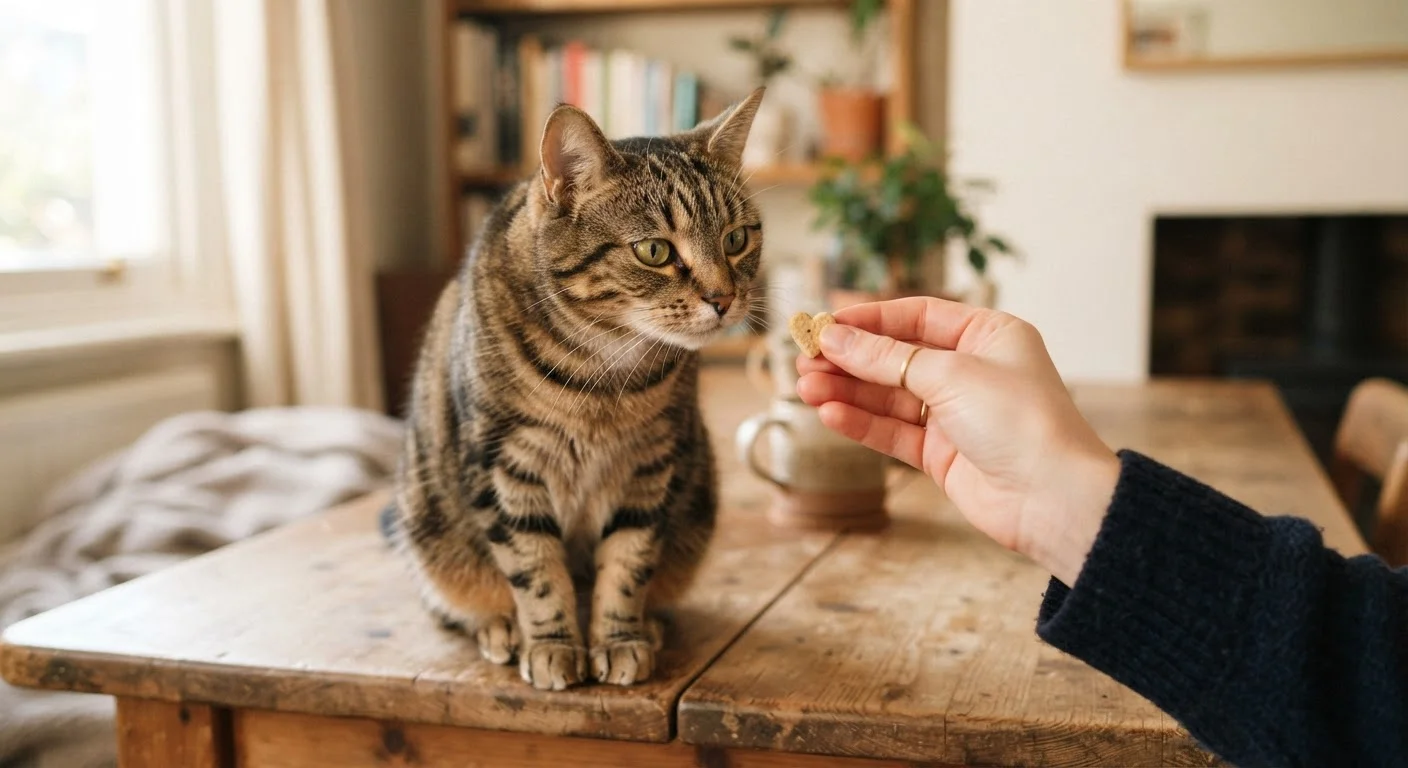
Why Cat Training Gets a Bad Reputation
Ask most cat owners whether their pet can be trained, and the response often involves a laugh. Cats have a long-standing cultural reputation for ignoring their owners entirely — and for some, that reputation feels like fact. But the science of animal learning tells a different story.
Cats are cognitively capable of associating actions with outcomes, recognizing patterns, and modifying their behavior in response to consistent feedback. What they are not is intrinsically motivated to please humans the way many dog breeds are. That distinction matters enormously for how training should be approached — not whether it's possible at all.
Most failures in cat training trace back to mismatched expectations or techniques borrowed from dog training without adjustment. Understanding what actually drives feline behavior is the first step to getting results. For a broader look at how reward-based methods function across species, see our guide to clicker training.
Myths vs. Facts: What the Evidence Actually Shows
The following myth-and-fact pairs address the most common misunderstandings pet owners carry into cat training — and explain the reasoning behind each correction.
Myth
Cats can't be trained — they're too independent and simply don't want to cooperate.
Fact
Cats can and do learn behaviors through consistent positive reinforcement; their independence means motivation must be correctly matched, not that learning is impossible.
The assumption conflates temperament with learning capacity. Cats are not pack animals and have no evolved drive to defer to a social hierarchy, which means they don't work for social approval the way many dogs do. But they are highly motivated by food, play, and environmental control. When training taps into those drives with precise timing and genuinely rewarding consequences, cats learn quickly. Research in comparative cognition consistently shows that cats can acquire both simple cues (sit, come) and more complex behaviors when trained with appropriate methods.
Myth
Scruffing a cat — grabbing the loose skin at the back of the neck — is an effective way to correct bad behavior.
Fact
Scruffing causes stress and fear in adult cats and does not teach them what to do differently; veterinary and behavioral organizations advise against it.
Scruffing is sometimes observed when a mother cat carries young kittens, which has led to the misconception that it's a neutral or calming form of restraint for adult cats. Current veterinary guidance, including positions held by the American Association of Feline Practitioners, opposes routine scruffing because it triggers a fear response rather than a learning response. A frightened cat is not learning; it is shutting down. Punishment-based corrections — whether physical or verbal — reliably increase stress and can damage the trust relationship that effective training depends on.
Myth
You have to catch a cat in the act to correct behavior, or the correction is useless.
Fact
While timing is critical in training, the more useful principle is to prevent unwanted behavior and reward the alternative — not to punish after the fact.
There is a grain of truth here: delayed punishment genuinely does not work in animals because they cannot connect a consequence to a behavior that happened minutes ago. But the takeaway is not to pursue faster corrections — it's to rethink the strategy entirely. Instead of correcting scratching on the sofa, make the sofa less appealing and place an appropriate scratching post nearby, then reward its use. Redirecting behavior toward a reinforceable alternative is consistently more effective and less stressful than any correction-based approach.
Myth
If a cat already knows a behavior, you don't need to keep rewarding it.
Fact
Variable reinforcement schedules help maintain trained behaviors over time; dropping rewards too abruptly often causes behaviors to fade.
Once a behavior is well-established, it does not need to be rewarded every single time — but that's different from never rewarding it. Intermittent reinforcement (rewarding unpredictably, not every time) actually strengthens behavior persistence. Owners who phase out rewards entirely often find the behavior deteriorates within weeks. The practical approach is to gradually reduce reward frequency while occasionally reinforcing with something the cat finds genuinely exciting, keeping the behavior reliably in the cat's repertoire.
Myth
Older cats are set in their ways and can't learn new behaviors.
Fact
Adult and senior cats retain the capacity to learn; age may affect pacing and session length, but it does not eliminate trainability.
The brain retains neuroplasticity well into adulthood across mammalian species, and cats are no exception. Senior cats may have shorter attention windows or physical limitations that affect certain behaviors, but they can absolutely acquire new associations and routines. In fact, mental engagement through training is widely considered beneficial for cognitive health in aging pets. The key adjustment is patience: allow more repetitions, keep sessions shorter, and choose rewards that remain motivating as food preferences sometimes shift with age.
What Effective Cat Training Actually Looks Like
Effective cat training relies on a few non-negotiable principles. First, timing: the reward must arrive within one to two seconds of the desired behavior, or the cat cannot reliably connect the two. Second, consistency: the same cue should always produce the same response from you, and the reward should follow reliably — not sometimes, not when you feel like it.
Session length matters too. Two to five minutes is the practical ceiling for most cats before attention fades. Ending on a success — even a small one — keeps the association positive. Many owners find that training just before a regular mealtime, when motivation is highest, improves focus noticeably.
2–5 min
Optimal cat training session length
Animal behaviorists commonly recommend keeping sessions under five minutes to maintain a cat's focus and end on a positive association.
1–2 sec
Maximum reward delay for effective learning
Behavioral science research indicates that consequences must follow a behavior within one to two seconds for animals to reliably form the association.
Enrichment and training reinforce each other. A cat that is mentally engaged through play and environmental variety is easier to train than one that is understimulated. See our coverage of indoor and outdoor enrichment for cats for ideas that complement your training work.
Avoid Punishment-Based Techniques
Spraying cats with water, shouting, or using physical corrections does not teach cats what to do instead — it teaches them to fear you or the environment. These methods are associated with increased stress, hiding behavior, and aggression. Stick to reward-based approaches for safer, more durable results.
Finally, remember that behavior is communication. If a cat repeatedly refuses a cue it previously knew, or shows stress signals during sessions — flattened ears, a lashing tail, dilated pupils — that is information, not defiance. Consult a veterinary behaviorist if unwanted behaviors persist or escalate, as medical causes are sometimes at the root.
This article is for general informational and educational purposes only and does not constitute professional veterinary or behavioral advice. Always consult a qualified veterinarian or certified animal behaviorist for guidance specific to your pet.
The content on this site is for informational purposes only and is not a substitute for professional advice. Always consult a qualified professional for guidance specific to your situation.