

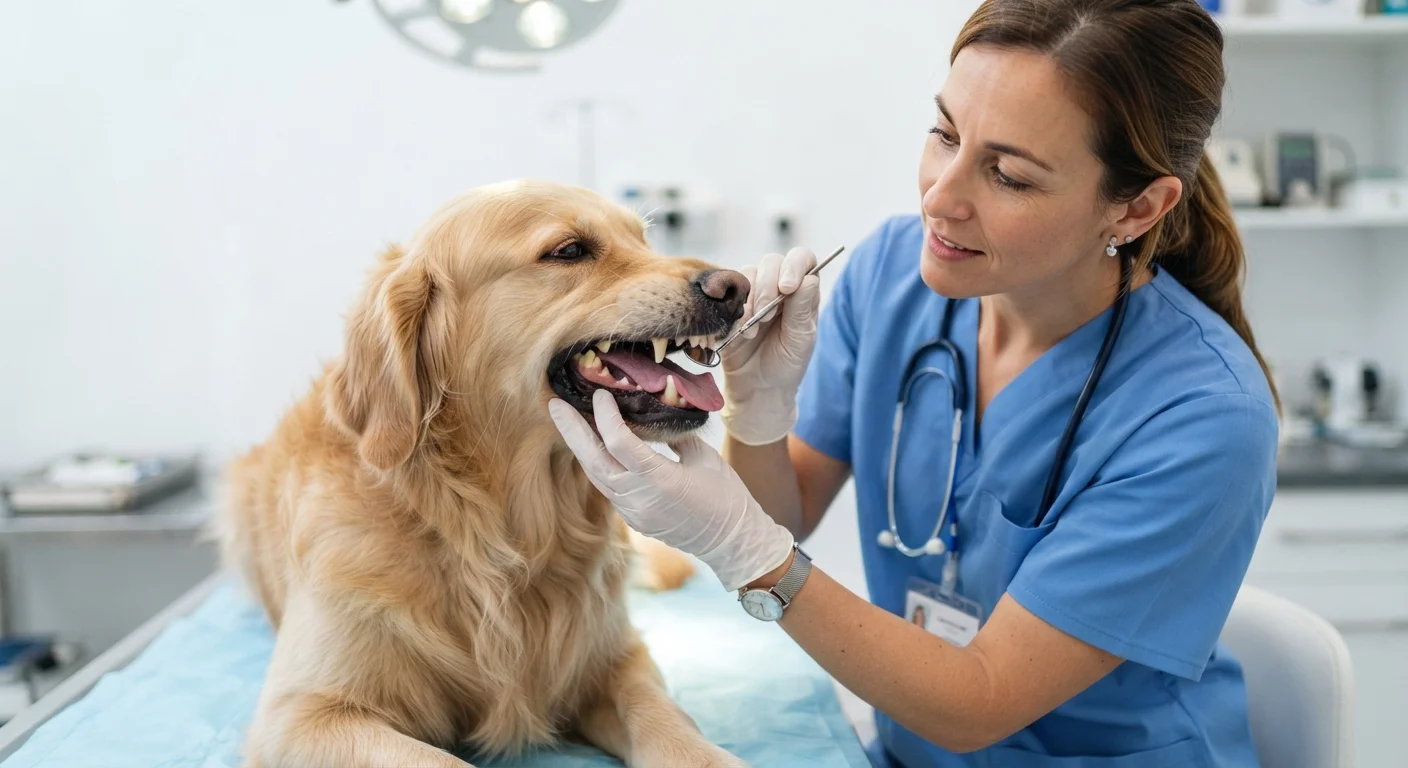
Why Dental Disease Flies Under the Radar
Periodontal disease — infection and inflammation of the structures supporting the teeth — is the most frequently diagnosed health problem in companion animals. Veterinary dental specialists estimate that by age three, the majority of dogs and cats have some degree of periodontal disease. Yet most owners never know until the condition has progressed significantly.
The reason is straightforward: pets instinctively hide discomfort, and early dental disease produces no symptoms visible to the casual observer. By the time bad breath becomes undeniable or a pet stops eating normally, damage is often already well underway beneath the gumline. Understanding the real picture means questioning several widely held beliefs — and that's exactly what the myth-versus-fact breakdown below addresses.
For a broader look at the everyday oversights that quietly affect pet health, see common pet care gaps owners miss.
Myth
Bad breath is just a normal part of having a dog or cat.
Fact
Persistent bad breath (halitosis) in pets is a clinical sign of bacterial accumulation and typically indicates active periodontal disease.
The idea that "dog breath" is inevitable normalizes a symptom that warrants attention. A healthy pet's breath is not odorless, but a strong, foul smell — especially one that persists — signals an overgrowth of oral bacteria, plaque buildup, or infection beneath the gumline. Accepting it as normal delays treatment and allows underlying disease to advance.
Myth
Pets who eat dry kibble don't need their teeth brushed — the crunching cleans their teeth.
Fact
Kibble provides minimal mechanical cleaning and does not remove the bacterial plaque that accumulates at and below the gumline.
This myth is so pervasive that many owners skip dental care entirely for kibble-fed pets. While some dental-specific dry diets are formulated with fiber matrices that create a scrubbing effect, standard kibble shatters on contact and provides little meaningful cleaning. Plaque — the sticky bacterial film that drives periodontal disease — forms continuously and must be physically disrupted through brushing or clinically validated products.
Myth
Anesthesia for a dental cleaning is too risky, especially for older pets.
Fact
Modern anesthetic protocols are safe for most pets, including seniors, when pre-anesthetic screening is performed by a veterinarian.
Anesthesia-free dental cleaning — where a pet is manually restrained while a technician scrapes visible tartar — is not an equivalent alternative. It cannot address subgingival (below-gumline) disease, cannot include dental radiographs, and causes significant stress. Veterinary anesthesia today involves individualized drug protocols, pre-operative bloodwork, and continuous monitoring. The risk of untreated dental disease — including systemic bacterial spread — often outweighs the well-managed risk of a properly supervised anesthetic procedure.
Myth
If a pet is still eating normally, its teeth must be fine.
Fact
Pets commonly continue eating even with significant oral pain, making normal appetite an unreliable indicator of dental health.
Survival instinct drives most animals to eat despite discomfort. A cat or dog with multiple broken or infected teeth may shift food to one side of the mouth, eat more slowly, or prefer softer textures — behaviors owners can miss or misinterpret. Waiting for appetite loss as a threshold for concern allows advanced disease to develop. Regular oral examinations by a veterinarian are the only reliable way to assess what's actually happening in the mouth.
Myth
Dental disease only becomes a problem in old pets.
Fact
Veterinary studies consistently find significant periodontal disease in dogs and cats as young as two to three years of age.
This misconception leads owners to defer dental care until their pet is visibly aging, by which point disease is often extensive. Plaque mineralizes into calculus (tartar) within days of formation, and without intervention, gum inflammation (gingivitis) progresses to deeper tissue destruction. Starting a home dental routine in puppyhood or kittenhood — and scheduling early professional cleanings — prevents the compounding damage that comes with years of unaddressed buildup.
The Systemic Connection: Beyond the Mouth
Periodontal disease doesn't stay contained to the gums and teeth. Oral bacteria can enter the bloodstream through inflamed gum tissue, and research in veterinary medicine has linked chronic periodontal disease to changes in kidney, liver, and cardiac tissue over time. This isn't a minor footnote — it's one of the strongest arguments for treating dental health as a whole-body concern.
~80%
Dogs with periodontal disease by age 3
Veterinary dental organizations report that approximately 80% of dogs and 70% of cats show evidence of periodontal disease by the time they reach three years of age.
70%
Cats affected by age 3
Feline periodontal disease is often underdiagnosed because cats are particularly adept at masking pain and discomfort from their owners.
60%
Tooth structure is below the gumline
Because the majority of each tooth lies beneath the gumline, disease affecting roots and surrounding bone is invisible without dental probing and radiography.
Pets with unmanaged dental disease may also experience chronic low-grade pain that subtly alters behavior: reduced activity, increased irritability, or reluctance to chew certain foods. Because these changes appear gradually, owners often attribute them to aging. This overlap with senior health is worth understanding — learn how to distinguish normal aging from treatable conditions in older pets. Dental disease can also compound other chronic conditions; explore how diabetes, arthritis, and kidney disease intersect with overall pet health.
Dental Disease Has Whole-Body Consequences
Bacteria from infected gum tissue can travel through the bloodstream and have been associated with changes in kidney, liver, and heart valve tissue in companion animals. This means untreated dental disease is not simply a mouth problem — it is a systemic health risk. Treating periodontal disease is an investment in your pet's overall longevity, not just oral comfort.
Building a Real Prevention Routine
Prevention doesn't require expensive tools or elaborate routines, but it does require consistency. Daily toothbrushing with a pet-safe toothpaste is the gold standard recommended by veterinary dental organizations. Introduce it gradually — starting with just touching the lips and gums — so the experience becomes routine rather than stressful for both animal and owner.
Supplementary tools such as dental chews, water additives, and specially formulated diets can support oral health but are not substitutes for brushing. Look for products that have been evaluated by the Veterinary Oral Health Council (VOHC), which reviews efficacy data before awarding its seal.
Never Use Human Toothpaste on Pets
Human toothpaste contains fluoride and xylitol — both of which are toxic to dogs and cats when swallowed. Always use a toothpaste specifically formulated for pets, which is safe for ingestion and comes in flavors animals tend to accept. Introduce brushing gradually to avoid creating a negative association with the process.
Professional cleanings performed by a veterinarian — under general anesthesia — allow for scaling below the gumline, probing for pocketing, and full-mouth radiographs. These are things no at-home routine can replicate. Routine veterinary visits are also when early dental problems are most likely to be caught; see why consistent wellness exams matter more than most owners realize.
This article provides general educational information about pet dental health and is not a substitute for professional veterinary advice. Always consult a licensed veterinarian for guidance specific to your pet's health needs.
The content on this site is for informational purposes only and is not a substitute for professional advice. Always consult a qualified professional for guidance specific to your situation.