

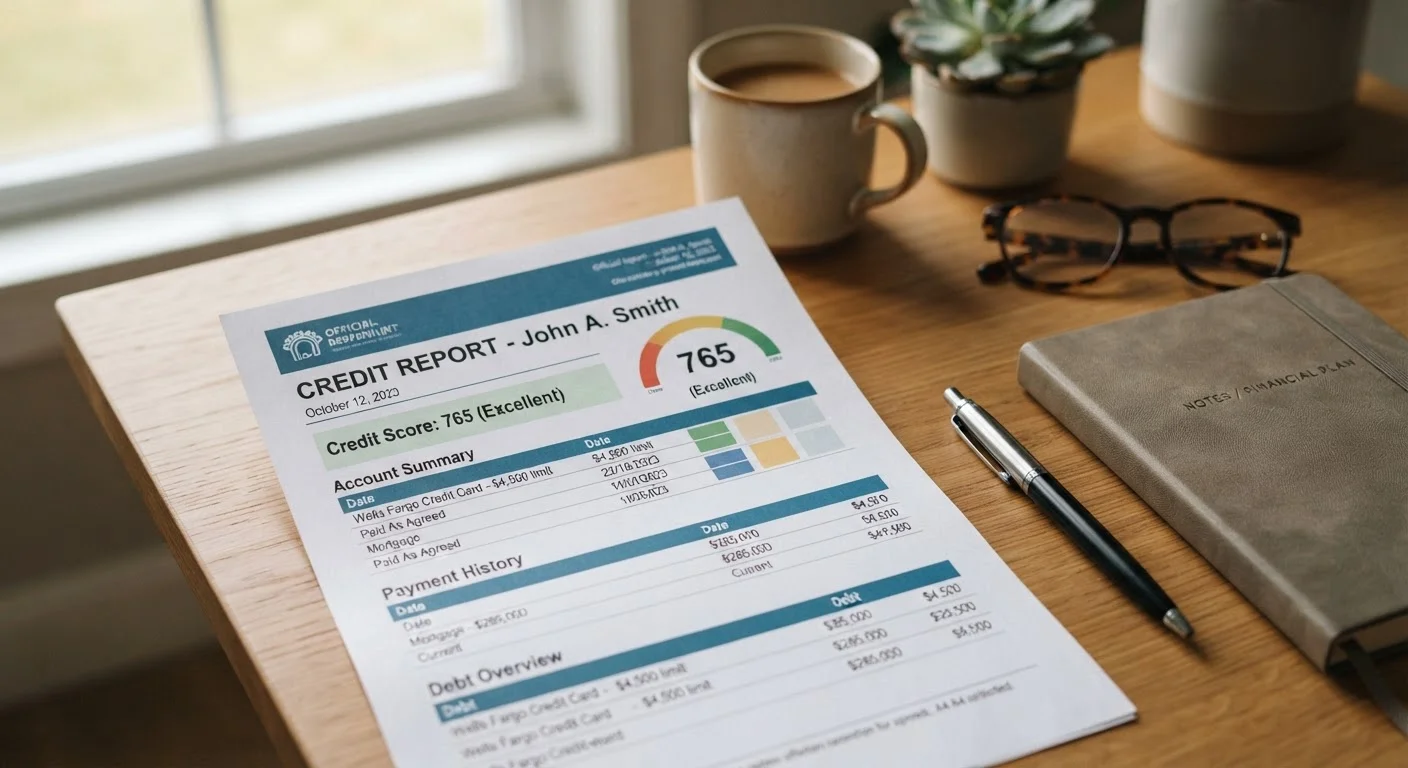
Why Your Credit Report Matters More Than Your Score
Most people focus on their credit score — a three-digit number — without realizing it is simply a summary calculated from the underlying data in their credit report. The report itself is the source of truth. It contains the complete, detailed history of every account you've opened, every payment you've made or missed, and every time a lender has pulled your file.
Because three separate bureaus each maintain their own version of your report, the same consumer can have three slightly different files. Lenders may report to one, two, or all three bureaus — and errors introduced at any point in that chain stay on your record until corrected. That's why reading your report directly, rather than relying solely on a score summary, is essential. It also provides context that a score cannot: an account that was paid late five years ago tells a different story than one that was 90 days past due last month.
For consumers just beginning to establish credit history, understanding the report structure also helps clarify what's missing and why. See our guide on building credit from zero for approaches tailored to a thin file.
What you will need
How to Read Each Section Systematically
A credit report is not designed for casual reading — it follows a consistent but dense structure. Approaching it section by section, rather than scanning the whole document at once, dramatically reduces the chance of missing something important.
AnnualCreditReport.com
The federally authorized source for obtaining free credit reports from all three major bureaus.
Notebook or spreadsheet
Record any discrepancies, unfamiliar accounts, or questions you find while reviewing your report.
Highlighter or annotation tool
Mark sections of a printed or PDF report that require follow-up or dispute.
Obtain your official credit report
Visit AnnualCreditReport.com — the only federally authorized free report portal — and request reports from Equifax, Experian, and TransUnion. Each bureau maintains its own file, and the data can differ between them, so reviewing all three gives you a complete picture. Download or print each report before proceeding.
Review your personal information section
The first section lists your name, current and previous addresses, date of birth, Social Security number (partially masked), and employer history. This data does not affect your credit score, but errors here — such as an unfamiliar address — can signal mixed files or identity issues. Confirm every field is accurate before moving on.
Examine the accounts (tradelines) section
This is the largest section. Each account — credit cards, loans, mortgages, student loans — is listed as a tradeline. For every account, check: the creditor name, account type, date opened, credit limit or original loan amount, current balance, and payment history. Payment history is displayed month by month, typically using codes (OK, 30, 60, 90 indicating days late). Understand that your credit score is built largely from this section's data.
Check the public records section
Public records include bankruptcies filed under federal law. A Chapter 7 bankruptcy can remain on your report for up to ten years; Chapter 13 for up to seven. Not all bureaus report public records the same way, so cross-check across all three reports. If this section is blank, that is a good sign.
Review the inquiries section
Inquiries are split into two types. Hard inquiries occur when you apply for credit and can modestly lower your score for a short period; they remain visible for two years. Soft inquiries — such as pre-qualification checks or employer checks — are visible only to you and do not affect your score. If you see hard inquiries you did not authorize, note them for follow-up. See the financial readiness checklist for guidance on managing inquiries before applying for new credit.
Look at the collections section
If a past-due account was sold to a collection agency, it appears here. Collections can significantly impact your score and typically remain for seven years from the original delinquency date — not from when the debt was sold. Note the original creditor, the collection agency, the amount, and the date of first delinquency. This date is critical for understanding when the item will age off your report.
Document anything that looks wrong
As you work through each section, write down any item that seems inaccurate: a balance that's wrong, a payment marked late that you paid on time, or an account you've never opened. These are candidates for a formal dispute. The process for doing so is covered in detail in the article on disputing errors on your credit report.
Set a Calendar Reminder to Review Annually
Reviewing your credit report at least once a year is one of the simplest habits you can build for long-term financial health. Regular review helps you catch errors early, spot signs of identity theft, and track the progress of positive credit behaviors over time.
Errors on Credit Reports Are Surprisingly Common
Research from the Federal Trade Commission has found that a significant share of consumers have at least one material error on one of their credit reports. An error — whether a wrong balance, a duplicate account, or a payment incorrectly marked late — can lower your score and affect lending decisions. Identifying and formally disputing errors is your legal right under the FCRA.
Once you've worked through your report and documented any concerns, you'll be in a much stronger position to act — whether that means disputing an error, paying down a balance, or simply monitoring the file over time. For a complementary look at another dense financial document, the anatomy of a bank statement uses the same plain-English approach to decode monthly transaction records.
This article is for general informational and educational purposes only and does not constitute financial, legal, or credit advice. Your individual credit situation will vary. Consult a qualified financial professional or credit counselor for guidance specific to your circumstances.
The content on this site is for informational purposes only and is not a substitute for professional advice. Always consult a qualified professional for guidance specific to your situation.