

What Homeowners Can - and Cannot - Safely Do
Electrical maintenance sits at a firm dividing line: some tasks are genuinely safe for an informed homeowner, while others involve live wiring, high voltages, or panel work that requires a licensed electrician. Understanding where that line is can protect both your household and your home's insurance coverage.
On the safe side: visual inspections, testing GFCI outlets, checking for warm faceplates, and replacing cover plates on outlets that are already de-energized. On the professional side: anything that involves opening your electrical panel, replacing circuit breakers, running new wiring, or diagnosing persistent tripping or sparking. Local building codes in most U.S. jurisdictions require licensed electricians for this work - and for good reason.
For a broader view of where electrical checks fit into your annual upkeep, see our home maintenance calendar.
Test GFCI outlets monthly using their built-in test and reset buttons.
Ground Fault Circuit Interrupter (GFCI) outlets are designed to cut power within milliseconds if a ground fault is detected, protecting against electrocution near water. A GFCI that doesn't trip when tested - or won't reset - is no longer providing protection and must be replaced by a qualified electrician.
Visually inspect outlet and switch cover plates for cracks, discoloration, or scorch marks.
Damaged cover plates expose interior wiring to contact and dust, increasing the risk of arcing or shock. Discoloration often indicates past overheating, which is a serious underlying problem even if the outlet appears functional.
Avoid overloading outlets with multi-tap adapters or daisy-chained power strips.
Each circuit is rated for a specific amperage load. Stacking adapters draws more current than the wiring is designed to handle, generating heat inside the walls where you can't see it. This is a leading cause of residential electrical fires.
Keep the area around your electrical panel clear and unobstructed at all times.
Electrical codes across the U.S. require a minimum clearance in front of panels - typically 36 inches - so that panels are accessible in an emergency. Stored items block rapid access and may themselves become a fire hazard.
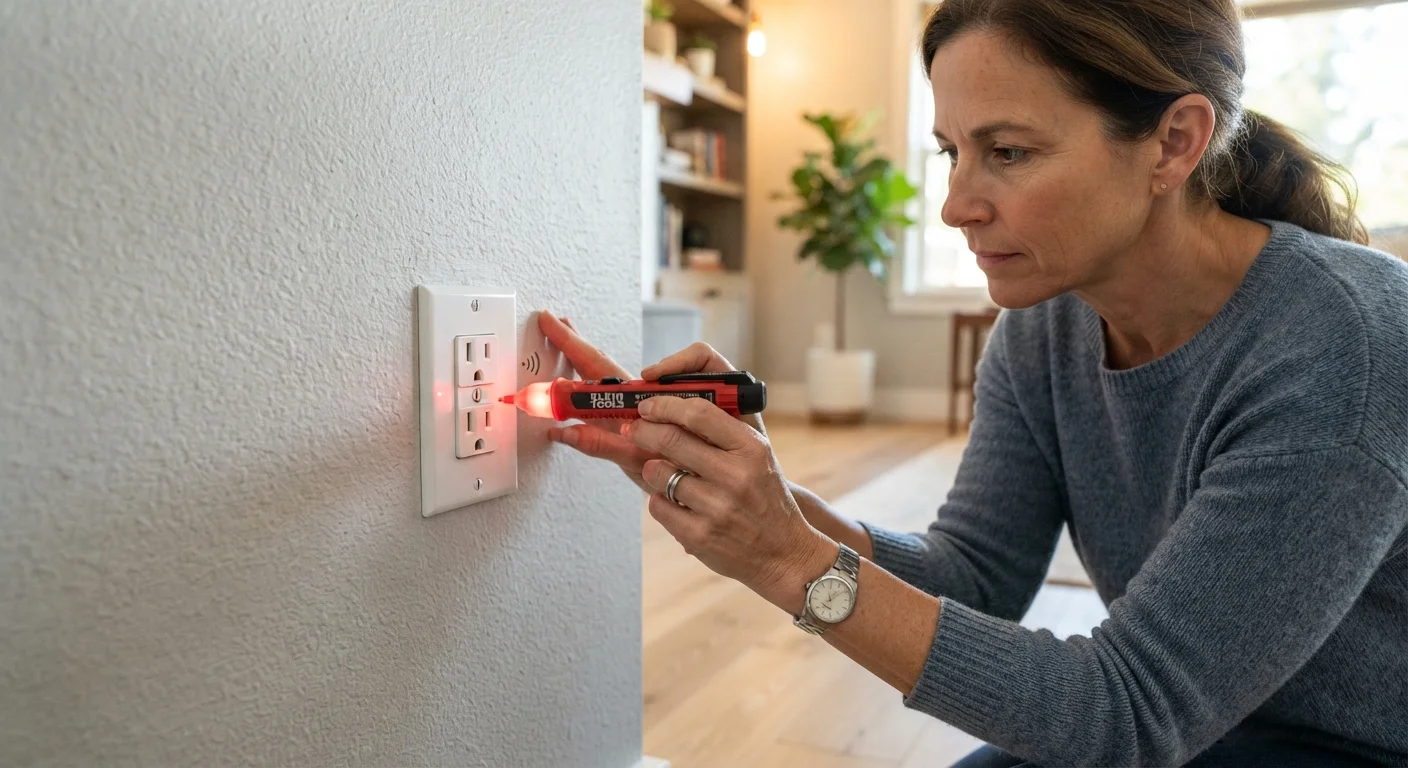
Use a non-contact voltage tester to confirm an outlet is de-energized before replacing a cover plate.
Even when you believe a breaker is off, a non-contact tester provides an added layer of confirmation before you handle anything near an outlet. These inexpensive tools detect voltage without touching wires and are one of the few instruments safe for homeowner use.
Warning Signs That Demand Immediate Professional Attention
Some electrical symptoms should stop you in your tracks. If you notice any of the following, stop using the affected outlet or circuit and contact a licensed electrician promptly:
- Outlets or switch plates that feel warm or hot to the touch - this indicates resistance, which can lead to a fire.
- Burning or melting plastic smell near outlets, panels, or fixtures.
- Frequent tripping of the same circuit breaker, which often signals an overloaded or failing circuit.
- Flickering or dimming lights when appliances turn on - a sign of voltage fluctuations or loose connections.
- Visible scorch marks or discoloration around outlet covers.
- Outlets that spark when a plug is inserted.
These are not DIY problems. Electrical faults are among the most common causes of house fires in the U.S., according to the National Fire Protection Association. Don't delay on these.
Skipping these signs is exactly the kind of oversight that compounds into expensive and dangerous damage - similar to the hidden problems covered in our commonly overlooked home maintenance issues.
Older Homes May Have Outdated Wiring
Homes built before the 1980s may contain aluminum wiring, knob-and-tube systems, or panels with known safety issues (such as certain Federal Pacific or Zinsco brands). These don't always show obvious symptoms, but they carry elevated risk. If your home is older and has never had an electrical inspection, a licensed electrician can assess whether your system meets current safety standards. This is general educational information - consult a qualified professional for an evaluation specific to your home.
Quick Safety Checks You Can Do Right Now
The following tasks involve no contact with wiring and are appropriate for most homeowners. Always use dry hands and avoid wet areas when performing any electrical check.
If you're a newer homeowner still building your maintenance routine, our home maintenance schedule guide for new owners walks through how to structure these checks across the year.
The content on this site is for informational purposes only and is not a substitute for professional advice. Always consult a qualified professional for guidance specific to your situation.